Introduction
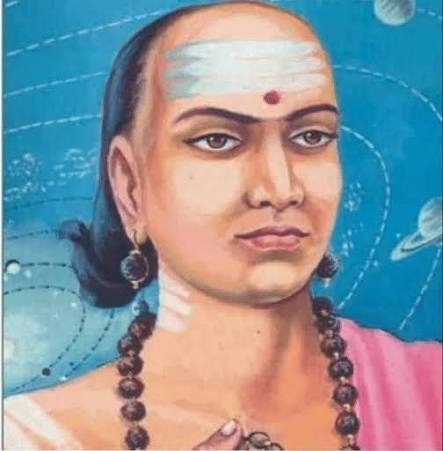
Varahamihira was one of the greatest scholars of ancient India and a leading figure of the classical Indian scientific tradition. Living during the 6th century CE, he made significant contributions to astronomy, mathematics, astrology, geography, meteorology, and natural sciences. His works synthesized indigenous Indian knowledge with Greek and other astronomical traditions, making him one of the most influential scientists of ancient India.
Early Life and Education
Varahamihira was born around 505 CE in Ujjain, present-day Madhya Pradesh, India. His father, Adityadasa, was a learned scholar and astrologer who introduced him to astronomy and mathematics. Ujjain was a major center of scientific learning and astronomical observation, providing an ideal environment for his education.
From a young age, Varahamihira studied mathematics, astronomy, astrology, and classical Sanskrit literature. He became known for his intellectual curiosity and exceptional analytical skills.
Scientific Career & Research
Varahamihira spent most of his career in Ujjain, which was then one of India’s foremost astronomical centers. He is believed to have been associated with the court of Yashodharman and was regarded as one of the distinguished scholars of his era.
His research covered:
- Astronomy
- Mathematics
- Planetary motion
- Calendar calculations
- Meteorology
- Hydrology
- Geography
- Astrology
His observations and calculations greatly improved the accuracy of astronomical predictions and calendars.
Major Discoveries and Inventions
1. Panchasiddhantika
Varahamihira’s most important astronomical work is the Panchasiddhantika. This text summarized and compared five major astronomical systems of ancient India. It preserved valuable knowledge from earlier traditions, some of which would otherwise have been lost.
2. Brihat Samhita
His encyclopedic work Brihat Samhita contains information on:
- Astronomy
- Weather forecasting
- Architecture
- Agriculture
- Water resources
- Gemology
- Geography
The text is considered one of the earliest scientific encyclopedias in India.
3. Contributions to Mathematics
Varahamihira made important advances in mathematics, including:
- Trigonometric calculations.
- Use of sine tables in astronomy.
- Methods for solving mathematical problems related to planetary motions.
- Refinement of computational techniques used by astronomers.
4. Astronomical Calculations
He improved methods for:
- Predicting solar eclipses.
- Predicting lunar eclipses.
- Calculating planetary positions.
- Determining celestial coordinates.
5. Meteorology and Environmental Science
Varahamihira studied weather patterns and proposed methods for forecasting rainfall based on:
- Cloud formations.
- Wind directions.
- Planetary positions.
- Seasonal observations.
His work represents one of the earliest systematic studies of meteorology in India.
6. Hydrology and Water Discovery
He described techniques for locating underground water sources by observing:
- Soil characteristics.
- Vegetation patterns.
- Surface features.
Many historians regard these observations as early contributions to hydrology and environmental science.
Awards and Honours
Formal awards did not exist during Varahamihira’s time. However, he earned immense respect as one of the foremost scholars of ancient India. His works were widely studied for centuries and became standard references for astronomers, mathematicians, and scholars throughout South Asia.
Later Life and Death
Varahamihira continued his scientific studies and writings throughout his life. He remained active in scholarly pursuits in Ujjain until his death around 587 CE. His writings continued to influence generations of scientists long after his passing.
Legacy and Impact
Varahamihira’s contributions had a lasting impact on Indian science and mathematics:
- Preserved ancient astronomical knowledge through Panchasiddhantika.
- Advanced mathematical techniques used in astronomy.
- Improved astronomical calculations and calendar systems.
- Contributed to meteorology, hydrology, and environmental studies.
- Influenced later scholars such as Brahmagupta and Bhaskara II.
- Helped establish Ujjain as a major center of scientific learning.
Today, Varahamihira is recognized as one of the most versatile scientists of ancient India.
Conclusion
Varahamihira was a remarkable astronomer and mathematician whose work bridged multiple scientific disciplines. Through his influential texts, precise astronomical observations, and mathematical innovations, he expanded humanity’s understanding of the natural world. His contributions to astronomy, mathematics, meteorology, and environmental science continue to be celebrated as milestones in the history of Indian science, securing his place among the greatest scholars of the ancient world.
About the Author