
Introduction
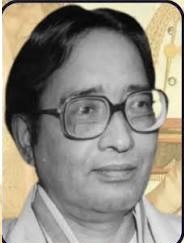
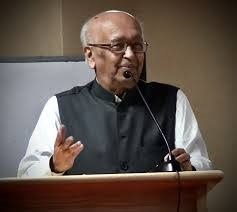
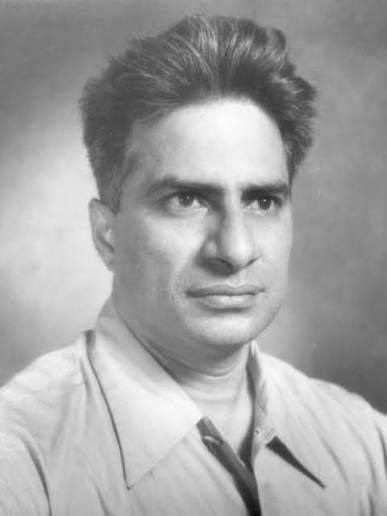
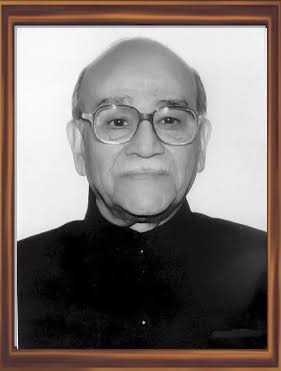
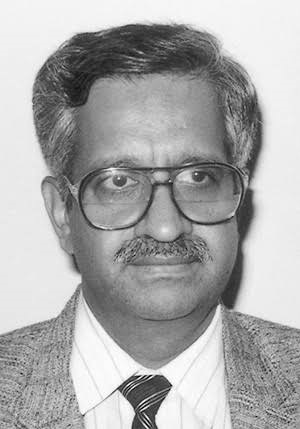
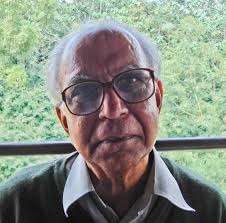
M. S. Narasimhan (Mudumbai Seshachalu Narasimhan, 1932–2021) was one of India’s most distinguished mathematicians and a leading figure in algebraic geometry. He is best known for his pioneering work on vector bundles, complex geometry, and moduli spaces. His collaboration with C. S. Seshadri led to the famous Narasimhan–Seshadri Theorem, a landmark result that transformed modern algebraic geometry and influenced mathematical physics. Through his research and leadership, Narasimhan helped establish India as an important center for advanced mathematical research.
Early Life and Education
M. S. Narasimhan was born on June 7, 1932, in India. From a young age, he showed exceptional talent in mathematics and analytical thinking.
He pursued higher education in mathematics and joined the prestigious Tata Institute of Fundamental Research in Mumbai, where he received advanced training under leading mathematicians. His education exposed him to modern developments in geometry, topology, and algebra, laying the foundation for a remarkable research career.
Narasimhan later collaborated with prominent mathematicians around the world, gaining international recognition for his innovative work.
Scientific Career & Research
Narasimhan spent much of his academic career at TIFR, where he became one of India’s foremost experts in algebraic geometry and complex analysis.
His primary research interests included:
- Algebraic geometry
- Complex manifolds
- Vector bundles
- Moduli spaces
- Differential geometry
- Complex analytic geometry
His work connected algebraic methods with geometric structures, creating new tools and theories that influenced generations of mathematicians.
He also held leadership roles in mathematical institutions and played a significant role in fostering research and education in India.
Major Discoveries and Contributions
1. Narasimhan–Seshadri Theorem
Narasimhan’s most celebrated achievement is the Narasimhan–Seshadri Theorem, developed jointly with C. S. Seshadri.
The theorem establishes a deep correspondence between stable vector bundles on compact Riemann surfaces and unitary representations of fundamental groups. It became one of the foundational results of modern algebraic geometry and has applications in topology, geometry, and theoretical physics.
2. Research on Vector Bundles
He made fundamental contributions to the study of vector bundles over algebraic curves and complex manifolds. His work provided powerful methods for understanding geometric structures.
3. Moduli Spaces
Narasimhan helped develop the theory of moduli spaces, which classify geometric objects according to their mathematical properties. This area remains central to contemporary algebraic geometry.
4. Complex Geometry
His research advanced the understanding of complex manifolds and analytic geometry, influencing both pure mathematics and mathematical physics.
5. International Collaborations
Throughout his career, he collaborated with leading mathematicians worldwide, helping connect Indian mathematical research with the global community.
Awards and Honours
M. S. Narasimhan received numerous prestigious awards and distinctions, including:
- Shanti Swarup Bhatnagar Prize for Science and Technology (1975)
- Fellowship of the Indian National Science Academy
- Fellowship of the Indian Academy of Sciences
- Fellow of The World Academy of Sciences
- International recognition through invited lectures and academic honors
- Leadership positions in prominent mathematical institutions
These honors reflected his immense contributions to mathematics and education.
Later Life and Death
In the later years of his career, Narasimhan continued to contribute to research, mentorship, and institution building. He remained active in promoting mathematical sciences and supporting young researchers.
M. S. Narasimhan passed away on May 16, 2021, at the age of 88. His passing was mourned by mathematicians around the world, who recognized him as one of the pioneers of modern algebraic geometry.
Legacy and Impact
Narasimhan’s influence extends across many areas of mathematics.
His legacy includes:
- Establishing foundational results in algebraic geometry.
- Co-developing the Narasimhan–Seshadri Theorem.
- Advancing the theory of vector bundles and moduli spaces.
- Strengthening mathematical research in India.
- Mentoring future generations of mathematicians.
- Influencing developments in geometry, topology, and mathematical physics.
Many modern research directions in algebraic geometry continue to build upon his ideas and methods.
Conclusion
M. S. Narasimhan was one of India’s greatest mathematicians and a pioneering figure in algebraic geometry. His groundbreaking work on vector bundles, moduli spaces, and the Narasimhan–Seshadri Theorem transformed the field and earned him international acclaim. Through his research, mentorship, and leadership, he left a lasting legacy that continues to inspire mathematicians worldwide. His contributions remain fundamental to modern geometry and mathematical science.
About the Author