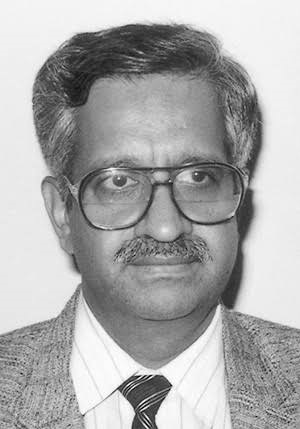
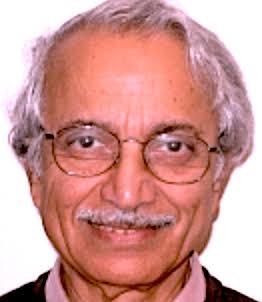
Introduction
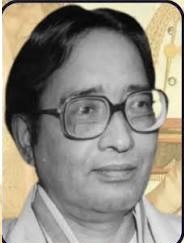
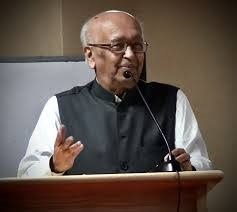
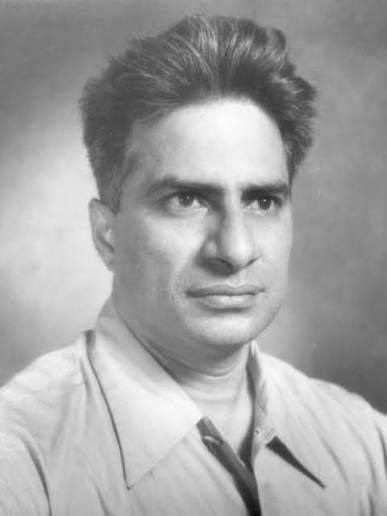
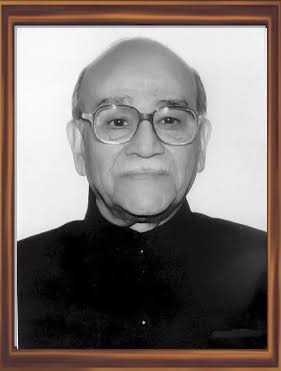
Jogesh Chandra Pati is a renowned theoretical physicist best known for his pioneering contributions to particle physics and grand unified theories. He is internationally recognized for developing the Pati–Salam model, a framework that sought to unify quarks and leptons within a single theoretical structure. His work has significantly influenced modern research in particle physics and the quest for a unified understanding of the fundamental forces of nature.
Early Life and Education
Jogesh Chandra Pati was born on December 20, 1937, in Odisha, India. He completed his early education in India and developed a strong interest in mathematics and physics. He earned a degree in physics from Maharaja Sriram Chandra Bhanja Deo University (then Utkal University-affiliated institutions). Later, he moved to the United States for higher studies and obtained a Ph.D. in Physics from the University of Maryland in 1967.
Scientific Career & Research
After completing his doctorate, Pati worked at several leading research institutions in the United States. He became a professor at the University of Maryland and established himself as a leading figure in theoretical particle physics.
His research focused on:
- Grand Unified Theories (GUTs)
- Particle physics and fundamental interactions
- Neutrino physics
- Supersymmetry
- Unification of quarks and leptons
In 1974, together with Abdus Salam, he proposed the famous Pati–Salam model, which became one of the most influential frameworks for particle unification.
Major Discoveries and Inventions
Pati–Salam Model
The most significant contribution of Jogesh Pati is the Pati–Salam Model, proposed in 1974. The theory introduced the idea that quarks and leptons are related and could be treated as different manifestations of a more fundamental particle structure.
Quark-Lepton Unification
He pioneered the concept of quark-lepton symmetry, providing a foundation for many later Grand Unified Theories.
Neutrino Physics
Pati’s work contributed to understanding neutrino masses and oscillations, which are important topics in modern particle physics.
Grand Unified Theories
His research helped advance theories that seek to unify the electromagnetic, weak, and strong nuclear forces into a single framework.
Proton Decay Predictions
His theoretical models inspired studies on proton decay, an important prediction of many unification theories.
Awards and Honours
Jogesh Pati has received numerous prestigious honours, including:
- Padma Bhushan (2020)
- J. Robert Oppenheimer Memorial Prize
- Fellow of the American Physical Society
- Fellow of the Indian National Science Academy
- Distinguished research awards from several international scientific institutions.
Later Life and Death
Jogesh Pati is alive and continues to contribute to theoretical physics through research, publications, and scientific discussions. Even in his later years, he remains active in exploring questions related to particle unification, neutrino physics, and cosmology.
Legacy and Impact
Jogesh Pati’s work has had a profound influence on modern particle physics. The Pati–Salam model remains one of the most important stepping stones toward Grand Unified Theories. His ideas inspired generations of physicists searching for a unified description of nature’s fundamental particles and forces.
His research has shaped studies at major scientific facilities worldwide, including experiments designed to test theories of particle unification and proton decay. He is widely regarded as one of the most influential Indian-origin theoretical physicists of the modern era.
Conclusion
Jogesh Pati is a pioneering physicist whose contributions to particle physics have expanded humanity’s understanding of the universe’s fundamental structure. Through the development of the Pati–Salam model and his work on Grand Unified Theories, he has played a crucial role in advancing theoretical physics. His legacy continues to inspire researchers seeking to uncover the deepest laws governing matter and energy.
Short Blog Summary (200 Words)
Jogesh Chandra Pati is a distinguished Indian-American theoretical physicist known for his groundbreaking contributions to particle physics and Grand Unified Theories. Born in Odisha, India, in 1937, he pursued higher education in physics and later earned a Ph.D. from the University of Maryland in the United States.
Pati is best known for co-developing the Pati–Salam model with Abdus Salam in 1974. This influential theory proposed a unification of quarks and leptons, two fundamental classes of particles, and became an important step toward creating a unified theory of the fundamental forces of nature. His work introduced the concept of quark-lepton symmetry and contributed significantly to the development of modern particle physics.
Throughout his career, Pati has conducted extensive research on Grand Unified Theories, neutrino physics, supersymmetry, and proton decay. His ideas have influenced many theoretical models and experimental studies aimed at understanding the universe at its most fundamental level.
In recognition of his contributions, he received the Padma Bhushan in 2020 and numerous international scientific honours. Jogesh Pati’s pioneering research continues to inspire physicists worldwide and remains central to ongoing efforts to develop a comprehensive theory that unifies the fundamental particles and forces of nature.
About the Author