

1. Introduction
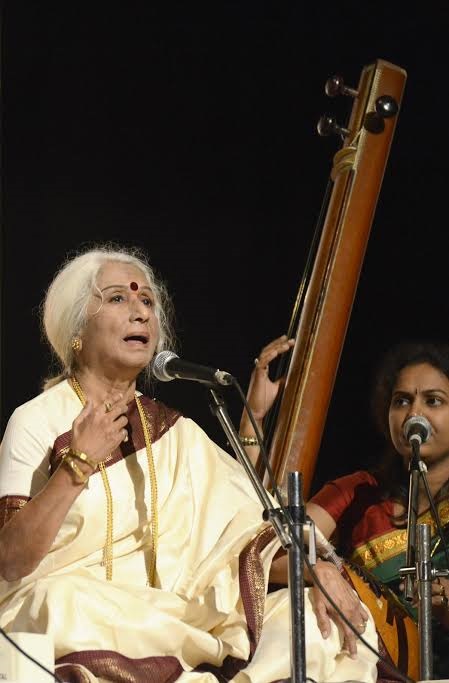
Dr. Prabha Atre was an iconic Indian classical vocalist, scholar, composer, and author of extraordinary stature. Representing the elite Kirana gharana, she was celebrated worldwide for her intellectual approach to music, immaculate tonal quality, and ability to blend traditional discipline with creative innovation. She holds the historic distinction of being one of the rare artists to be honored with all three major Padma civilian awards, culminating in the prestigious Padma Vibhushan.
2. Quick Facts
- Full Name: Prabha Atre
- Native Name: प्रभा अत्रे (Marathi / Hindi)
- Date of Birth: September 13, 1932
- Place of Birth: Pune, Bombay Presidency, British India (present-day Maharashtra)
- Nationality: Indian
- Occupation / Profession: Classical Vocalist, Academic, Author, and Composer
- Field of Achievement: Hindustani Classical Vocal Music (Khayal, Thumri, Dadra)
- Years Active: 1950s–2024
3. Award Information (Focus: Padma Vibhushan)
- Award Name: Padma Vibhushan
- Award Category: India’s Second-Highest Civilian Award
- Award Year: 2022
- Presented By: Ram Nath Kovind (President of India)
- Date of Ceremony: March 28, 2022
- Citation / Official Reason: For exceptional and distinguished service to the arts, Hindustani classical vocal music, and global cultural propagation.
- Previous Recipients (2021): Shinzo Abe, S. P. Balasubrahmanyam (Posthumous), B. B. Lal, and others.
- Next Recipients (2023): Bala Sarma, Mulayam Singh Yadav (Posthumous), S. M. Krishna, and others.
4. Why Did He/She Receive the Award?
Dr. Prabha Atre received the Padma Vibhushan in recognition of her lifetime dedication to elevating the aesthetic and intellectual standards of Hindustani classical music. As a torchbearer of the Kirana gharana, she expanded the horizons of traditional gayaki by introducing unique melodic dimensions, rare ragas, and exceptional clarity in word pronunciation and emotional expression, while taking Indian classical art music to international audiences since the late 1960s.
5. Early Life
Born in Pune to Abasaheb and Indirabai Atre, Prabha Atre grew up in a household that deeply appreciated culture. Her musical journey began quite unexpectedly at the age of eight when her mother took a few singing lessons on a doctor’s advice to improve her health. Listening to those lessons sparked a deep, lifelong passion in young Prabha. Her foundational training took place under the traditional guru-shishya parampara, learning from stalwarts like Vijay Karandikar, Sureshbabu Mane, and Hirabai Badodekar.
6. Education
Dr. Atre was a rare blend of deep artistic sensibility and rigorous academic intellect:
- Bachelor of Science (B.Sc.): Fergusson College, University of Pune.
- Bachelor of Laws (LL.B.): Law College, University of Pune.
- Master of Music (Sangeet Alankar): Gandharva Mahavidyalaya Mandal.
- Doctor of Philosophy (Ph.D. in Music): Completed her doctoral thesis focusing on Sargam (the use of sol-fa notes in Indian classical music).
- Western Music: Studied Western Music Theory (Grade-IV) at the Trinity College of Music, London.
7. Career Journey
Dr. Atre balanced a multifaceted career as a performer, academic, and author. Early on, she acted and sang in classic Marathi theatrical productions like Sanshay-Kallol and Saubhadra. She served as the Head of the Music Department at SNDT Women’s University in Mumbai and taught extensively across India and abroad. As an innovator, she created several new ragas (such as Apurva Kalyan, Darbari Kauns, and Ravi Bhairav) and authored 11 authoritative books on music theory, compositions, and aesthetics, cementing her legacy as a master teacher.
8. Major Achievements
- Triple Padma Laureate: Conferred with the Padma Shri (1990), Padma Bhushan (2002), and Padma Vibhushan (2022).
- Global Ambassador: One of the earliest Indian classical vocalists to popularize authentic Khayal and art music through full-length concerts in Western nations starting in 1969.
- Prolific Author: Released 11 widely acclaimed books on music philosophy, compositions (Swaranjanee, Swaranginee), and aesthetic thoughts (Swarmayee).
- Innovator of Ragas: Composed several unique ragas and intricate bandishes that expanded the classical repertoire.
9. Contribution to the Nation
Dr. Atre enriched India’s cultural heritage by preserving the purity of the Kirana gharana while making classical music accessible and intellectually engaging to contemporary audiences. Through her academic leadership, the Swaramayee Gurukul in Pune, and extensive mentoring, she trained generations of professional musicians, ensuring that the ancient guru-shishya tradition thrived in the modern era.
10. Other Awards and Honours
- Padma Shri: Conferred by the Government of India (1990).
- Sangeet Natak Akademi Award: For Hindustani Vocal Music (1991).
- Padma Bhushan: Conferred by the Government of India (2002).
- Padma Vibhushan: Conferred by the Government of India (2022).
- Kalidas Samman: Presented by the Government of Madhya Pradesh.
- Tagore Akademi Ratna: Conferred by the Sangeet Natak Akademi (2011).
11. Legacy and Influence
Dr. Prabha Atre’s legacy is defined by her intellectual rigor and crystalline voice. She demonstrated that adherence to classical rules does not restrict creativity, but rather provides an infinite canvas for emotional and structural expression. Her recordings, books, and disciples remain cornerstones of Indian classical music education worldwide. She passed away on January 13, 2024, at the age of 91 in Pune.
12. Interesting Facts
- Lawyer and Scientist by Training: Long before dedicating herself entirely to music, she earned both a science degree (B.Sc.) and a law degree (LL.B.).
- Architect of New Melodies: Unlike purists who strictly stick to standard scales, she successfully engineered brand-new ragas that have been adopted by fellow classical performers.
- Lifelong Institution Builder: She headed multiple music organizations, including serving as president of Gaan Vardhan in Pune and establishing the annual Sureshbabu Mane-Hirabai Badodekar Sangeet Sammelan.
13. Quotes
“Music is not just about entertainment; it is an inward journey. Every note should carry soul, clarity, and the deep silence from which it emerged.” — Dr. Prabha Atre
14. Timeline
- 1932: Born on September 13 in Pune.
- 1969: Embarks on pioneering concert tours introducing Indian classical vocal music to Western audiences.
- 1990: Conferred with the Padma Shri by the Government of India.
- 1991: Receives the Sangeet Natak Akademi Award.
- 2002: Conferred with the Padma Bhushan.
- 2022: Honored with India’s second-highest civilian award, the Padma Vibhushan.
- 2024: Passes away on January 13 in Pune at the age of 91.
15. References
- Ministry of Home Affairs, Government of India – Padma Awardees Database.
- Wikipedia – Pran Atre / Prabha Atre Profile & Discography.
- Sangeet Natak Akademi – Awardee Archives.
- Archival and Retrospective Profiles from The Hindu, Sruti Magazine, and PIB India.
16. Related Personalities
- Hirabai Badodekar: Legendary Kirana gharana vocalist and primary guru who shaped Dr. Atre’s artistic foundation.
- Ustad Amir Khan: Iconic vocalist whose introspective khayal style deeply influenced Dr. Atre’s musical aesthetic.
- Pandit Bhimsen Joshi: Fellow towering giant of the Kirana gharana and contemporary musical contemporary from Pune.
17. Frequently Asked Questions (FAQ)
Q1: Who was Dr. Prabha Atre? A: Dr. Prabha Atre was a legendary Indian classical vocalist and doyen of the Kirana gharana, celebrated for her intellectual depth, crystal-clear tone, and global propagation of Hindustani music.
Q2: Which major awards did she receive from the Indian government? A: She is one of the rare artists to receive all three Padma civilian honors: the Padma Shri (1990), Padma Bhushan (2002), and Padma Vibhushan (2022).
Q3: What academic degrees did she hold alongside music? A: She held a Bachelor of Science (B.Sc.) from Fergusson College, a Bachelor of Laws (LL.B.) from Pune University, and a Ph.D. in Music focusing on Sargam.
Q4: When did she pass away? A: She passed away on January 13, 2024, at the age of 91 in Pune.
About the Author




