

1. Introduction
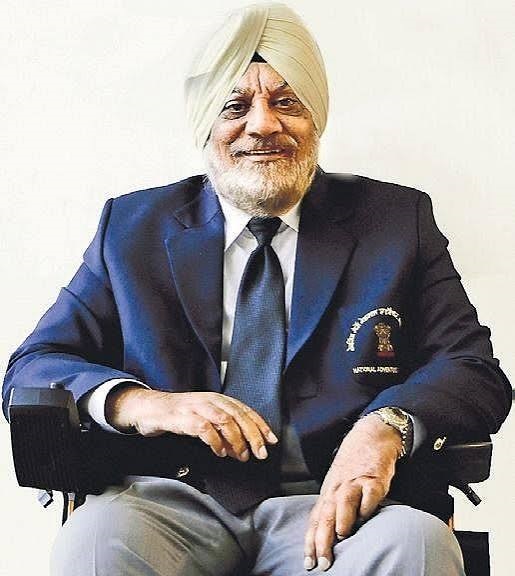
Major Hari Pal Singh Ahluwalia was a towering figure in Indian mountaineering, a retired Indian Army officer, an accomplished author, and a tireless social activist. Best known as one of the elite members of the historic 1965 Indian expedition that successfully scaled Mount Everest for the first time, his life story is an extraordinary testament to human resilience, physical endurance, and the triumph of the human spirit over severe physical adversity.
2. Quick Facts
- Full Name: Hari Pal Singh Ahluwalia (Major H. P. S. Ahluwalia)
- Native Name: ਹਰੀ ਪਾਲ ਸਿੰਘ ਆਹ루ਵਾਲੀਆ (Punjabi) / हरिपॉल सिंह अहलूवालिया (Hindi)
- Date of Birth: November 6, 1936
- Place of Birth: Sialkot, Punjab Province, British India (brought up in Shimla)
- Nationality: Indian
- Occupation / Profession: Mountaineer, Military Officer, Author, and Social Worker
- Field of Achievement: Mountaineering, Adventure Sports, and Disability Rehabilitation
- Years Active: 1958–2022
3. Award Information (Focus: Padma Bhushan)
- Award Name: Padma Bhushan
- Award Category: India’s Third-Highest Civilian Award
- Award Year: 2002
- Presented By: K. R. Narayanan (President of India)
- Date of Ceremony: March/April 2002
- Citation / Official Reason: For distinguished, pioneering service to adventure sports, mountaineering, and social welfare, particularly in the rehabilitation of persons with disabilities.
- Previous Recipients (2001): Prominent public figures, scientists, and industry leaders.
- Next Recipients (2003): P. Bhanumathi Ramakrishna, S. K. Skaria, and others.
4. Why Did He Receive the Award?
Major Ahluwalia was conferred with the Padma Bhushan in recognition of his lifelong dedication to adventure and humanitarian service. Having previously received the Padma Shri and Arjuna Award in 1965 for scaling Mount Everest, this higher national honor celebrated his remarkable post-injury transition into a champion for social welfare, founding the Indian Spinal Injuries Centre and transforming the lives of individuals with physical disabilities.
5. Early Life
Born in Sialkot (now in Pakistan) in 1936, Ahluwalia spent his early years growing up in Shimla alongside his two brothers and two sisters, after his family relocated due to professional postings and changing political borders. His father worked as a civil engineer in the Indian Central Public Works Department. During his school days at St. Joseph’s Academy in Dehradun and St. George’s College in Mussoorie, he discovered a deep passion for photography, nature, and rock climbing across the rugged Himalayan foothills.
6. Education
- Schooling: Completed his primary and secondary education at St. Joseph’s Academy, Dehradun, and St. George’s College, Mussoorie.
- Engineering Degree: Graduated with a Bachelor’s degree in Electrical and Mechanical Engineering from the College of Military Engineering (CME), Pune, in 1964, combining technical discipline with his military career.
7. Career Journey
Ahluwalia joined the Indian Army as an officer, receiving a commission as a second lieutenant in December 1958. His military service intertwined with his love for mountaineering, leading him to participate in demanding expeditions in Sikkim, Ladakh, and Nepal. In May 1965, as part of the historic third Indian Everest Expedition led by Captain M. S. Kohli, he successfully reached the summit of Mount Everest. Shortly after, during the Indo-Pakistani War of 1965, he suffered a severe bullet injury to his spine that left him dependent on a wheelchair. Refusing to let his injury defeat him, he pioneered wheelchair travel and adventure, organized the first Trans-Himalaya Motor Expedition (1983), and established the world-class Indian Spinal Injuries Centre in New Delhi in 1993.
8. Major Achievements
- Everest Pioneer: One of the first Indians to successfully summit Mount Everest on May 29, 1965.
- Triple National Honors: Conferred with the Arjuna Award (1965), Padma Shri (1965), and Padma Bhushan (2002).
- Healthcare Institution Builder: Founded the Indian Spinal Injuries Centre (ISIC), bringing advanced spinal care and rehabilitation standards to India.
- Prolific Author & Documentarian: Authored 13 books on mountaineering and philosophy, and created the acclaimed Beyond Himalaya documentary series broadcast globally.
9. Contribution to the Nation
Major Ahluwalia expanded the boundaries of Indian courage and social empathy. On the mountains, he placed India on the global adventure map. Off the mountains, his establishment of the Indian Spinal Injuries Centre revolutionized medical rehabilitation for spinal trauma victims in India, particularly prioritizing paralyzed soldiers and underprivileged citizens who previously had limited access to specialized care.
10. Other Awards and Honours
- Arjuna Award: Conferred by the Government of India for Mountaineering (1965).
- Padma Shri: Conferred by the Government of India (1965).
- Padma Bhushan: Conferred by the Government of India (2002).
- Tenzing Norgay National Adventure Award: For Lifetime Achievement (2009).
- National Award for the Welfare of People with Disabilities: Presented by the Government of India (1998).
- Fellow of the Royal Geographical Society (FRGS): United Kingdom.
11. Legacy and Influence
Major H. P. S. Ahluwalia’s legacy is defined by his profound concept of “The Summit Within”—the idea that the physical conquest of a mountain is merely a reflection of the mental and spiritual strength required to overcome life’s insurmountable obstacles. He proved that physical disability is not the end of a purposeful life, inspiring generations of soldiers, athletes, and differently-abled individuals worldwide. He passed away on January 14, 2022, at the age of 85.
12. Interesting Facts
- Historic Summit Team: He was part of the legendary 1965 Indian Everest Expedition that set a world record at the time by placing nine summiters on top of Mount Everest in a single expedition.
- Wheelchair Explorer: Despite being paralyzed from the waist down due to his war injury, he did not stop exploring—he went on to organize the first Trans-Himalaya motor expedition and traveled extensively across the globe.
- Literary Philosopher: His autobiography, Higher Than Everest, and subsequent philosophical writings became standard reading on resilience, mental fortitude, and human endeavor.
13. Quotes
“The man who has been to the mountain is never the same again. There is the physical conquest of the mountain, but there is also a spiritual summit within every human being that must be climbed.” — Major H. P. S. Ahluwalia
14. Timeline
- 1936: Born on November 6 in Sialkot.
- 1958: Commissioned as an officer in the Indian Army.
- 1965: Successfully summits Mount Everest on May 29; awarded the Padma Shri and Arjuna Award; injured in the spine during active military conflict.
- 1983: Organizes the pioneering First Trans-Himalaya Motor Expedition.
- 1993: Establishes the Indian Spinal Injuries Centre in Vasant Kunj, New Delhi.
- 2002: Conferred with India’s third-highest civilian honor, the Padma Bhushan.
- 2009: Receives the Tenzing Norgay National Adventure Award for Lifetime Achievement.
- 2022: Passes away on January 14 in New Delhi at the age of 85.
15. References
- Ministry of Home Affairs, Government of India – Padma Awardees Database.
- Wikipedia – H. P. S. Ahluwalia Profile & Biography.
- Indian Spinal Injuries Centre (ISIC) – Founder Archives & Institutional History.
- Higher Than Everest: Memoirs of a Mountaineer (Autobiographical work by H. P. S. Ahluwalia).
16. Related Personalities
- Captain M. S. Kohli: Leader of the historic 1965 Indian Mount Everest Expedition.
- Tenzing Norgay: Legendary mountaineer and co-first ascensionist of Everest, who mentored and encouraged generations of Indian climbers.
- Bachendri Pal: First Indian woman to reach the summit of Mount Everest, inspired by the pioneering efforts of the 1965 team.
17. Frequently Asked Questions (FAQ)
Q1: Who was Major H. P. S. Ahluwalia? A: Major H. P. S. Ahluwalia was a renowned Indian mountaineer, army officer, author, and social worker best known as one of the first Indians to scale Mount Everest in 1965.
Q2: How did he get confined to a wheelchair? A: Shortly after his historic Everest climb, he sustained a severe bullet injury to his spine while serving in active combat during the 1965 Indo-Pakistani War.
3: What major social institution did he found? A: He founded the Indian Spinal Injuries Centre (ISIC) in New Delhi in 1993 to provide advanced medical care and rehabilitation for individuals with spinal cord injuries.
Q4: Which civilian awards did he receive? A: He was honored with the Padma Shri (1965), the Arjuna Award (1965), and India’s third-highest civilian honor, the Padma Bhushan (2002).
About the Author




