

1. Introduction
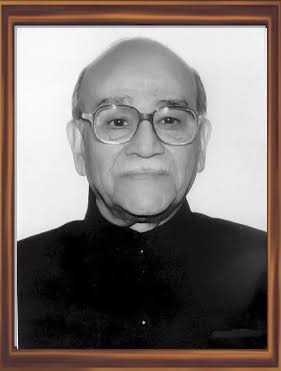
Dr. Brahm Prakash was a distinguished Indian metallurgist, nuclear scientist and scientific institution builder. Born in Lahore in 1912, he developed expertise in physical chemistry and metallurgy before becoming an important member of India’s emerging atomic-energy programme.
After completing advanced studies at the Massachusetts Institute of Technology (MIT), he returned to India in 1949. Homi J. Bhabha selected him to join the Atomic Energy Establishment. He subsequently became the first Indian to head the Department of Metallurgy at the Indian Institute of Science (IISc), Bengaluru.
His career later expanded beyond nuclear science. In 1972, he became the first Director of VSSC, where he helped bring together several young units of India’s space programme into a more integrated organisation.
2. Quick Facts
| Particular | Details |
|---|---|
| Full Name | Dr. Brahm Prakash |
| Native Name | Brahm Prakash |
| Date of Birth | 21 August 1912 |
| Place of Birth | Lahore, British India; now Lahore, Pakistan |
| Nationality | Indian |
| Profession | Metallurgist, scientist and scientific administrator |
| Field of Achievement | Metallurgy, nuclear technology, materials science and space programme |
| Specialisation | Mineral chemistry, extractive metallurgy, atomic energy and space programme |
| Years Active | Mainly from the 1940s to 1984 |
| Major Institutions | Atomic Energy Establishment, IISc, BARC, VSSC, MIDHANI |
| Major Awards | Padma Shri, Shanti Swarup Bhatnagar Prize, Padma Bhushan |
| Died | 3 January 1984 |
| Age at Death | 71/72 years, depending on date-counting convention |
The official VSSC biography gives his birth date as 21 August 1912 and records his death on 3 January 1984 at the age of 72.
3. Award Information
Dr. Brahm Prakash received three major national honours that are particularly relevant to his scientific career.
A. Padma Shri — 1961
| Award Detail | Information |
|---|---|
| Award Name | Padma Shri |
| Category/Field | Science and Engineering |
| Year | 1961 |
| Awardee | Dr. Brahm Prakash |
| Presented by | Government of India |
| Ceremony Date | Not specified in the accessible official award record |
| Official field | Science and Engineering |
The Government of India’s Padma Awards database lists Dr. Brahm Prakash as a Padma Shri recipient in 1961 under Science and Engineering.
Why was he honoured?
His recognition was connected with his important work in metallurgy and India’s developing atomic-energy programme. At the time, he was associated with the metallurgical work of the Atomic Energy Establishment at Trombay. ISRO also confirms that he received the Padma Shri in 1961.
B. Shanti Swarup Bhatnagar Prize — 1963
| Award Detail | Information |
|---|---|
| Award Name | Shanti Swarup Bhatnagar Prize for Science and Technology |
| Category | Engineering Sciences |
| Year | 1963 |
| Awardee | Dr. Brahm Prakash |
| Specialisation | Mineral Chemistry, Extractive Metallurgy, Atomic Energy and Space Programme |
| Presented by | CSIR |
| Ceremony Date | The exact ceremony date is not stated on the awardee profile |
| Official citation | Development of fabrication technology for nuclear-fuel elements |
The official CSIR Shanti Swarup Bhatnagar Prize database records him as the 1963 Engineering Sciences recipient.
Official citation
The official citation states that Brahm Prakash was particularly involved in developing fabrication technology for nuclear-fuel elements for research and power reactors. It also credits the Fuel Element Fabrication Plant at Trombay, designed and built under his direction, with supplying fuel elements for the natural-uranium reactors CIRUS and ZERLINA.
This is one of the strongest official sources for explaining exactly why Brahm Prakash received the Bhatnagar Prize.
C. Padma Bhushan — 1968
| Award Detail | Information |
|---|---|
| Award Name | Padma Bhushan |
| Category/Field | Science and Engineering |
| Year | 1968 |
| Awardee | Dr. Brahm Prakash |
| Presented by | Government of India |
| Ceremony Date | Not specified in the accessible award database |
| State listed | Punjab |
The Government of India’s official Padma database lists Dr. Brahm Prakash — Padma Bhushan, 1968 — Science and Engineering — Punjab.
ISRO also confirms that the nation honoured him with the Padma Shri in 1961 and Padma Bhushan in 1968.
Previous and next recipients
For a blog, it is better to avoid describing individual people as the “previous” or “next” Padma Bhushan recipient because the award had many recipients in each year.
The official 1968 list includes other notable scientists such as Benjamin Peary Pal, C. R. Rao and Prabhu Lal Bhatnagar alongside Brahm Prakash.
4. Why Did Brahm Prakash Receive These Awards?
Brahm Prakash was recognised primarily for his contribution to Indian science and engineering, particularly metallurgy and atomic-energy technology.
His most significant contributions included:
- Developing nuclear-metallurgical expertise in India.
- Developing technology for fabrication of nuclear-fuel elements.
- Establishing advanced metallurgical education and research at IISc.
- Supporting India’s indigenous nuclear-energy capabilities.
- Contributing to the development of strategic materials.
- Building scientific institutions and teams.
- Leading VSSC during an important formative period of India’s space programme.
5. Early Life
Brahm Prakash was born on 21 August 1912 in Lahore, then part of British India. Today, Lahore is in Pakistan.
From an early age, he demonstrated strong academic ability. He studied chemistry and eventually developed a particular interest in physical chemistry and metallurgy.
His academic achievements opened the way for advanced scientific training abroad, which ultimately shaped his career in India’s nuclear and metallurgical programmes.
6. Education
Brahm Prakash initially studied chemistry and undertook doctoral research at Punjab University.
He later worked with the eminent Indian scientist Shanti Swarup Bhatnagar during his post-doctoral career.
His academic excellence eventually took him to the Massachusetts Institute of Technology (MIT) in the United States.
At MIT, he obtained advanced training in Mineral Engineering and Metallurgical Thermodynamics and earned a second doctoral degree.
His education gave him a rare combination of knowledge in:
- Chemistry
- Metallurgy
- Mineral engineering
- Thermodynamics
- Nuclear materials
These skills later proved valuable to India’s atomic-energy programme.
7. Career Journey
Joining India’s Atomic-Energy Programme
After returning to India in 1949, Brahm Prakash was selected by Homi Bhabha to join the Atomic Energy Establishment as a metallurgist.
This was a crucial stage in the development of his career.
Indian Institute of Science
In 1951, he was deputed to the Indian Institute of Science in Bengaluru.
He became the first Indian to head the Department of Metallurgy at IISc. He served there from 1951 to 1957.
His tenure contributed significantly to the growth of metallurgical education and research in India.
United Nations Atomic-Energy Conference
In 1955, he was selected as one of the scientific secretaries for the first UN Conference on the Peaceful Uses of Atomic Energy, held in Geneva.
Return to Atomic Energy
From 1957 to 1972, he was closely associated with India’s atomic-energy programmes.
Among his important responsibilities was work related to nuclear-fuel fabrication.
CIRUS Fuel Fabrication
In 1959, Brahm Prakash and his team achieved the commissioning of a fuel-fabrication facility for the Canada-India Reactor, CIRUS.
The CSIR’s official citation similarly highlights his work on nuclear-fuel fabrication technology.
Nuclear Fuel Complex
He later served as Project Director of the Nuclear Fuel Complex (NFC), Hyderabad, contributing to India’s nuclear-materials and fuel capabilities.
First Director of VSSC
In May 1972, Brahm Prakash became the first Director of the Vikram Sarabhai Space Centre.
He remained in the position until November 1979.
When he took charge, India’s space programme consisted of several relatively small units, including TERLS, RPP, RFF, PFC and the former Space Science and Technology Centre.
According to ISRO, his administrative and organisational abilities helped bring these units together into a dynamic VSSC.
MIDHANI
From 1980 until 1984, he served as Chairman of Mishra Dhatu Nigam Limited (MIDHANI), contributing to India’s strategic materials and defence-production capabilities.
8. Major Achievements
1. Pioneer in nuclear metallurgy
Brahm Prakash helped establish expertise in nuclear metallurgy at a time when India was building its atomic-energy infrastructure.
2. Nuclear-fuel fabrication
His work on nuclear-fuel fabrication was one of his most important technical contributions. The official Bhatnagar Prize citation specifically recognises this work.
3. Fuel fabrication for CIRUS
His team commissioned the CIRUS fuel-fabrication facility in 1959.
4. First Indian Head of Metallurgy at IISc
He became the first Indian to lead IISc’s Department of Metallurgy.
5. First Director of VSSC
He became the first Director of VSSC and played a significant role in its organisational development.
6. Strategic materials
His later leadership at MIDHANI connected his metallurgical expertise with India’s defence and strategic-materials requirements.
9. Contribution to the Nation
Brahm Prakash contributed to India’s development in several interconnected areas.
Nuclear self-reliance
India needed its own expertise in nuclear materials and fuel technology. His work helped create that technical foundation.
Metallurgical education
His leadership at IISc contributed to the expansion of metallurgical education and research in India.
Space technology
As VSSC’s first Director, he helped establish the organisational structure required for India’s growing space programme.
Strategic materials
His work at MIDHANI contributed to India’s capabilities in specialised materials for strategic and defence applications.
His career therefore connected education, research, nuclear technology, space technology and strategic manufacturing.
10. Other Awards and Honours
Padma Shri — 1961
Awarded in Science and Engineering.
Shanti Swarup Bhatnagar Prize — 1963
Awarded in Engineering Sciences for important contributions including nuclear-fuel fabrication technology.
Padma Bhushan — 1968
Awarded in Science and Engineering.
He also received institutional recognition after his death, including memorial initiatives associated with his contributions to engineering and materials science.
11. Legacy and Influence
Brahm Prakash’s legacy is particularly strong because he did not simply conduct scientific research—he built institutions, technologies and teams.
Legacy at IISc
His leadership helped strengthen metallurgy as an important academic and research discipline in India.
Legacy at VSSC
ISRO credits him with bringing several separate units together and helping create the organisational foundation of the modern VSSC.
Legacy in nuclear technology
The nuclear-fuel fabrication facilities and metallurgical capabilities he helped establish contributed to India’s efforts toward technological self-reliance.
Legacy in strategic materials
His association with MIDHANI demonstrated the continued importance of metallurgy to India’s strategic and defence sectors.
12. Interesting Facts
- He was born in Lahore in 1912, before the Partition of India.
- He studied chemistry before specialising in metallurgy.
- He worked with renowned scientist Shanti Swarup Bhatnagar.
- Homi Bhabha selected him for India’s atomic-energy programme.
- He became the first Indian Head of the Department of Metallurgy at IISc.
- He was a scientific secretary at the first UN Conference on the Peaceful Uses of Atomic Energy in 1955.
- His team commissioned the CIRUS fuel-fabrication facility in 1959.
- He was the first Director of VSSC.
- He received both the Padma Shri and Padma Bhushan.
- He remained associated with the Space Commission until his death.
13. Quotes
There are relatively few reliably documented direct quotations from Brahm Prakash available in the major official online sources. Therefore, it is better not to attribute popular motivational quotations to him without a primary source.
For your blog, you can instead use this editorial summary:
“Brahm Prakash helped build the scientific and technological foundations that enabled India to pursue greater self-reliance in nuclear energy, metallurgy and space technology.”
Note: This is a summary of his contribution, not a direct quotation by Brahm Prakash.
14. Timeline
| Year | Event |
|---|---|
| 1912 | Born on 21 August in Lahore |
| 1930s–1940s | Studied chemistry and pursued advanced research |
| 1940s | Worked with Shanti Swarup Bhatnagar |
| 1949 | Returned to India after advanced training at MIT |
| 1949 | Joined Atomic Energy Establishment under Homi Bhabha |
| 1951 | Became first Indian Head of Metallurgy at IISc |
| 1955 | Scientific Secretary at the first UN Conference on Peaceful Uses of Atomic Energy |
| 1957 | Returned to full-time atomic-energy work |
| 1959 | His team commissioned CIRUS fuel-fabrication facility |
| 1961 | Received Padma Shri |
| 1963 | Received Shanti Swarup Bhatnagar Prize in Engineering Sciences |
| 1968 | Received Padma Bhushan |
| 1972 | Became first Director of VSSC |
| 1979 | Completed tenure as VSSC Director |
| 1980 | Became Chairman of MIDHANI |
| 1984 | Died on 3 January in Bombay |
The major career dates above are documented by ISRO and the official award databases.
15. References
For a fact-based blog, these are the strongest sources to cite:
- ISRO — Vikram Sarabhai Space Centre: Dr. Brahm Prakash
ISRO — Dr. Brahm Prakash - CSIR — Shanti Swarup Bhatnagar Prize: Brahm Prakash
Shanti Swarup Bhatnagar Prize — Brahm Prakash - Government of India — Padma Awards Database
Padma Awards — 1968 - Government of India — Padma Awards Database, 1961
Padma Awards — 1961 - Indian National Science Academy — Biographical Memoir of Brahm Prakash
INSA — Brahm Prakash Biographical Memoir
16. Related Personalities
Homi J. Bhabha
The architect of India’s early atomic-energy programme, who selected Brahm Prakash to join the Atomic Energy Establishment.
Shanti Swarup Bhatnagar
An eminent Indian scientist with whom Brahm Prakash was associated during his early research career.
Vikram Sarabhai
The founding figure of India’s space programme. Brahm Prakash became the first Director of VSSC following Sarabhai’s death.
Satish Dhawan
Satish Dhawan persuaded Brahm Prakash to take charge of VSSC in 1972.
A. P. J. Abdul Kalam
A major figure in India’s space and missile programmes who worked during the formative period of the programme in which Brahm Prakash played a leadership role.
Benjamin Peary Pal
A prominent Indian agricultural scientist who, like Brahm Prakash, received the Padma Bhushan in 1968 in Science and Engineering.
17. Frequently Asked Questions (FAQ)
Who was Dr. Brahm Prakash?
Dr. Brahm Prakash was an Indian metallurgist, nuclear scientist and scientific administrator who contributed to India’s nuclear-energy, materials and space programmes.
When was Brahm Prakash born?
He was born on 21 August 1912 in Lahore.
What was Brahm Prakash famous for?
He was particularly known for nuclear metallurgy and nuclear-fuel fabrication, and for becoming the first Director of VSSC.
Which awards did Brahm Prakash receive?
His major national honours were:
- Padma Shri — 1961
- Shanti Swarup Bhatnagar Prize — 1963
- Padma Bhushan — 1968
When did Brahm Prakash receive the Padma Bhushan?
He received the Padma Bhushan in 1968 in Science and Engineering.
Why did Brahm Prakash receive the Shanti Swarup Bhatnagar Prize?
He received the 1963 Engineering Sciences prize for important work in nuclear-fuel fabrication technology, including the Fuel Element Fabrication Plant at Trombay.
Was Brahm Prakash associated with ISRO?
Yes. He became the first Director of the Vikram Sarabhai Space Centre in May 1972 and served until November 1979.
What did Brahm Prakash contribute to India’s nuclear programme?
He helped develop India’s expertise in nuclear metallurgy and fabrication of nuclear-fuel elements, including facilities supporting reactors such as CIRUS and ZERLINA.
Where did Brahm Prakash study?
He studied chemistry and conducted doctoral research at Punjab University before undertaking advanced studies at MIT in the United States.
Who recruited Brahm Prakash into the atomic-energy programme?
Homi J. Bhabha selected him to join the Atomic Energy Establishment in 1949.
When did Brahm Prakash die?
He died on 3 January 1984 in Bombay (now Mumbai).
What is Brahm Prakash’s greatest legacy?
His greatest legacy is arguably his role in building India’s indigenous capabilities in metallurgy and nuclear materials, while also helping organise the country’s early space programme.
About the Author