
1. Introduction
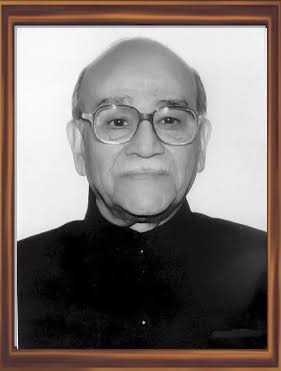
Dr. Benjamin Peary Pal (26 May 1906 – 14 September 1989) was one of India’s most influential agricultural scientists, plant breeders and institution builders. He is particularly remembered for his pioneering work on wheat breeding and rust-resistant varieties, his leadership of the Indian Agricultural Research Institute (IARI), and his role as the first Director General of the Indian Council of Agricultural Research (ICAR) after its reorganisation in 1965.
Pal’s research focused especially on developing wheat varieties that could withstand diseases while maintaining desirable characteristics such as good grain quality and high yield. His work on NP 809 was particularly significant because the variety showed resistance to three major wheat rusts—stem, leaf and stripe rust.
He was also an enthusiastic horticulturist and rose breeder. He founded the Rose Society of India and Bougainvillea Society of India, and wrote extensively about roses.
His national contributions were recognised through the Padma Shri (1958), Padma Bhushan (1968) and Padma Vibhushan (1987), while internationally he was elected a Fellow of the Royal Society (FRS) in 1972.
2. Quick Facts
| Particular | Information |
|---|---|
| Full Name | Benjamin Peary Pal |
| Popular Name | B. P. Pal / Dr. B. P. Pal |
| Birth Name | Brahma Das Pal |
| Date of Birth | 26 May 1906 |
| Place of Birth | Mukandpur, Punjab, British India |
| Nationality | Indian |
| Profession | Agricultural scientist, plant breeder, botanist and agronomist |
| Main Field | Plant genetics, crop improvement and agricultural science |
| Specialisation | Wheat breeding and disease resistance |
| Major Institution | Indian Agricultural Research Institute (IARI) |
| Major Leadership Role | First Director General of ICAR after its 1965 reorganisation |
| Years Active | Approximately 1932–1972 in his principal scientific and administrative career |
| Date of Death | 14 September 1989 |
| Major Awards | Padma Shri, Padma Bhushan, Padma Vibhushan, Fellowship of the Royal Society |
Sources describe Pal as born in Mukandpur and raised partly in Burma after his father moved there as a medical officer. He studied at Rangoon University and Cambridge before beginning his agricultural research career.
Native name / birth name
His birth name was Brahma Das Pal. He later adopted the name Benjamin Peary Pal while studying at St. Michael’s School in Maymyo, Burma, in 1914.
3. Award Information
Dr. B. P. Pal is unusual because he received all three major Padma awards during his lifetime.
A. Padma Shri — 1958
| Award Detail | Information |
|---|---|
| Award Name | Padma Shri |
| Award Year | 1958 |
| Category | Science and Engineering |
| Recipient | Dr. Benjamin Peary Pal |
| Award record location | Delhi |
The original 1958 Gazette of India notification identifies Dr. Benjamin Peary Pal, Director, Indian Agricultural Research Institute, New Delhi, among the Padma Shri awardees. The Government’s current Padma database also records his award as Padma Shri (1958), Science and Engineering.
Why was he recognised?
The award recognised his contribution to agricultural science and plant breeding, particularly his work at the Indian Agricultural Research Institute.
B. Padma Bhushan — 1968
| Award Detail | Information |
|---|---|
| Award Name | Padma Bhushan |
| Award Year | 1968 |
| Category | Science and Engineering |
| Recipient | Dr. Benjamin Peary Pal |
| Award record location | Punjab |
The Government of India’s official Padma database records Dr. Benjamin Peary Pal — Padma Bhushan, 1968 — Science and Engineering.
Why was he recognised?
By this time, Pal had become one of India’s leading agricultural scientists and institution builders. His work on wheat breeding, disease resistance, agricultural research coordination and scientific education had become nationally important.
C. Padma Vibhushan — 1987
| Award Detail | Information |
|---|---|
| Award Name | Padma Vibhushan |
| Award Year | 1987 |
| Category | Agricultural Sciences |
| Recipient | Dr. Benjamin Peary Pal |
| Location | New Delhi |
The official 26 January 1987 Presidential Secretariat notification specifically lists:
“Dr. Benjamin Peary Pal (Agricultural Sciences), New Delhi.”
among the Padma Vibhushan awardees.
This was the highest Padma honour he received and represented the culmination of his contribution to Indian agricultural science.
Presented By
For your blog, I recommend not inserting a specific ceremony date or President’s name unless you have the original investiture-ceremony record. The award notification establishes the honour and date of announcement, but the notification itself does not establish the ceremony date.
Citation / Official Reason
For the 1987 Padma Vibhushan, the official notification identifies his field simply as Agricultural Sciences.
For the 1958 and 1968 awards, the official database classifies his field as Science and Engineering.
Previous and Next Recipients
Because the Padma awards have multiple recipients in the same year, there is no single “previous recipient” or “next recipient.”
For comparison, among the 1968 Padma Bhushan recipients were scientists such as Brahm Prakash and C. R. Rao, as well as personalities from medicine, literature, arts and public affairs.
4. Why Did Benjamin Peary Pal Receive the Awards?
Pal was recognised for a combination of scientific research, agricultural development and institution building.
His most important contributions included:
- Breeding disease-resistant wheat.
- Developing wheat varieties resistant to major rust diseases.
- Improving crop breeding methods.
- Strengthening agricultural research institutions.
- Building coordinated, nationwide agricultural research programmes.
- Developing agricultural education and scientific manpower.
- Leading IARI.
- Becoming the first Director General of the reorganised ICAR.
- Supporting plant genetic-resource conservation.
- Promoting horticulture and rose breeding.
His importance extended beyond a single crop. He helped establish a national system of coordinated agricultural research, which became increasingly important during India’s agricultural transformation in the 1960s.
5. Early Life
Benjamin Peary Pal was born on 26 May 1906 at Mukandpur, in Punjab during the British period. His family originally came from the Jalandhar region. His father, Dr. Rala Ram, was a medical officer and moved to Burma for his work.
Pal spent much of his childhood and youth in Burma.
His early exposure to plants and gardening helped shape interests that continued throughout his life. While studying at St. Michael’s School in Maymyo, he changed his name from Brahma Das Pal to Benjamin Peary Pal.
Interestingly, his interest in roses began early. A rose garden associated with his school is often mentioned as an influence on his lifelong fascination with ornamental plants.
6. Education
Pal had a strong academic record.
Rangoon University
He studied at Rangoon University, where he obtained his B.Sc. and M.Sc. qualifications. His master’s research involved Burmese Charophyta, a group of green algae.
University of Cambridge
He subsequently went to the University of Cambridge for doctoral research.
At Cambridge, he worked under leading agricultural scientists Sir Rowland Biffen and Sir Frank Engledow. His research examined hybrid vigour in wheat, exploring how crossing different varieties could potentially improve crop performance. He received his Ph.D. in 1933.
This research became an important foundation for his later career as a plant breeder.
7. Career Journey
Early career in Burma
In 1932, Pal began working as a rice research officer in Burma.
His experience there gave him practical exposure to crop research and agricultural problems.
Joining the Imperial Agricultural Research Institute
In 1933, he returned to India and joined the Imperial Agricultural Research Institute at Pusa, Bihar, as an Economic Botanist.
The institute moved to New Delhi in the 1930s following an earthquake at Pusa and later became the Indian Agricultural Research Institute (IARI) after independence.
Wheat research
Pal became increasingly focused on wheat breeding, particularly the problem of rust diseases, which could seriously reduce wheat production.
In 1934, he initiated systematic breeding work aimed at developing rust-resistant wheat. He worked with other scientists to combine disease resistance with good grain quality and yield.
Director of IARI
In 1950, Pal became the first Indian Director of IARI. He remained in this position until 1965.
Under his leadership, IARI became an increasingly important centre for agricultural research and training.
First Director General of ICAR
In 1965, Pal became the first Director General of the reorganised Indian Council of Agricultural Research (ICAR). He served until his retirement in 1972.
This was a crucial period for Indian agriculture because it coincided with the beginning of the Green Revolution.
Environmental work after retirement
After retiring from ICAR, Pal continued contributing to public policy. He served as the first chairman of the National Committee on Environmental Planning and Coordination, according to biographical sources.
8. Major Achievements
1. Development of rust-resistant wheat
One of Pal’s greatest scientific achievements was his work on wheat varieties resistant to rust diseases.
His research helped combine:
- Disease resistance
- Good grain quality
- High yield
- Agronomic suitability
This was an important contribution to wheat improvement in India.
2. NP 809 wheat
The wheat variety NP 809 is particularly associated with Pal’s research.
It was notable for resistance to the three major rust types:
- Stem rust
- Leaf rust
- Stripe rust
This made it an important milestone in wheat breeding.
3. Coordinated agricultural research
Pal was a major advocate of coordinated research across institutions and regions.
This approach later became a central feature of India’s agricultural research system.
4. Strengthening IARI
As Director of IARI, he helped develop the institution’s research and educational capacity.
5. First Director General of ICAR
His appointment as the first Director General of the reorganised ICAR in 1965 was one of the most important administrative milestones of his career.
6. Agricultural education
He promoted scientific education and helped establish postgraduate training at IARI, contributing to India’s agricultural research manpower.
7. Plant genetic resources
Pal supported the development of institutional arrangements for the conservation and use of India’s plant genetic resources.
8. Rose breeding
His interests extended beyond food crops. He bred numerous varieties of roses and became a leading authority on rose cultivation in India.
9. Contribution to the Nation
Benjamin Peary Pal made a major contribution to India at a time when the country faced serious agricultural challenges.
Food security
His wheat-breeding research helped create varieties better able to withstand diseases, contributing to more reliable crop production.
Agricultural research
He helped transform agricultural research from a collection of individual projects into a more coordinated national system.
Human-resource development
Through agricultural education and postgraduate training, he helped develop the scientists and specialists needed for India’s expanding agricultural research system.
Green Revolution
Pal’s tenure as ICAR’s first Director General overlapped with the early years of India’s Green Revolution. NABARD describes him as a major agricultural scientist who led ICAR from 1965 to 1972 during the period when the new high-yielding crop technology was introduced.
It is important, however, not to describe Pal as the sole “father of India’s Green Revolution.” The transformation involved many scientists, policymakers, farmers and institutions, including M. S. Swaminathan, C. Subramaniam and Norman Borlaug.
Environmental awareness
After his ICAR career, Pal also became involved in environmental planning and coordination.
10. Other Awards and Honours
Padma Shri — 1958
Field: Science and Engineering.
Padma Bhushan — 1968
Field: Science and Engineering.
Fellow of the Royal Society — 1972
Pal was elected a Fellow of the Royal Society (FRS) in 1972, a major international scientific distinction.
Padma Vibhushan — 1987
Field: Agricultural Sciences. The official 1987 Presidential notification records the award.
Other recognition
He was also associated with the Indian National Science Academy (INSA) and served as its president in 1975, according to biographical accounts.
11. Legacy and Influence
B. P. Pal’s legacy can be seen in several areas of Indian science.
Agricultural research institutions
He helped strengthen IARI and played a foundational role in the reorganised ICAR.
Wheat science
His research on rust resistance remains an important chapter in the history of Indian wheat breeding.
National research coordination
His emphasis on interdisciplinary and inter-institutional research helped shape the coordinated agricultural research model in India.
Roses and horticulture
Pal’s contribution wasn’t limited to crops. He developed rose varieties and wrote major works on roses, demonstrating his interest in both scientific agriculture and horticulture.
Institutional memory
A rose garden at IARI has been associated with his memory, reflecting his lifelong passion for roses.
Scientific inspiration
India’s Department of Science and Technology describes him as “The Architect of ICAR” and highlights his role as a plant breeder, agronomist and institution builder.
12. Interesting Facts
1. His original name was Brahma Das Pal
He later adopted the name Benjamin Peary Pal while studying in Burma.
2. He was born in Punjab but grew up partly in Burma
His father moved to Burma as a medical officer, and Pal received much of his early education there.
3. He studied both botany and agricultural science
His academic path took him from Rangoon University to Cambridge, where he studied wheat genetics and hybrid vigour.
4. He was a scientist and rose enthusiast
He combined his professional interest in crop science with a personal passion for roses.
5. He founded horticultural societies
He was associated with the founding of the Rose Society of India and Bougainvillea Society of India.
6. He wrote a major book about roses
His book The Rose in India was published by ICAR in 1966 and ran to 389 pages.
7. He was a Fellow of the Royal Society
He became an FRS in 1972, placing him among internationally recognised scientists.
8. He received three different Padma awards
He received:
Padma Shri → Padma Bhushan → Padma Vibhushan
in 1958, 1968 and 1987, respectively.
9. He remained interested in environmental issues
After retiring from ICAR, he continued public service through environmental planning work.
13. Quotes
One of the most memorable lines associated with B. P. Pal appears in his writings on roses:
“The gate of life swings to and fro,
And soon, too soon, it closes…”
The lines are associated with Pal’s book The Rose: Its Beauty and Science and express his philosophical connection between the shortness of life and the beauty of roses.
For your blog, you can also use this editorial summary, but should not attribute it directly to Pal:
“B. P. Pal combined scientific innovation with institution building, helping lay the foundations of modern agricultural research in India.”
This is a description of his legacy, not a direct quotation.
14. Timeline
| Year | Major Event |
|---|---|
| 1906 | Born on 26 May at Mukandpur, Punjab |
| 1914 | Adopted the name Benjamin Peary Pal while studying at St. Michael’s School in Burma |
| 1920s | Studied at Rangoon University |
| 1929 | Completed M.Sc. in Botany |
| 1929–1933 | Conducted doctoral research at Cambridge on hybrid vigour in wheat |
| 1932 | Began work as a rice research officer in Burma |
| 1933 | Returned to India and joined the Imperial Agricultural Research Institute at Pusa |
| 1934 | Began systematic breeding work for rust-resistant wheat |
| 1937 | Became Imperial Economic Botanist at IARI |
| 1950 | Became the first Indian Director of IARI |
| 1954 | Developed the important NP 809 wheat variety associated with resistance to three rust diseases |
| 1958 | Received the Padma Shri |
| 1965 | Became the first Director General of the reorganised ICAR |
| 1968 | Received the Padma Bhushan |
| 1972 | Retired from ICAR and was elected Fellow of the Royal Society |
| 1975 | Served as President of the Indian National Science Academy, according to biographical accounts |
| 1987 | Received the Padma Vibhushan in Agricultural Sciences |
| 1989 | Died on 14 September |
The career dates are supported by biographical and institutional sources, while the Padma years are confirmed by the Government of India’s official records.
15. References
For publication, I recommend using the following sources, especially the official Government records.
1. Government of India — Padma Awards
The official Padma database confirms his 1958 Padma Shri and 1968 Padma Bhushan.
Government of India — Padma Awards database
2. 1958 Padma Shri Gazette
The original Gazette of India notification identifies Dr. Benjamin Peary Pal as Director of IARI and a Padma Shri recipient.
3. 1987 Presidential Secretariat Notification
The official notification records his Padma Vibhushan for Agricultural Sciences.
4. Department of Science & Technology, Government of India
The DST’s India Science profile describes Pal as an agricultural scientist, plant breeder, agronomist, IARI director and first Director General of ICAR.
India Science — Benjamin Peary Pal: The Architect of ICAR
5. IIT Madras — Shaastra
The IIT Madras article provides useful historical context about Pal’s wheat research and NP 809.
IIT Madras Shaastra — The Unsung Heroes of Agriculture
6. Royal Society
His election as a Fellow of the Royal Society in 1972 is documented in the Royal Society fellowship records.
7. Google Books — The Rose in India
Pal’s 1966 book The Rose in India was published by ICAR.
16. Related Personalities
M. S. Swaminathan
Dr. M. S. Swaminathan succeeded Pal as Director General of ICAR in 1972 and became one of India’s most important agricultural scientists. Pal’s generation helped create the institutional and research environment in which Swaminathan and others worked. NABARD’s historical account places Pal at ICAR from 1965–72 and Swaminathan from 1972–79.
Norman E. Borlaug
Borlaug was a central figure in developing high-yielding, semi-dwarf wheat varieties that later played an important role in India’s Green Revolution.
C. Subramaniam
As Union Minister for Food and Agriculture, C. Subramaniam was an important policymaker during India’s agricultural transformation in the 1960s. Pal’s ICAR leadership overlapped with this period.
K. C. Mehta
Mehta was an important collaborator in wheat disease research and breeding, particularly in the development of rust-resistant wheat varieties.
Sir Rowland Biffen
Biffen was one of Pal’s Cambridge mentors and an influential wheat geneticist.
Sir Frank Engledow
Engledow was another of Pal’s Cambridge mentors and played an important role in his doctoral research.
17. Frequently Asked Questions (FAQ)
Who was Benjamin Peary Pal?
Benjamin Peary Pal was an Indian agricultural scientist, plant breeder and agronomist who specialised in wheat genetics and crop improvement. He also became the first Director General of the reorganised ICAR.
When was Benjamin Peary Pal born?
He was born on 26 May 1906.
Where was Benjamin Peary Pal born?
He was born at Mukandpur in Punjab, then part of British India.
What was Benjamin Peary Pal’s original name?
His birth name was Brahma Das Pal. He later adopted the name Benjamin Peary Pal.
What did Benjamin Peary Pal study?
He studied botany at Rangoon University and subsequently completed doctoral research at the University of Cambridge, where he studied hybrid vigour in wheat.
What was B. P. Pal famous for?
He was famous for his work in wheat breeding, rust resistance, agricultural research administration and institution building.
What was NP 809?
NP 809 was a wheat variety associated with Pal’s breeding work and notable for resistance to three major wheat rust diseases.
Was B. P. Pal involved in the Green Revolution?
Yes. He was the first Director General of the reorganised ICAR from 1965 to 1972, a period that coincided with the launch and expansion of India’s Green Revolution.
When did Benjamin Peary Pal receive the Padma Shri?
He received the Padma Shri in 1958 in Science and Engineering.
When did he receive the Padma Bhushan?
He received the Padma Bhushan in 1968 in Science and Engineering.
When did he receive the Padma Vibhushan?
He received the Padma Vibhushan in 1987 in Agricultural Sciences.
Was Benjamin Peary Pal a Fellow of the Royal Society?
Yes. He was elected Fellow of the Royal Society (FRS) in 1972.
Did B. P. Pal work only on wheat?
No. Although wheat breeding was central to his career, he also worked on agricultural research policy, plant genetic resources, genetics and plant breeding education, roses and bougainvillea.
Did Benjamin Peary Pal breed roses?
Yes. He bred numerous rose varieties and was a major promoter of rose cultivation and horticultural research in India.
Which book did B. P. Pal write about roses?
One of his major works was The Rose in India, published by the Indian Council of Agricultural Research in 1966.
When did Benjamin Peary Pal die?
He died on 14 September 1989, aged 83.
About the Author