

1. Introduction
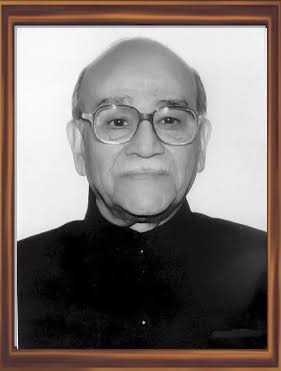
Manikonda Chalapathi Rau was one of the prominent figures of Indian English-language journalism in the 20th century.
He belonged to the generation of journalists who worked both during India’s freedom struggle and during the formative decades after Independence. His career was closely connected with the National Herald, the newspaper founded by Jawaharlal Nehru in 1938.
Rau was known for his strong editorial voice, political commentary, knowledge of English literature and independent approach to journalism. His weekly column “Off the Record,” written under the pseudonym “Magnus,” became widely read during his years at the Hindustan Times.
Beyond newspaper editing, he contributed to the organisation of journalists, served on press and international bodies, represented India at the United Nations, and wrote books on journalism, politics and prominent Indian personalities.
2. Quick Facts
| Particular | Details |
|---|---|
| Full Name | Manikonda Chalapathi Rau |
| Common Name | M. Chalapathi Rau |
| Other Names | M. C.; Magnus |
| Date of Birth | 1908 or 1910 |
| Place of Birth | Visakhapatnam district, Madras Presidency, British India |
| Modern Location | Andhra Pradesh, India |
| Nationality | Indian |
| Profession | Journalist, editor, author and public intellectual |
| Field of Achievement | Journalism, literature, public affairs and press organisation |
| Known For | Editing the National Herald and contributions to Indian journalism |
| Major Newspaper | National Herald |
| Years as National Herald Editor | 1946–1978 |
| Major Award | Padma Bhushan, 1968 |
| Award Field | Literature and Education |
| Award Status | Later returned |
| Date of Death | 25 March 1983 |
| Place of Death | Delhi, India |
| Age at Death | Approximately 73–75 |
The 1983 Triveni memorial records his birth as “in or about 1908”, while other sources give 1910. It confirms his death on 25 March 1983.
3. Award Information
Padma Bhushan — 1968
The principal national honour associated with Manikonda Chalapathi Rau was the Padma Bhushan, awarded in 1968.
| Award Detail | Information |
|---|---|
| Award Name | Padma Bhushan |
| Award Category | Literature and Education |
| Award Year | 1968 |
| Awardee | Manikonda Chalapathi Rau |
| Field of Achievement | Journalism / Literature and Education |
| Presented By | Government of India |
| Ceremony Date | Exact date should not be stated without a primary ceremony record |
| Status | Returned by Rau |
| Reason for recognition | Journalistic eminence and contribution to Indian journalism |
Contemporary Triveni memorial material explicitly states that he “was awarded the Padma Bhushan in recognition of his journalistic eminence in the country” and that he subsequently returned it.
The Government of India later recorded in Parliament that M. Chalapathi Rau had returned the Padma Bhushan. A 10 August 1983 parliamentary answer lists him among recipients who had returned national awards.
Did he accept the Padma Bhushan?
No, not permanently. He returned it.
This is an important distinction for your blog. He was awarded the Padma Bhushan in 1968, but subsequently returned the award. The Triveni memorial attributes his decision to his belief that accepting official honours could conflict with his independent spirit.
Previous and next recipients
The Padma Bhushan is awarded to multiple people each year, so there was no single “previous” or “next” recipient.
Other notable 1968 Padma Bhushan recipients included Brahm Prakash, Benjamin Peary Pal, C. R. Rao, Bismillah Khan, Sam Manekshaw, K. Shivaram Karanth and Gujarmal Modi.
4. Why Did Manikonda Chalapathi Rau Receive the Award?
Rau received the Padma Bhushan in recognition of his journalistic eminence and contribution to Indian journalism.
His achievements included:
- Long-term leadership of the National Herald.
- Contribution to Indian journalism during the freedom movement.
- Influential political and social commentary.
- Organisation of journalists through the Indian Federation of Working Journalists.
- Work related to the Press Commission and journalists’ working conditions.
- Participation in international press organisations.
- Contribution to literature through books on journalism, politics and Indian leaders.
His career illustrates the importance of journalism not merely as newspaper production but as an institution connected with democracy, public debate, freedom of expression and national development.
5. Early Life
Manikonda Chalapathi Rau was born in the Visakhapatnam district of the then Madras Presidency.
His exact year of birth is disputed. Sources variously give 1908 and 1910. A 1983 memorial published in Triveni was particularly cautious, stating that he was born “in or about 1908” because his exact date of birth was unavailable.
His father was a police officer, and Rau received his early education in his native district.
He subsequently moved to Madras for higher education, where he studied English literature.
6. Education
Rau studied at Presidency College, Madras, where he obtained an M.A. in English Language and Literature in 1929.
He then studied law at Madras Law College.
After completing his legal studies, he apprenticed in the chambers of Pappu Somasundaram, a prominent lawyer of the Madras Bar, and enrolled as an advocate around 1932. He briefly practised law in Visakhapatnam.
Although trained in law, his career ultimately moved toward journalism, writing and public affairs.
7. Career Journey
Early legal career
After completing his law education, Rau initially practised as an advocate. However, journalism soon became his principal profession.
Association with the National Herald
Rau’s political writings attracted the attention of Jawaharlal Nehru.
When Nehru established the National Herald in Lucknow in 1938, Rau joined its staff as an Assistant Editor and leader-writer.
The newspaper became an important voice during India’s freedom movement.
Freedom struggle
During the independence movement, Rau was associated with the underground press movement. The National Herald itself faced difficulties during British rule and eventually suspended publication during the Quit India period.
Hindustan Times
After the National Herald was closed, Rau moved to Delhi and joined the Hindustan Times as an Assistant Editor under Devdas Gandhi.
He wrote a weekly column called “Off the Record” using the pseudonym “Magnus.” The column became widely known among Indian readers.
Return to National Herald
When the National Herald was revived, Rau returned to Lucknow.
He became its Joint Editor and subsequently took over as Editor on 1 July 1946. He remained associated with the newspaper for approximately 32 years, until 1978.
From 1968, he worked from Delhi after the National Herald started a Delhi edition.
Indian Federation of Working Journalists
Rau played an important role in organising Indian journalists.
He was a founding figure in the Indian Federation of Working Journalists (IFWJ) and served as its first president from 1950 to 1955.
He advocated better working conditions and professional organisation for journalists.
Press Commission
He was also associated with efforts that led to the establishment of India’s first Press Commission.
The 1983 Triveni memorial credits him with helping bring about the Press Commission and the subsequent Wage Board that addressed journalists’ salaries and service conditions.
International work
Rau participated in several international organisations and conferences.
His roles included:
- Member of the initiating committee of the International Press Institute.
- Participation in UNESCO press-related activities.
- Member of UNESCO advisory and expert bodies.
- Delegate to UNESCO conferences.
- Representative of India at the United Nations General Assembly in 1958.
Relationship with Jawaharlal Nehru
Rau was a close associate and admirer of Jawaharlal Nehru, but his association with Nehru did not prevent him from expressing criticism through his journalism.
He also led an Indian press delegation accompanying Nehru on his 1955 tour of the Soviet Union, Poland and Yugoslavia.
Retirement
Rau left the National Herald in 1978.
He then devoted more time to writing books, essays and other literary and journalistic projects.
Shortly before his death, he became Chief Editor of Meridian International, a non-political monthly publication in Delhi.
8. Major Achievements
1. Long-serving editor of the National Herald
Rau served as editor of the National Herald from 1946 to 1978, making him one of the newspaper’s most important editorial figures.
2. Influential journalist
His political commentary and editorial writing made him one of the prominent voices of Indian journalism.
3. “Magnus” column
His Hindustan Times column “Off the Record,” written as “Magnus,” became highly popular.
4. Organising Indian journalists
He played an important role in the creation and development of the Indian Federation of Working Journalists.
5. Press reform
He contributed to efforts concerning the Press Commission and journalists’ wage and service conditions.
6. International representation
He represented India in international press and diplomatic forums, including the UN General Assembly.
7. Author
He wrote books about Indian politics, journalism and prominent national figures.
9. Contribution to the Nation
Manikonda Chalapathi Rau’s contribution to India extended beyond newspaper editing.
Contribution to freedom journalism
He worked with the nationalist press during the struggle against British rule and was associated with the underground press movement.
Contribution to freedom of expression
Through his editorials and public writings, he defended the importance of an independent press.
Contribution to journalists’ welfare
His work in organising journalists helped establish a stronger professional voice for India’s working journalists.
Contribution to press reform
His association with the Press Commission and journalists’ wage issues helped draw attention to professional standards and working conditions in the newspaper industry.
Contribution to public debate
His books and editorials contributed to discussions about Indian politics, democracy, journalism and national development.
10. Other Awards and Honours
The Padma Bhushan (1968) is the principal major civilian honour associated with Rau.
However, his influence was also reflected in professional and institutional positions, including:
- First President of the Indian Federation of Working Journalists.
- Participation in the International Press Institute.
- Work with UNESCO.
- Representation at the United Nations General Assembly.
- Association with the Nehru Memorial Museum and Library.
- Association with the Nehru Foundation for International Understanding.
- Membership of various press and cultural bodies.
Returned Padma Bhushan
His decision to return the Padma Bhushan is itself an important part of his public legacy.
A 1983 answer in the Indian Parliament confirms that M. Chalapathi Rau was among those who had returned national awards.
11. Legacy and Influence
Rau is remembered as one of the significant editors of India’s English-language press.
His legacy rests on four major areas:
Journalism
He demonstrated the importance of editorial independence, political analysis and literary quality in journalism.
Press freedom
His career reflected a strong belief in the journalist’s responsibility to question authority.
Journalists’ rights
His work with the Indian Federation of Working Journalists helped establish a stronger institutional voice for working journalists.
Literature
His books and essays preserved his views on Indian politics, journalism and major national personalities.
The Triveni memorial described him as a journalist, author, man of letters and humanist, while another memorial described him as a leading figure of Indian journalism.
12. Interesting Facts
- His birth year is disputed. Sources give either 1908 or 1910.
- He was trained as a lawyer before making journalism his principal career.
- He had an M.A. in English Language and Literature from Presidency College, Madras.
- He used the pseudonym “Magnus” for his Hindustan Times column.
- He edited the National Herald for about 32 years.
- He was a close associate of Jawaharlal Nehru.
- Despite his association with Nehru, he could also criticise Nehru’s policies in his editorials.
- He helped organise the Indian Federation of Working Journalists.
- He represented India at the UN General Assembly in 1958.
- He received the Padma Bhushan but later returned it.
- He was unmarried and was known for his relatively simple lifestyle.
- He had a strong interest in English literature and Carnatic music.
13. Quotes
Several statements about Rau have survived in contemporary recollections.
Jawaharlal Nehru reportedly described him as “the ablest journalist in India today” at a National Herald jubilee celebration.
Another contemporary assessment described him as a journalist whose writing combined learning, independence and literary quality.
A useful quote for your blog
“He was a journalist, author, man of letters and humanist.”
This description comes from the 1983 Triveni memorial rather than being a quotation by Rau himself.
Editorial note: Avoid attributing motivational quotations found on unsourced biography websites directly to Rau. His documented legacy is better represented through his editorials, books and contemporary tributes.
14. Timeline
| Year | Event |
|---|---|
| 1908 or 1910 | Born in Visakhapatnam district |
| 1929 | Completed M.A. in English Language and Literature |
| c. 1932 | Enrolled as an advocate after studying law |
| 1930s | Began becoming active in journalism |
| 1938 | Joined National Herald as Assistant Editor and leader-writer |
| 1940s | Associated with the nationalist/underground press |
| 1940s | Worked as Assistant Editor at Hindustan Times |
| 1940s | Wrote the “Off the Record” column as “Magnus” |
| 1946 | Became Editor of National Herald |
| 1950–1955 | First President of Indian Federation of Working Journalists |
| 1952 | Associated with Indian goodwill mission to China |
| 1955 | Led Indian Press Delegation accompanying Nehru on his international tour |
| 1956 | Worked with UNESCO press-related bodies |
| 1958 | Represented India at the UN General Assembly |
| 1968 | Received Padma Bhushan in Literature and Education |
| 1968 | Began working from Delhi edition of National Herald |
| 1978 | Left National Herald |
| 1978/69 | Returned the Padma Bhushan; sources differ on exact timing |
| 1983 | Died in Delhi on 25 March |
| 1983 | Contemporary memorials appeared in Triveni |
The exact year of the award’s return is reported differently in secondary sources, so for a blog I recommend simply writing “He later returned the Padma Bhushan.” The parliamentary record confirms the return but does not require you to give a specific return date.
15. References
For a reliable blog, I recommend giving preference to contemporary and institutional sources.
1. Government of India — Parliamentary Record
A parliamentary answer from August 1983 confirms that M. Chalapathi Rau returned the Padma Bhushan.
2. Triveni — “In Memorium: M. Chalapati Rau”
This 1983 memorial provides valuable information about his education, career, journalism work, Press Commission involvement, international activities and death.
3. Triveni — “Chalapathi Rau: A Doyen among Journalists”
This contemporary tribute discusses his reputation as an editor, work with journalists’ organisations, Press Commission involvement and decision to return the Padma Bhushan.
4. India Today Archives
The India Today archives contain contemporary reporting concerning Rau’s resignation from the National Herald in 1978 and his views about the newspaper.
5. Rekhta — M. Chalapati Rau
Rekhta identifies his real name as Manikonda Chalapathi Rau and gives 1910–1983 as the biographical dates.
16. Related Personalities
Jawaharlal Nehru
Nehru founded the National Herald and had a long association with Rau. Nehru’s political and intellectual influence was an important part of Rau’s journalistic career.
Devdas Gandhi
Devdas Gandhi was editor of the Hindustan Times when Rau worked there as Assistant Editor.
Mahatma Gandhi
Rau’s journalism developed during the period of India’s freedom struggle, when Gandhi’s calls for resistance and press freedom strongly influenced nationalist journalism.
Khushwant Singh
Khushwant Singh became involved with the National Herald after Rau’s departure, an appointment that contributed to Rau’s 1978 resignation from his editorial leadership role.
K. Rama Rao
Rama Rao was the first editor of the National Herald and worked with Rau during the newspaper’s early years.
17. Frequently Asked Questions (FAQ)
Who was Manikonda Chalapathi Rau?
Manikonda Chalapathi Rau was an eminent Indian journalist, editor and author, best known for his long association with the National Herald.
What was M. Chalapathi Rau famous for?
He was famous for his editorial work, his association with the National Herald, his “Magnus” column in the Hindustan Times, and his contribution to organising Indian journalists.
When was Manikonda Chalapathi Rau born?
His birth year is disputed. Sources give 1908 or 1910. A 1983 contemporary memorial gives approximately 1908.
Where was he born?
He was born in the Visakhapatnam district of the former Madras Presidency, now in Andhra Pradesh, India.
What was Manikonda Chalapathi Rau’s profession?
He was primarily a journalist, editor and author, although he also trained and briefly worked as a lawyer.
What newspaper did he edit?
He was the long-serving editor of the National Herald, serving from 1946 until 1978.
What was his pseudonym?
He used the pseudonym “Magnus” for his “Off the Record” column in the Hindustan Times.
Which award did Manikonda Chalapathi Rau receive?
He received the Padma Bhushan in 1968 in the field of Literature and Education.
Did he accept the Padma Bhushan?
He was awarded the Padma Bhushan but later returned it. The Government of India confirmed his returned award in a parliamentary record.
Why did he return the Padma Bhushan?
A contemporary Triveni tribute says he returned it because he believed that accepting official rewards could compromise the independent spirit he valued.
Was Chalapathi Rau associated with Jawaharlal Nehru?
Yes. He was closely associated with Nehru and the National Herald, while still maintaining an editorial voice capable of criticising political policies.
What did he do for journalists?
He helped organise the Indian Federation of Working Journalists and served as its first president from 1950 to 1955.
Did he work internationally?
Yes. He participated in UNESCO-related activities, was associated with international press organisations and represented India at the UN General Assembly in 1958.
When did Manikonda Chalapathi Rau die?
He died on 25 March 1983 in Delhi, reportedly from a heart attack.
What books did Manikonda Chalapathi Rau write?
His works include Fragments of a Revolution, Gandhi and Nehru, The Press in India, The Press, Jawaharlal Nehru, Govind Ballabh Pant: His Life and Times, and All in All, among others.
About the Author