

1. Introduction
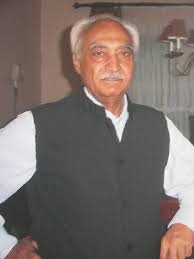
Dr. Bagicha Singh Minhas was one of India’s most brilliant, principled, and influential economists. Famed for his uncompromising intellectual integrity and empirical rigor, he made profound contributions to development economics, agricultural planning, and econometrics. As a co-creator of the landmark Constant Elasticity of Substitution (CES) production function alongside future Nobel laureates, Dr. Minhas shaped both global economic theory and India’s domestic policy framework through his work at the Planning Commission and the Indian Statistical Institute (ISI).
2. Quick facts
- Full Name: Bagicha Singh Minhas (Dr. B. S. Minhas)
- Native Name: ਬਗੀਚਾ ਸਿੰਘ ਮਿਨਹਾਸ (Punjabi) / बगीचा सिंह मिन्हास (Hindi)
- Date of birth: March 28, 1929
- Place Of birth: Damunda, Jalandhar district, Punjab, British India
- Nationality: Indian
- Occupation/ Profession: Economist, Statistician, Policy Analyst, and Academic
- Field of Achievement: Development Economics, Econometrics, Agricultural Economics, and National Planning
- Years Active: 1950s – 2005
3. Award Information
- Award Name: Padma Bhushan
- Award Category: India’s Third-Highest Civilian Award
- Award Year: 2003
- Presented By: Government of India (Conferred by the President of India)
- Date of Ceremony: Republic Day honors cycle, 2003
- Citation/Official Reason: For exceptional and distinguished service to science, engineering, and national economic policy development.
- Previous Recipients (Examples): Prominent scientists, economists, and public intellectuals.
- Next Recipients: Conferred annually as part of national civilian honors.
4. Why they Receive the award?
Dr. Bagicha Singh Minhas was conferred the Padma Bhushan in recognition of his lifetime dedication to rigorous quantitative economics and fearless public policy analysis. He was honored for his foundational econometric models, his empirical studies on poverty alleviation, and his unwavering commitment to evidence-based national planning over political expediency.
5. Early Life
Born in 1929 in the rural village of Damunda in Jalandhar, Punjab, into a modest Sikh farming family, Minhas was the first in his family to attend school, overcoming generational agrarian labor and economic precarity. His formative rural upbringing deeply sensitized him to the structural challenges of Indian agriculture, rural poverty, and resource distribution, inspiring a lifelong academic focus on agrarian economics.
6. Education
- Undergraduate Degree: Earned his Bachelor of Science in Agriculture from Khalsa College, Amritsar (Panjab University).
- Master’s Degree: Obtained his Master’s degree in Economics from Panjab University.
- Advanced Studies Abroad:
- Earned a Master’s degree in Agricultural Economics from the University of Illinois at Urbana-Champaign.
- Completed his Ph.D. in Economics from Stanford University, where his doctoral research focused on international comparisons of factor costs and economic efficiency.
7. Carrier Journey
- Early Academic Roles: Taught economics as an Assistant Professor at Stanford University before returning to India.
- Indian Statistical Institute (ISI): Joined the ISI and served as Head of the Planning Division at ISI Delhi from 1971 to 1986, transforming it into an epicenter for quantitative development research.
- Planning Commission Involvement: Appointed as a member of the Planning Commission of India (1971–1973), where he famously pushed for empirical anti-poverty planning.
- Finance Commission: Served concurrently as a member of the Finance Commission of India (1972–1973).
8. Major Achievements
- The CES Production Function: Co-authored the monumental 1961 paper “Capital-Labor Substitution and Economic Efficiency” alongside Kenneth Arrow, Hollis Chenery, and Robert Solow, deriving the pioneering Constant Elasticity of Substitution (CES) production function.
- Landmark Publications: Authored influential books on development policy, including Planning and the Poor (1974), which critically examined the efficacy of targeted anti-poverty programs.
- Empirical Rigor in Planning: Championed statistical validity and biophysical constraints over rhetorical targets in national Five-Year Plans.
- Padma Bhushan Conferred (2003): Honored with India’s third-highest civilian distinction for his contributions to economic science.
9. Contribution to the nation
Dr. Minhas brought unmatched scientific realism to India’s economic planning. His work exposed the gaps between macro-level growth models and ground-level destitution, forcing policymakers to confront the structural realities of rural unemployment and land reform. Known for his moral courage, his principled exit from the Planning Commission during the 1970s highlighted his refusal to compromise economic truth for political convenience.
10. Other Awards and Honours
- Padma Bhushan (2003) – Government of India
- The Financial Express Award for Economics (1999)
- Fellowships and honorary lifetimes memberships across premier economic associations in India and abroad.
11. Legacy and influence
Dr. Minhas is remembered as a guardian of intellectual honesty in Indian academia. His econometric models remain standard fixtures in global microeconomic theory textbooks, while his domestic policy critiques continue to guide discussions on sustainable resource allocation, agricultural pricing, and welfare economics.
12. Interesting Facts
- Global Collaborations: His co-authorship of the CES production function placed him in direct intellectual partnership with future Nobel laureates (Arrow and Solow), making him one of the few Indian economists to fundamentally shift mainstream global economic theory.
- Uncompromising Voice: He was widely respected across ideological divides because he never tailored his economic findings to suit the political pressures of the ruling establishment, earning a reputation as an economist who “was never afraid to speak his mind”.
13. Quotes
“Economic planning is not about manipulating statistical tables to please political masters; it is about confronting the hard realities of rural poverty and resource scarcity with empirical honesty.”
14. Timeline
- 1929: Born on March 28 in Damunda, Punjab.
- 1961: Co-authors the pathbreaking CES production function paper.
- 1971–1973: Serves as a member of the Planning Commission of India.
- 1974: Publishes his defining work, Planning and the Poor.
- 1971–1986: Heads the Planning Division at the Indian Statistical Institute (ISI), Delhi.
- 2003: Conferred the Padma Bhushan by the Government of India.
- 2005: Passes away, leaving behind an immortal legacy in development economics and public policy.
15. References
- Arrow, Kenneth J., Chenery, Hollis B., Minhas, Bagicha S., and Solow, Robert M. “Capital-Labor Substitution and Economic Efficiency.” The Review of Economics and Statistics (1961).
- Minhas, Bagicha Singh. Planning and the Poor. S. Chand & Co., 1974.
- Ministry of Home Affairs, Government of India – Padma Awards Directories.
- Biographical archives and tributes from Punjab Agricultural University (PAU) and the Indian Statistical Institute.
16. Related Personalities
- Kenneth Arrow (Nobel laureate economist and co-author of the CES function)
- Robert Solow (Nobel laureate economist and co-author of the CES function)
- P. C. Mahalanobis (Legendary founder of the Indian Statistical Institute)
- Sukhamoy Chakravarty (Eminent Indian mathematical economist and planner)
17. Frequently Asked Questions (FAQ)
Q1: What is Dr. Bagicha Singh Minhas best known for?
A: Dr. Bagicha Singh Minhas is best known for co-authoring the revolutionary Constant Elasticity of Substitution (CES) production function in 1961 and for his critical work on poverty estimation and agricultural planning in India.
Q2: What major civilian honor did he receive?
A: He was awarded India’s third-highest civilian honor, the Padma Bhushan, in 2003.
Q3: Which major institutions were associated with his career?
A: He served as a professor at Stanford University, head of the Planning Division at the Indian Statistical Institute (ISI) in Delhi, and as a member of both the Planning Commission and Finance Commission of India.
About the Author




