

1. Introduction
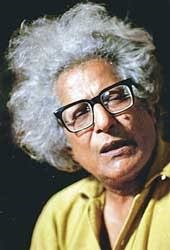
Subhash Mukhopadhyay was one of the most celebrated, influential, and socially conscious poets of 20th-century Indian literature. Popularly known as Padatik Kobi (the “foot-soldier poet”), he revolutionized modern Bengali poetry by steering it away from elite romanticism and grounding it in the stark realities of the working class, political struggle, and human resilience. With a career spanning over six decades, his verse combined striking simplicity with deep revolutionary fervor, making him an enduring voice for the marginalized.
2. Quick facts
- Full Name: Subhash Mukhopadhyay
- Native Name: সুভাষ মুখোপাধ্যায় (Bengali)
- Date of birth: February 12, 1919
- Place Of birth: Krishnanagar, Nadia district, West Bengal, British India
- Nationality: Indian
- Occupation/ Profession: Poet, Essayist, Translator, Journalist, and Children’s Writer
- Field of Achievement: Modern Bengali Poetry, Left-Wing Literature, and Literary Journalism
- Years Active: 1940s – 2003
3. Award Information
- Award Name: Jnanpith Award
- Award Category: India’s Highest Literary Honor
- Award Year: 1991
- Presented By: Bharatiya Jnanpith
- Date of Ceremony: Annual national literary honors cycle
- Citation/Official Reason: For his monumental lifelong contribution to Indian literature, enriching Bengali poetry with modern social realism, uncompromising political integrity, and profound lyrical depth.
- Previous Recipients (Examples): Vinayaka Krishna Gokak, Indira Goswami, Qurratulain Hyder.
- Next Recipients: U. R. Ananthamurthy, Kedarnath Singh, and other literary greats.
4. Why they Receive the award?
Subhash Mukhopadhyay was conferred the Jnanpith Award in 1991 in recognition of his powerful poetic journey that began with his pathbreaking debut Padatik (1940). He was honored for keeping the progressive literary movement alive with language that was direct, accessible, and revolutionary, refusing to separate art from the urgent struggle for human dignity and social justice.
5. Early Life
Born in Krishnanagar and raised in Bengal, Mukhopadhyay witnessed firsthand the socio-economic turmoil of pre-independence India, including the devastating Bengal Famine of the 1940s. Deeply affected by human suffering, inequality, and the struggles of the working class, he gravitated toward left-wing student politics during his college years, laying the intellectual and moral foundation for his future poetry.
6. Education
- Schooling: Completed foundational schooling in West Bengal.
- Higher Education: Graduated with honors in Philosophy from the prestigious Scottish Church College, Calcutta, in 1941.
- Political & Philosophical Grounding: His background in philosophy deeply informed his poetry, allowing him to weave complex existential and Marxist critiques of society into simple, everyday language.
7. Carrier Journey
- Entering Journalism & Activism: Formally joined the Communist Party of India after graduation and worked actively with the Progressive Writers’ Union.
- Journalistic Ventures: Served on the editorial boards of various prominent daily newspapers and literary magazines, notably editing the legendary Bengali literary journal Parichay.
- Children’s Literature Pioneer: Collaborated closely with master filmmaker Satyajit Ray to co-edit the iconic children’s magazine Sandesh during the early 1960s.
- Literary Diplomacy: Served as Organizer-General of the Afro-Asian Writers’ Association and on the Executive Board of the Sahitya Akademi.
8. Major Achievements
- Padatik (The Foot Soldier, 1940): Published his epoch-making debut collection at age 21, which instantly redefined modern Bengali poetic idioms with its conversational yet militant rhythm.
- Sahitya Akademi Award (1964): Conferred India’s premier national literary prize for his celebrated poetry collection Joto Dureii Jai (How Distant I May Be).
- Padma Bhushan (2003): Honored with India’s third-highest civilian distinction by the Government of India.
- Prolific Translation Work: Bridged international cultures by translating works of world literary giants—most notably Turkish poet Nazim Hikmet—into Bengali.
9. Contribution to the nation
Subhash Mukhopadhyay democratized Bengali poetry. He stripped away ornate, esoteric vocabulary and proved that complex political and social truths could be expressed with devastating emotional clarity. Through his poems, journalistic essays, and children’s literature, he fostered a cultural climate that valued democratic freedom, labor rights, and secular humanism.
10. Other Awards and Honours
- Sahitya Akademi Award (1964) – For Joto Dureii Jai
- Deshikottama Award (1970) – Visva-Bharati University
- Afro-Asian Lotus Prize (1977)
- Kumaran Asan Award (Kerala, 1982)
- Mirzo Tursunzoda Prize (USSR, 1982)
- Ananda Puraskar (1991)
- Soviet Land Nehru Award
- Jnanpith Award (1991)
- Padma Bhushan (2003) – Government of India
11. Legacy and influence
Remembered affectionately as the Padatik Kobi, Mukhopadhyay’s poetry remains a touchstone for socially committed art in India. His influence is so deep that the Kolkata Metro rail authorities named a station (Kavi Subhash Metro Station) in his honor, and the Sealdah-New Jalpaiguri Express was famously named the Padatik Express after his debut book. His works continue to inspire generations of activists, writers, and free-thinkers.
12. Interesting Facts
- The “Foot-Soldier” Identity: The title Padatik symbolized his belief that a poet is not an ivory-tower recluse, but a humble foot-soldier walking alongside ordinary people in their daily struggle for survival.
- Collaboration with Satyajit Ray: His editorial partnership with Satyajit Ray on the children’s magazine Sandesh helped shape the literary childhood of generations of Bengali youth.
- Global Resonance: His poetry has been translated into numerous foreign languages, earning him global literary fellowship across Europe and Asia.
13. Quotes
“Phul phutuk na phutuk, ajker din phuler din.”
(Whether flowers bloom or not, today is the day of flowers—a timeless metaphor for hope and revolution even in dark times.)
“If poetry does not speak for the man who works with his hands, if it cannot wipe the sweat off his brow, it is merely an idle whisper in an empty room.”
14. Timeline
- 1919: Born on February 12 in Krishnanagar, West Bengal.
- 1941: Graduates with honors in Philosophy from Scottish Church College.
- 1940: Publishes his landmark debut poetry collection, Padatik.
- 1964: Awarded the Sahitya Akademi Award for Joto Dureii Jai.
- 1991: Conferred India’s highest literary distinction, the Jnanpith Award.
- 2003: Honored with the Padma Bhushan by the Government of India; passes away on July 8 in Kolkata at the age of 84.
15. References
- Wikipedia – Comprehensive Biographical Compilations on Subhash Mukhopadhyay (Poet).
- Basu, Anjan. As Day is Breaking: Selected Poems of Subhash Mukhopadhyay (English translations and critical introductions).
- Sahitya Akademi – Official Award Archives and Fellow Registers.
- The Wire – Essays and retrospectives on Subhash Mukhopadhyay’s literary and prose contributions.
16. Related Personalities
- Sukanta Bhattacharya (Legendary young Marxist poet of Bengal and contemporary)
- Satyajit Ray (Iconic filmmaker and co-editor of Sandesh)
- Nazim Hikmet (Renowned Turkish poet whose works Mukhopadhyay translated)
- Bishnu Dey (Prominent modern Bengali poet and fellow progressive intellectual)
17. Frequently Asked Questions (FAQ)
Q1: What is Subhash Mukhopadhyay best known for?
A: Subhash Mukhopadhyay is best known as a pioneer of modern Bengali poetry, celebrated for his works celebrating working-class resilience, social justice, and revolutionary hope, earning him the moniker Padatik Kobi (the foot-soldier poet).
Q2: What are the highest literary honors he received?
A: He received both of India’s highest literary distinctions: the Sahitya Akademi Award (1964) and the Jnanpith Award (1991), alongside the Padma Bhushan in 2003.
Q3: Did he write anything other than poetry?
A: Yes, he was a versatile writer who authored essays, travelogues, novels, translated foreign literature into Bengali, and edited famous children’s periodicals like Sandesh alongside Satyajit Ray.
About the Author




