

1. Introduction
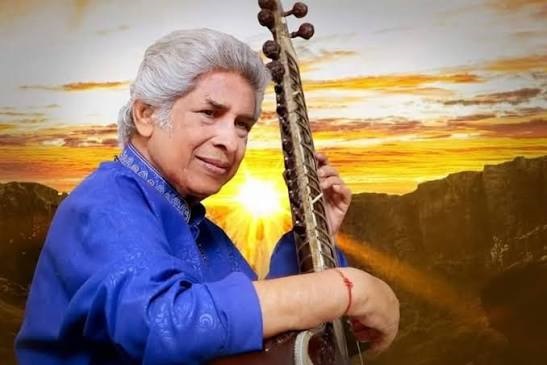
Pandit Devabrata (Debu) Chaudhuri (1935–2021) was an exceptional titan of Hindustani classical music, representing the elite lineage of the Senia-Jaipur Gharana. As a master sitar player, scholar, composer, and educator, he carved out a distinct artistic identity defined by absolute adherence to traditional purity, microtonal precision, and a warm, ringing tone. Beyond his mastery on the concert stage, he dedicated his life to institutionalizing musicology, training generations of global students, and authoring seminal literature on the sitar.
2. Quick Facts
- Full Name: Pandit Devabrata Chaudhuri (Famously known as Debu Chaudhuri)
- Native Name: দেবব্রত চৌধুরী (Bengali)
- Date of Birth: May 30, 1935
- Place of Birth: Mymensingh, British India (now in Bangladesh)
- Date of Death: May 1, 2021 (aged 85) in New Delhi, India
- Nationality: Indian
- Occupation / Profession: Sitar Virtuoso, Musicologist, Academic Administrator, Author
- Field of Achievement: Indian Classical Instrumental Music (Sitar)
- Years Active: c. 1940s – 2021
3. Award Information (Focus: Padma Bhushan)
- Award Name: Padma Bhushan
- Award Category: Civil Honour (India’s third-highest civilian award)
- Award Year: 1992 (Preceded by the Padma Shri in 1974)
- Presented By: The President of India
- Date of Ceremony: 1992
- Citation / Official Reason: For exceptional and distinguished service to the nation in the field of arts, culture, and classical music promotion.
- Previous Recipients: Legendary artists, writers, and nation-builders of India.
- Next Recipients: Succeeding national civilian honorees.
4. Why They Received the Award
Pandit Debu Chaudhuri was conferred the Padma Bhushan in 1992 in recognition of his multi-decadal contribution to enriching Indian culture. He was celebrated not only for taking the profound, meditative depths of the Senia Gharana to global audiences across continents, but also for his rigorous academic work that elevated music education in Indian universities to a respected scholarly standard.
5. Early Life
Born in 1935 in Mymensingh (now part of Bangladesh), Debu Chaudhuri grew up immersed in an environment rich in cultural refinement. He displayed an astonishing affinity for sound and rhythm at a remarkably young age, picking up the sitar at just four years old. His early years were shaped by the turbulence of the partition era, yet music remained his constant anchor, guiding him toward intensive artistic training.
6. Education
- General Studies: Completed foundational school and college education, earning degrees under the University of Calcutta.
- Traditional Training (Talim): Received his foundational lessons from Panchu Gopal Datta, before entering into a lifelong discipleship (gandabandh shagird) under the legendary Ustad Mushtaq Ali Khan, absorbing the intricate vocalism and strict structural purity (gayaki ang) of the Senia-Jaipur tradition.
7. Career Journey
- Early Broadcasts: Made his debut on All India Radio (AIR) in 1953 at the age of eighteen, instantly drawing critical acclaim for his mature phrasing.
- Academic Pioneer at Delhi University: Joined Delhi University as a Reader in 1971, eventually serving as the Dean and Head of the Faculty of Music and Fine Arts (1985–1988), where he designed modern curricula for classical music.
- Global Academic Ambassador: Taught as a visiting professor internationally, including a prestigious tenure at Maharishi International University in Iowa, USA (1991–1994).
8. Major Achievements
- The 17-Fret Tradition: Preserved and performed on the traditional 17-fret sitar rather than the modern 19-fret variant, maintaining historical microtonal authenticity.
- Creation of 8 New Ragas: Composed unique ragas including Bisweswari, Palas-Sarang, Anuranjani, Ashiqui Lalit, Swanandeswari, Kalyani Bilawal, Shivamanjari, and Prabhati Manjari.
- Authoritative Literature: Authored six major books on musicology, including Sitar and Its Techniques, Music of India, and On Indian Music.
- The 24-Hour Raga Project: Recorded a monumental series of 24 compact discs in the US, mapping out ragas specific to all 24 hours of the day.
9. Contribution to the Nation
Pandit Chaudhuri served as a cultural ambassador for India, bridging East and West through lecture-demonstrations and concerts worldwide. Domestically, his most enduring contribution was institutionalizing music: by securing academic parity for classical arts within university frameworks, he ensured that performance was backed by rigorous theoretical understanding.
10. Other Awards and Honours
- Padma Shri (1974) – India’s fourth-highest civilian award.
- Padma Bhushan (1992) – India’s third-highest civilian award.
- Sangeet Natak Akademi Award
- Fellowships from the West Bengal and Delhi Academies of Music.
11. Legacy and Influence
As a master of the Senia-Jaipur Gharana, Chaudhuri’s style was characterized by crystal-clear glides (meend), dynamic jod-jhala execution, and deep meditative focus. His legacy is passionately preserved through the Ustad Mushtaq Ali Khan (UMAK) Center for Culture, which he founded, and through the artistic achievements of his late son and prime disciple, sitar maestro Prateek Chaudhuri.
12. Interesting Facts
- The 17-Fret Debate: While the modern sitar standard shifted to 19 frets to ease multi-octave playing, Chaudhuri fiercely defended the acoustic purity of the traditional 17-fret setup.
- A Man of Gentle Words: Known affectionately as mridubhashi (soft-spoken), he combined elite artistic rigor with profound humility off stage.
- Tragic Demise: He passed away in May 2021 from COVID-19 complications; tragically, his son Prateek succumbed to the virus just days later, marking an immense loss for the sitar community.
13. Quotes
“Music is not merely entertainment; it is the ultimate language to connect human consciousness with the divine.” — Pandit Debu Chaudhuri
14. Timeline
- 1935: Born on May 30 in Mymensingh.
- 1953: Makes his landmark debut broadcast on All India Radio.
- 1974: Conferred the Padma Shri by the Government of India.
- 1985–1988: Serves as Dean and Head of the Faculty of Music at Delhi University.
- 1992: Honored with the Padma Bhushan.
- 2010: Establishes the UMAK Center for Culture.
- 2021: Passes away on May 1 in New Delhi.
15. References
- Wikipedia contributors. “Debu Chaudhuri.” Wikipedia, The Free Encyclopedia.
- The Wire. “Pandit Debu Chaudhuri: A ‘Mridubhashi’ Stalwart of the Jaipur-Senia Tradition”.
- Ministry of Home Affairs, Government of India. “Padma Awards Directory”.
16. Related Personalities
- Ustad Mushtaq Ali Khan: Legendary sitar maestro and Pandit Chaudhuri’s primary guru.
- Prateek Chaudhuri: Accomplished sitar virtuoso, professor, and Pandit Chaudhuri’s son and disciple.
- Pandit Ravi Shankar: Contemporary sitar titan who popularized Indian classical music globally.
17. Frequently Asked Questions (FAQ)
Q1: What gharana did Pandit Debu Chaudhuri belong to?
A: He belonged to the illustrious Senia-Jaipur Gharana, receiving his training under Ustad Mushtaq Ali Khan.
Q2: What was unique about his sitar instrument?
A: He famously adhered to the traditional 17-fret sitar rather than the modern 19-fret design to preserve pure microtonal accuracy.
Q3: What major national honors did he receive?
A: He received both the Padma Shri (1974) and the Padma Bhushan (1992) from the Government of India.
About the Author




