1. Introduction
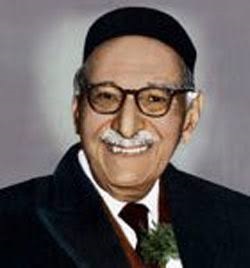
Darashaw Nosherwan Wadia was one of India’s pioneering geologists and among the earliest Indian scientists to serve in the Geological Survey of India. Internationally recognized for his groundbreaking research on the geology and tectonics of the Himalayas, he made lasting contributions to stratigraphy, paleontology, mineral exploration, and geological education. His classic textbook, Geology of India, educated generations of geologists. In recognition of his exceptional contributions to science and engineering, he received the Padma Bhushan in 1958.
2. Quick Facts
| Particular | Details |
|---|---|
| Full Name | Darashaw Nosherwan Wadia |
| Native Name | દારાશા નોશેરવાન વાડિયા (Gujarati) |
| Date of Birth | 23 October 1883 |
| Place of Birth | Surat |
| Date of Death | 15 June 1969 |
| Place of Death | New Delhi |
| Nationality | Indian |
| Occupation / Profession | Geologist, Professor, Scientific Administrator |
| Field of Achievement | Geology, Earth Sciences, Himalayan Geology |
| Years Active | 1906–1969 |
| Known For | Himalayan geology, Geology of India, Geological Survey of India |
3. Award Information
Award Name
Padma Bhushan
Award Category
Science and Engineering
Award Year
1958
Presented By
Government of India
Date of Ceremony
The Padma Awards for 1958 were announced on 26 January 1958. They were presented by the President of India at Rashtrapati Bhavan. The exact investiture date is not widely documented.
Citation / Official Reason
Awarded for his distinguished contributions to geology, scientific research, and the advancement of earth sciences in India, especially his pioneering work on the Himalayas.
Previous Recipients (Optional)
The Padma Bhushan is awarded to multiple individuals annually; therefore, there is no officially designated previous recipient.
Next Recipients
Likewise, there is no officially designated next recipient.
4. Why Did He Receive the Award?
Darashaw Nosherwan Wadia received the Padma Bhushan because of his:
- Pioneering geological research on the Himalayas.
- Contributions to stratigraphy and tectonic studies.
- Leadership in geological surveys and mineral exploration.
- Influential textbook Geology of India.
- Outstanding service to scientific education and research in India.
5. Early Life
Darashaw Nosherwan Wadia was born on 23 October 1883 in Surat, Gujarat, into a Parsi family. He displayed a keen interest in science from an early age and was encouraged by his family to pursue higher education. His fascination with the natural world eventually led him to specialize in geology, a field then in its early stages in India.
6. Education
- Early schooling in Surat and Baroda.
- Studied at Baroda College.
- Graduated with a Bachelor of Science degree.
- Developed expertise in geology through fieldwork and research rather than overseas education, becoming one of the first Indian geologists to achieve international recognition.
7. Career Journey
Academic Career
- Began as a professor of geology at Prince of Wales College, Jammu.
- Conducted extensive geological field studies in the Himalayas.
Geological Survey of India
- Joined the Geological Survey of India (GSI) in 1921.
- Investigated the geology of the Himalayas, Kashmir, and northwestern India.
- Made significant contributions to tectonics, stratigraphy, paleontology, and engineering geology.
Government Service
- Later served as Geological Adviser to the Government of India in the Department of Atomic Energy.
- Advised on mineral resources, petroleum, and geological investigations of national importance.
8. Major Achievements
- Among the first eminent Indian geologists.
- Authored the classic textbook Geology of India (first published in 1919).
- Conducted pioneering research on Himalayan geology.
- Discovered important fossils, including remains of Stegodon ganesa.
- Elected Fellow of the Royal Society (FRS) in 1957.
- Awarded the Padma Bhushan (1958).
- Played a key role in advancing geological science in India.
9. Contribution to the Nation
Darashaw Nosherwan Wadia contributed to India by:
- Advancing geological knowledge of the Himalayas.
- Supporting exploration of mineral and natural resources.
- Training generations of Indian geologists.
- Strengthening scientific institutions.
- Providing geological expertise for national development, including infrastructure and resource planning.
10. Other Awards and Honours
- Padma Bhushan (1958).
- Fellow of the Royal Society (FRS) (1957).
- Lyell Medal (Geological Society of London, 1943).
- Back Award (Royal Geographical Society, 1934).
- Jagdish Bose Memorial Medal (1947).
- Honorary Doctor of Science (D.Sc.) from the University of Delhi.
- The Wadia Institute of Himalayan Geology was named in his honour in 1976.
11. Legacy and Influence
Darashaw Nosherwan Wadia is remembered as:
- The father of modern Himalayan geology in India.
- One of India’s greatest earth scientists.
- A pioneering educator and scientific administrator.
- An inspiration to generations of geologists.
His textbook and research continue to influence geological studies, while the Wadia Institute of Himalayan Geology stands as a lasting tribute to his contributions.
12. Interesting Facts
- He was among the first Indian scientists to gain international recognition in geology.
- His textbook Geology of India remained a standard reference for decades.
- He made important discoveries of prehistoric fossils in the Himalayan region.
- He became a Fellow of the Royal Society, one of the highest scientific honours.
- An Indian commemorative postage stamp was issued in his honour in 1984.
13. Quotes
There are no widely authenticated quotations attributed to Darashaw Nosherwan Wadia in authoritative published sources.
For academic or historical writing, it is preferable to quote directly from his published works, particularly Geology of India, rather than using unattributed quotations.
14. Timeline
| Year | Event |
|---|---|
| 1883 | Born in Surat, Gujarat |
| 1906 | Began teaching geology at Prince of Wales College, Jammu |
| 1919 | Published Geology of India |
| 1921 | Joined the Geological Survey of India |
| 1943 | Received the Lyell Medal |
| 1957 | Elected Fellow of the Royal Society (FRS) |
| 1958 | Awarded the Padma Bhushan |
| 1969 | Passed away on 15 June |
15. References
For a reliable blog, consult:
- Padma Awards Portal
- Wadia Institute of Himalayan Geology
- Geological Survey of India
- The Royal Society
- Geology of India by Darashaw Nosherwan Wadia.
16. Related Personalities
- Salim Ali
- Homi Jehangir Bhabha
- Birbal Sahni
- Meghnad Saha
- Shanti Swarup Bhatnagar
17. Frequently Asked Questions (FAQ)
1. Who was Darashaw Nosherwan Wadia?
He was an Indian geologist, educator, and scientific administrator who pioneered the study of Himalayan geology.
2. When was Darashaw Nosherwan Wadia born?
He was born on 23 October 1883 in Surat, Gujarat.
3. Why did Darashaw Nosherwan Wadia receive the Padma Bhushan?
He received the Padma Bhushan in 1958 for his outstanding contributions to Science and Engineering, particularly his pioneering work in geology and Himalayan research.
4. What is his most famous book?
His best-known work is Geology of India, one of the most influential textbooks in Indian geology.
5. What was his greatest scientific contribution?
His research on the stratigraphy, tectonics, and geological evolution of the Himalayas transformed the understanding of India’s mountain systems.
6. Was Darashaw Nosherwan Wadia a Fellow of the Royal Society?
Yes. He was elected a Fellow of the Royal Society (FRS) in 1957, one of the highest honours in science.
7. Which institute is named after him?
The Wadia Institute of Himalayan Geology in Dehradun was named in his honour in 1976 in recognition of his immense contributions to earth sciences.
8. Why is Darashaw Nosherwan Wadia important?
He laid the foundation for modern geological research in India, trained generations of geologists, and significantly advanced the scientific understanding of the Himalayas and India’s natural resources.
About the Author