

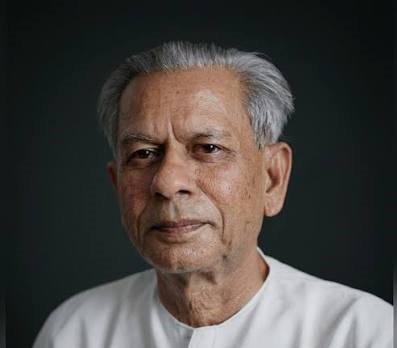
1. Introduction
Pandit Dalsukh Dahyabhai Malvania (1910–2000) was a towering intellectual titan in the fields of Jainology, Buddhism, Prakrit linguistics, and Indian philosophy. As an erudite scholar, editor, and institution builder, he dedicated his life to critically analyzing, editing, and publishing ancient canonical texts. Working alongside contemporaries like Acharya Tulsi and Pandit Sukhlal Sanghvi, Malvania revolutionized traditional Indian scholasticism by integrating rigorous modern academic methodology with deep textual heritage.
2. Quick Facts
- Full Name: Dalsukh Dahyabhai Malvania
- Date of Birth: June 24, 1910
- Place of Birth: Patan, Gujarat, British India
- Date of Passing: May 31, 2000 (aged 89)
- Nationality: Indian
- Occupation/Profession: Scholar, Indologist, Professor, Editor, Author
- Field of Achievement: Jain Studies, Buddhist Philosophy, and Prakrit/Sanskrit Literature
- Years Active: 1930s to late 1990s
3. Award Information (Highlight: Sahitya Akademi Award)
- Award Name: Sahitya Akademi Award
- Award Category: India’s Premier Literary Honor (Translation / Classical Literature category)
- Award Year: 1985
- Presented By: Sahitya Akademi, New Delhi
- Citation/Official Reason: Conferred for his monumental scholarly contributions and edited volumes, recognizing his exceptional acumen in reviving and translating complex philosophical texts into accessible modern scholarship.
- Other Major National Honours:
- Padma Bhushan (1998) – India’s third-highest civilian award, conferred in recognition of his lifetime service to literature and education.
4. Why He Received the Award
Pandit Malvania earned India’s highest civilian and literary distinctions because he rescued obscure, crumbling ancient manuscripts written in Prakrit, Sanskrit, and Apabhramsha, subjecting them to peerless critical analysis. His meticulous editing of foundational Jain philosophical treatises like Niryukti, Bhashya, and Kundakunda’s works established international standards for Indological research. He transformed traditional temple-bound scriptural study into a vibrant, globally respected academic discipline.
5. Early Life
Born in Patan, an ancient historical center of learning and manuscript preservation in Gujarat, Malvania grew up surrounded by a deeply traditional environment. Drawn to spiritual and philosophical inquiry from an early age, he sought out rigorous scholastic training under traditional Jain pandits, absorbing Sanskrit, Prakrit, and logic before formal university education became widespread for textual scholars.
6. Education
- Traditional Studies: Underwent rigorous classical training in Jain philosophy, grammar, and logic under renowned traditional teachers (shastris and pandits).
- Higher Academic Pursuits: Deepened his linguistic and philosophical foundation at premier centers of Indian learning, mastering multiple classical languages including Pali, Prakrit, Sanskrit, and Tibetan.
7. Career Journey
- Early Research & Teaching: Began his academic career associating with prominent research institutions, diving deep into ancient text preservation.
- L.D. Institute of Indology (Ahmedabad): Served for decades as the founding Director of the prestigious L.D. Institute of Indology, turning it into a world-class hub for manuscriptology, rare book archiving, and publishing.
- Banaras Hindu University (BHU): Toured and lectured widely, contributing significantly to university syllabi dealing with comparative religion, Jainism, and Buddhism.
- Global Academic Reach: Collaborated with international scholars and universities, putting Indian classical philosophy on the global academic map.
8. Major Achievements
- Authored, edited, and translated over 50 critical academic volumes on Jainism, Buddhism, and Indian philosophy.
- Key editorial masterpieces include critical editions of foundational texts such as the Nishetha Bhashya, Nayad-dhamma-kahao, and philosophical commentaries by Jinabhadra and Haribhadra.
- Played a pivotal role in establishing the L.D. Series, which published hundreds of rare palm-leaf and paper manuscripts.
9. Contribution to the Nation
Pandit Malvania’s greatest gift to India was the preservation of its fragile manuscript heritage. By establishing systematic cataloging, conservation, and critical editing practices at the L.D. Institute, he saved countless ancient texts from decay and obscurity. Furthermore, by training generations of scholars, he ensured that the rich rationalist traditions of Jain epistemology and ethics remained alive in contemporary academic discourse.
10. Other Awards and Honours
- Padma Bhushan (1998) by the Government of India.
- Mahavir Award for contributions to non-violence and Jain philosophy.
- Felicitations by various national and international Oriental conferences and universities for lifetime achievement in Indology.
11. Legacy and Influence
Pandit Dalsukh Malvania is remembered as a giant who bridged the gap between traditional shastra learning and modern empirical research. His critical approach demonstrated that ancient Indian traditions were deeply rational, pluralistic, and analytical. His students and disciples continue to hold leadership positions in universities worldwide, carrying forward his rigorous standards of textual scholarship.
12. Interesting Facts
- The Patan Heritage: Growing up in Patan—famed for its historic Jnana Bhandars (ancient Jain manuscript libraries)—instilled in him a lifelong obsession with discovering and safeguarding hidden texts.
- Polyglot Extraordinaire: He could read, write, and converse fluently across multiple classical and modern languages, allowing him to compare original Jain texts directly with Buddhist Pali canons and Hindu philosophical systems.
- A Life of Austerity: Despite receiving national honors and international renown, he lived an extraordinarily simple, monastic life dedicated entirely to books and research.
13. Quotes
“True study of ancient texts is not about blind devotion; it is about uncovering the rational core of human experience and ethical living preserved within them.” — Pandit Dalsukh Malvania
14. Timeline
Birth in Patan, Gujarat
June 24, 1910
Born into a culturally rich environment in Patan, laying the groundwork for his future in manuscript studies.
Rigorous Classical Training
1930s-1940s
Masters Sanskrit, Prakrit, and Jain philosophy under traditional masters.
Rise as a Master Editor
1950s-1960s
Publishes groundbreaking critical editions of ancient Jain canonical texts.
Leadership at L.D. Institute
1970s-1980s
Builds the L.D. Institute of Indology into a world-renowned center for research and manuscript conservation.
Sahitya Akademi Award
1985
Honored by the Sahitya Akademi for his monumental literary and editorial contributions.
Awarded Padma Bhushan
1998
Receives India’s third-highest civilian distinction from the Government of India.
Passing in Ahmedabad
May 31, 2000
Passes away at the age of 89, leaving behind an immortal legacy in Indian Indology.
15. References
- Official archives of the L.D. Institute of Indology, Ahmedabad.
- Journal of the American Oriental Society and Indian philosophical journals.
- Historical overviews from the Sahitya Akademi and Government of India award directories.
16. Related Personalities
- Pandit Sukhlal Sanghvi (Legendary blind Jain scholar and close contemporary)
- Acharya Tulsi (Prominent Jain religious and spiritual leader)
- Prof. Ernst Waldschmidt (Renowned international Indologist and manuscript scholar)
17. Frequently Asked Questions (FAQ)
Q1: Who was Pandit Dalsukh Malvania?
A: He was a legendary Indian scholar, Indologist, and expert in Jainology and Prakrit literature who spent his life critically editing and publishing ancient Indian philosophical manuscripts.
Q2: What institutions was he most closely associated with?
A: He is best known for his foundational role as Director of the L.D. Institute of Indology in Ahmedabad, Gujarat.
Q3: What major national honors did he receive?
A: He received the Sahitya Akademi Award in 1985 and India’s prestigious civilian honor, the Padma Bhushan, in 1998.
About the Author




