

1. Introduction
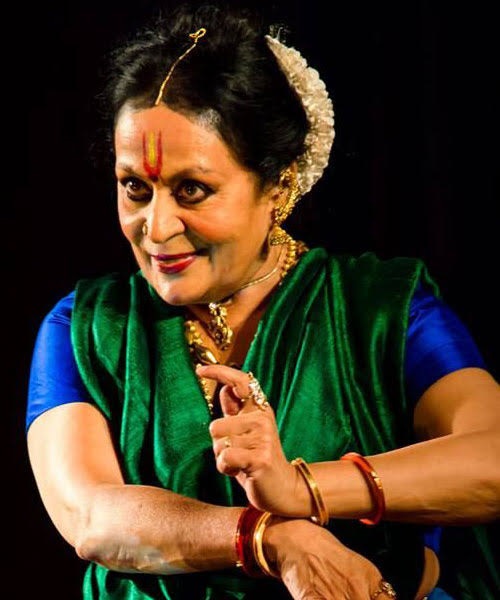
Dr. Sonal Mansingh (born April 30, 1944) is a preeminent Indian classical dancer, choreographer, and cultural scholar who has mastered both Bharatanatyam and Odissi. With a career spanning over six decades, she has brought mythological parables, poetic nuances, and spiritual depth to international stages. A former Member of Parliament (Rajya Sabha) and a fierce proponent of the arts, she bridges classical tradition with contemporary socio-cultural commentary.
2. Quick Facts
- Full Name: Sonal Mansingh
- Date of Birth: April 30, 1944
- Place of Birth: Mumbai, British India (present-day Maharashtra, India)
- Nationality: Indian
- Occupation/Profession: Classical Dancer, Choreographer, Dance Guru, Politician
- Field of Achievement: Indian Classical Dance (Bharatanatyam & Odissi)
- Years Active: 1962 to present (over 60 years)
3. Award Information (Highlight: Padma Vibhushan)
- Award Name: Padma Vibhushan
- Award Category: India’s Second-Highest Civilian Honour
- Award Year: 2003
- Presented By: The President of India
- Citation/Official Reason: Conferred in recognition of her exceptional and distinguished service to the field of arts, her global dissemination of Indian classical dance, and her lifelong dedication to preserving dance heritage.
- Other Major National Honours:
- Padma Bhushan (1992) – India’s third-highest civilian honor (she was its youngest recipient at the time).
- Sangeet Natak Akademi Award (1987) and Sangeet Natak Akademi Fellowship (Ratna Sadsya) (2018).
4. Why She Received the Award
Sonal Mansingh earned India’s highest civilian accolades for redefining the boundaries of classical Indian dance. Rather than treating dance as a mere performance art, she used it as a powerful medium for sociological inquiry, exploring themes like environmental conservation, women’s empowerment, and human rights. Her mastery over the rigorous geometries of Bharatanatyam and the fluid lyrical grace of Odissi, combined with her relentless academic articulation of Indian aesthetics, set her apart as a national cultural treasure.
5. Early Life
Born in Mumbai to Arvind Pakvasa and Poornima Pakvasa (a noted social worker and Padma Bhushan recipient), Sonal grew up in a household deeply rooted in public service and Gandhian values. Her grandfather, Mangal Das Pakvasa, was a freedom fighter and one of the first Governors of independent India. Showing an early affinity for rhythm, she began learning Manipuri dance at age four and started training in Bharatanatyam by age seven under various gurus.
6. Education
- Academic Background: Earned “Praveen” and “Kovid” degrees in Sanskrit from Bharatiya Vidya Bhavan, followed by a B.A. (Hons) degree in German Literature from Elphinstone College, Mumbai.
- Rigorous Dance Training: Despite initial family reservations, she traveled to Bangalore at age 18 to train intensively under Professor U.S. Krishna Rao and Chandrabhaga Devi. She later mastered abhinaya under Mylapore Gowri Ammal and traveled to Odisha in 1965 to learn Odissi directly from legendary maestro Guru Kelucharan Mohapatra.
7. Career Journey
- Professional Debut: Gave her formal arangetram (debut performance) in Mumbai in 1962, marking the beginning of an illustrious global touring career.
- Foundation of CICD: Founded the Centre for Indian Classical Dances (CICD) in New Delhi in 1977, which has served as a premier institution for teaching dance and fostering cultural dialogue for decades.
- Parliamentary Nomination: Nominated by the President of India to the Rajya Sabha (Upper House of Parliament) in 2018, serving a full term until 2024, where she actively championed national art and culture policies.
8. Major Choreographies & Productions
Sonal Mansingh has conceptualized groundbreaking thematic dance ballets, including:
- Draupadi – Examining the epic character’s strength and relevance.
- Indradhanush – A unique exploration connecting classical forms with cinematic elements.
- Aatmayan – A multi-layered production reflecting on social inequalities, caste, and the inner human spirit.
- Manavata – A poignant collaborative performance featuring inmates of Tihar Jail.
- Panchkanya and Sabras
9. Contribution to the Nation
Dr. Mansingh’s contributions extend far beyond the proscenium stage. She has served as the Chairperson of the Sangeet Natak Akademi and as a Trustee of the Indira Gandhi National Centre for the Arts (IGNCA). As a cultural ambassador, she has taken Indian classical arts to over 90 countries. Furthermore, her active involvement in national campaigns—such as serving as a nominated member for the Swachh Bharat Abhiyan—demonstrates her enduring commitment to civic duty.
10. Other Awards and Honours
- Kalidas Samman (2006) by the Government of Madhya Pradesh.
- Rajiv Gandhi Excellence Award (1991).
- Honorary Doctorates (D.Litt / D.Sc.) from multiple universities including Sambalpur University, KIIT University, and G.B. Pant University.
- Lifetime Achievement Award (2019).
11. Legacy and Influence
Dr. Sonal Mansingh is immortalized not just through her mesmerizing performances, but through her intellectual rigour. Her life became the subject of the award-winning National Film Award documentary titled Sonal, directed by Prakash Jha, and a biographical book titled Sonal Mansingh: A Life Like No Other. She continues to mentor younger generations, instilling the philosophy of Vasudhaiva Kutumbakam (the world is one family) through the universal language of art.
12. Interesting Facts
- Pioneering Record: When she was awarded the Padma Vibhushan in 2003, she made history as the first female Indian classical dancer to receive the honor.
- Overcoming Adversity: In 1974, she suffered a near-fatal car accident in Germany that fractured her back and threatened to end her dancing career permanently. Through sheer willpower, rigorous yoga, and intense physical therapy, she made a miraculous return to the stage.
- Polyglot & Scholar: Her deep grounding in Sanskrit allows her to interpret complex Vedic texts, ancient epics, and classical poetry directly for her choreographic works.
13. Quotes
“A dancer is not just a dancer. He/She is part of this environment. He/She does not exist in a vacuum. Society and its happenings have an impact on all individuals, especially artists. If an art form does not reflect the existing milieu, it stagnates.” — Sonal Mansingh
14. Timeline
Birth in Mumbai
April 30, 1944
Born into a culturally and socially prominent family in Mumbai.
Formal Arangetram
1962
Performs her debut classical dance recital in Mumbai, marking her entry into professional performance.
Training in Odissi
1965
Begins her rigorous training under legendary guru Kelucharan Mohapatra.
Founds CICD
1977
Establishes the Centre for Indian Classical Dances in New Delhi.
Awarded Padma Bhushan
1992
Becomes the youngest recipient of the Padma Bhushan at the time.
Awarded Padma Vibhushan
2003
Honored with India’s second-highest civilian award, becoming the first female dancer to receive it.
Nominated to Rajya Sabha
2018
Nominated as a Member of Parliament to the Upper House of India by the President.
15. References
- Official archives of the Sangeet Natak Akademi and Centre for Indian Classical Dances (CICD).
- Sujata Prasad, Sonal Mansingh: A Life Like No Other (Penguin Random House).
- The Hindu and Times of India cultural archives and artist profiles.
16. Related Personalities
- Guru Kelucharan Mohapatra (Legendary Odissi guru and mentor)
- Rukmini Devi Arundale (Pioneering Bharatanatyam revivalist)
- Birju Maharaj (Legendary Kathak maestro and contemporary)
17. Frequently Asked Questions (FAQ)
Q1: What dance forms does Sonal Mansingh specialize in?
A: She is a master of both Bharatanatyam and Odissi, having trained extensively under legendary gurus in both traditions.
Q2: What major civilian awards has she received?
A: She received the Padma Bhushan in 1992 and the prestigious Padma Vibhushan in 2003, making her the first female Indian classical dancer to receive the latter.
Q3: Did she serve in the Indian Parliament?
A: Yes, she was nominated by the President of India as a Member of Parliament in the Rajya Sabha in 2018, serving until 2024.
About the Author




