Introduction
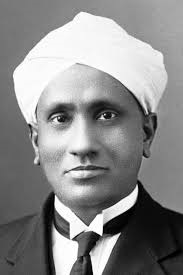
Sir Chandrasekhara Venkata Raman (C. V. Raman) was one of India’s most celebrated physicists and the first Asian scientist to receive a Nobel Prize in the sciences. He is best known for discovering the Raman Effect, a groundbreaking phenomenon in the field of light scattering that revolutionized spectroscopy and modern physics. His discovery earned him the Nobel Prize in Physics in 1930, making him a global icon of scientific excellence. Raman’s work laid the foundation for numerous applications in chemistry, medicine, materials science, and astronomy.
Early Life and Education
C. V. Raman was born on 7 November 1888 in Tiruchirappalli. His father, Chandrasekhara Ayyar, was a lecturer in mathematics and physics, which helped nurture Raman’s interest in science from an early age.
Raman was a brilliant student and completed his schooling with exceptional academic performance. He joined Presidency College in Chennai, where he earned a Bachelor’s degree in Physics in 1904, securing first rank and a gold medal. He later completed his Master’s degree in Physics in 1907 with outstanding distinction.
Despite limited research facilities in India during that period, Raman pursued scientific investigations with remarkable determination and self-motivation.
Scientific Career & Research
After completing his education, Raman joined the Indian Finance Department as an Assistant Accountant General in Kolkata. Although he worked in government service, his passion for science remained strong.
He conducted research at the Indian Association for the Cultivation of Science during his spare time. His early studies focused on acoustics, vibrations, and the physics of musical instruments.
In 1917, Raman became the first Palit Professor of Physics at the University of Calcutta. This position allowed him to devote himself fully to scientific research.
During the 1920s, Raman extensively studied the interaction between light and matter. His experiments eventually led to one of the most significant discoveries in modern physics—the Raman Effect.
Later, he served as Director of the Indian Institute of Science and founded the Raman Research Institute in 1948, where he continued scientific work until his final years.
Major Discoveries and Inventions
1. Raman Effect (1928)
The Raman Effect refers to the change in wavelength of light when it passes through a transparent substance and interacts with its molecules.
Raman discovered that a small fraction of scattered light changes its frequency due to molecular interactions. This phenomenon provided scientists with a powerful tool for analyzing molecular structures.
Today, Raman Spectroscopy is widely used in:
- Chemical analysis
- Pharmaceutical research
- Medical diagnostics
- Forensic science
- Nanotechnology
- Environmental studies
- Astronomy
2. Research in Acoustics
Raman conducted pioneering studies on:
- Vibrations of musical instruments
- Sound waves
- Acoustical properties of Indian drums and string instruments
His work helped explain the physics behind traditional Indian musical instruments.
3. Studies on Crystal Physics and Optics
Raman made significant contributions to:
- Crystal dynamics
- Light diffraction
- Optical properties of liquids and solids
- Molecular spectroscopy
These studies expanded the understanding of matter and light interactions.
Awards and Honours
C. V. Raman received numerous national and international honors:
- Nobel Prize in Physics (1930) for the discovery of the Raman Effect
- Knight Bachelor (1929)
- Bharat Ratna (1954)
- Lenin Peace Prize (1957)
- Fellow of the Royal Society (1924)
In India, 28 February is celebrated annually as National Science Day to commemorate the announcement of the Raman Effect.
Later Life and Death
After retiring from active academic administration, Raman dedicated his time to research at the Raman Research Institute in Bengaluru. He continued mentoring young scientists and conducting experiments well into his later years.
Raman remained deeply committed to scientific inquiry and believed that India should develop a strong culture of independent research and innovation.
He passed away on 21 November 1970 in Bengaluru at the age of 82.
Legacy and Impact
C. V. Raman is regarded as one of the greatest physicists in history and a pioneer of modern Indian science. His discovery of the Raman Effect transformed spectroscopy and continues to influence scientific research across multiple disciplines.
His achievements demonstrated that world-class scientific discoveries could emerge from India despite limited resources. He inspired generations of Indian scientists and helped establish India as a respected contributor to global scientific research.
Today, institutions, scholarships, research centers, and scientific awards across India bear his name. The Raman Effect remains one of the most important discoveries in physics, ensuring that C. V. Raman’s legacy continues to illuminate the world of science.
Conclusion
C. V. Raman’s life is a remarkable story of curiosity, perseverance, and scientific brilliance. From a young student fascinated by physics to a Nobel Prize-winning scientist, his journey transformed India’s scientific landscape. His discovery of the Raman Effect not only earned international recognition but also opened new frontiers in scientific research. Raman’s contributions continue to inspire students, researchers, and innovators worldwide, making him a timeless symbol of scientific excellence.
About the Author