Early Life and Education
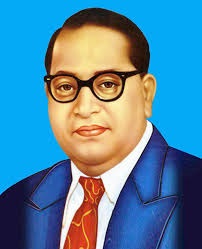
Dr. B.R. Ambedkar was born on 14 April 1891 in Mhow (now Dr. Ambedkar Nagar) into a Mahar family. His father, Ramji Maloji Sakpal, served in the British Indian Army. Despite facing social discrimination due to the caste system, Ambedkar showed exceptional academic ability from a young age.
He completed his early education in Maharashtra and later attended Elphinstone College. With scholarships from the Maharaja of Baroda, he pursued higher education abroad at Columbia University and later at London School of Economics, earning advanced degrees in economics, law, and political science.
Education & Skills
Dr. Ambedkar was one of the most highly educated leaders of his time and possessed expertise in multiple disciplines.
Key Skills
- Constitutional law
- Economics and public finance
- Political leadership
- Social reform advocacy
- Public speaking
- Research and academic writing
- Policy formulation and governance
His intellectual brilliance and commitment to social justice made him a transformative leader in Indian history.
Contribution to Tamil Literature
Dr. Ambedkar did not directly contribute to Tamil literature as a Tamil author. However, his writings and ideas have had a profound influence on Tamil intellectual, social, and political movements.
His books, speeches, and essays have been widely translated into Tamil and are studied by scholars, students, and social reformers. His works on equality, human rights, caste reform, and democracy have inspired numerous Tamil writers and thinkers.
Some of his influential works include:
- Annihilation of Caste
- The Problem of the Rupee
- The Buddha and His Dhamma
Role in India’s Freedom Movement
Dr. Ambedkar played a unique and significant role in India’s struggle for freedom by focusing on social equality, civil rights, and political representation for marginalized communities.
Major Contributions
- Fought against caste discrimination and untouchability.
- Advocated equal rights and social justice for oppressed communities.
- Participated in constitutional and political discussions concerning India’s future.
- Represented the interests of marginalized groups at the Round Table Conferences.
- Worked to secure political safeguards and representation for disadvantaged communities.
- Served as the Chairman of the Drafting Committee of the Constituent Assembly of India.
- Played a leading role in framing the Constitution of India after independence.
His efforts helped ensure that the principles of liberty, equality, and justice became central to modern India.
Personal Life
Dr. Ambedkar married Ramabai Ambedkar in 1906. After her death, he later married Dr. Savita Ambedkar in 1948.
Throughout his life, he dedicated himself to the upliftment of marginalized communities and the promotion of education. He served as India’s first Law Minister after independence and worked on numerous social and economic reforms.
In 1956, he embraced Buddhism along with hundreds of thousands of followers, initiating a major social and religious movement.
Death
Dr. B.R. Ambedkar passed away on 6 December 1956 in New Delhi.
In recognition of his immense contributions to India, he was posthumously awarded the Bharat Ratna in 1990.
His memorial, Chaitya Bhoomi, remains an important place of tribute for millions of people.
Conclusion
Dr. B.R. Ambedkar was a visionary scholar, jurist, economist, social reformer, and statesman who transformed India’s social and constitutional landscape. As the principal architect of the Indian Constitution, he championed equality, justice, and human rights for all citizens. His relentless fight against social discrimination and his commitment to education and empowerment continue to inspire people across India and around the world. His legacy remains a cornerstone of modern India’s democratic and social ideals.
About the Author