1. Introduction
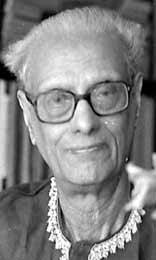
Annada Shankar Ray (15 March 1904 – 28 October 2002) was a legendary Indian poet and essayist who wrote primarily in Bengali and Odia. A rare intellectual who seamlessly transitioned from an elite British-era civil servant to a full-time Gandhian literary crusader, Ray is best remembered for his sharp socio-political commentary, his profound essays on the Bengal Renaissance, and his deeply humanist poetry that courageously protested the Partition of India.
2. Quick Facts
- Full Name: Annada Shankar Ray
- Native Name: অন্নদাশঙ্কর রায়
- Date of Birth: March 15, 1904
- Place of Birth: Dhenkanal State, British India (present-day Odisha, India)
- Nationality: Indian
- Occupation/Profession: Author, Poet, Essayist, and Civil Servant (ICS)
- Field of Achievement: Bengali & Odia Literature, Public Administration, and Social Humanism
- Years Active: 1920s – 2002
3. Award Information (Focus: Padma Bhushan & Sahitya Akademi Fellowship)
- Award Name: Padma Bhushan
- Award Category: India’s Third-Highest Civilian Award
- Award Year: 1960 (He also received the Sahitya Akademi Fellowship in 1989)
- Presented By: The President of India
- Date of Ceremony: Republic Day Investiture, New Delhi
- Citation/Official Reason: For exceptional and distinguished contributions to literature and education.
- Previous/Next Recipients: Conferred alongside eminent literary figures, artists, and scholars of post-independence India.
4. Why Did He Receive the Award?
Annada Shankar Ray was honored with the Padma Bhushan and later the Sahitya Akademi Fellowship for his colossal contribution to Indian letters—particularly Bengali and Odia literature. His writings blended the sophisticated prose styles of Rabindranath Tagore and Pramatha Chaudhuri, fostering deep cultural introspection, democratic values, and artistic brilliance.
5. Early Life
Born in Dhenkanal, Odisha, into a Bengali-speaking family whose roots traced back to Kotrung (Hooghly, West Bengal), Ray displayed literary genius at an astonishingly young age. By 16, he had translated a short story by Leo Tolstoy and critically reviewed Sarat Chandra Chattopadhyay’s famous essay Narir Mulya. Growing up under the dual cultural influences of Bengal and Odisha, he developed a profound command over both languages.
6. Education
- Schooling & Graduation: Completed his early education locally and graduated with a Bachelor of Arts (Honours) in English from Ravenshaw College in Cuttack.
- The Indian Civil Service (ICS): Displaying extraordinary academic brilliance, he topped the rigorous Indian Civil Service examination in 1927, becoming the very first ICS officer from the territory that later formed the state of Odisha.
7. Career Journey
- Bureaucratic Tenure (1927–1951): Served in various administrative and judicial capacities across Bengal and Odisha as an ICS officer.
- Voluntary Retirement: In a rare move reflecting his absolute dedication to art over power, he took voluntary early retirement in 1951 to completely devote himself to writing.
- Literary Vanguard: Imbued with Gandhian ideals and Tagore’s humanism, he spent the next five decades writing novels, travelogues, essays, and poetry.
8. Major Achievements
- Magnum Opus Travelogue: Published Pathe Prabaase (1931), a celebrated travel diary documenting his journey and observations across Europe.
- Monumental Novel Series: Authored the epic six-part novel sequence Satyasatya.
- Literary Stature in Two Languages: Remarkably, his poetry collection Sabita was included in higher education curricula in Odisha, making him one of the few writers to receive top-tier academic acclaim across two distinct linguistic states (Bengali and Odia).
9. Contribution to the Nation
Ray was an unyielding moral compass for society. When the Partition of India in 1947 tore communities apart, he vehemently opposed it through his pen. His satirical and poignant poem “Teler shishi bhaanglo bole khukur pare raag karo…” became an iconic cultural critique of the political folly of partition. He championed secularism, communal harmony, and freedom of expression throughout his life.
10. Other Awards and Honours
- Sahitya Akademi Fellowship (1989)
- Desikottama from Visva-Bharati University
- Rabindra Puraskar (1958)
- Ananda Puraskar (Awarded twice)
- Vidyasagar Smriti Award (from the Government of West Bengal)
- Zaibunnisa Award (Bangladesh)
11. Legacy and Influence
Annada Shankar Ray is remembered as an intellectual titan of the 20th century who bridged traditional Indian philosophy with modern European liberalism. His critical essays, such as Banglar Renaissance, mapped the sociological transformation of Bengal. His life remains an inspiration for balancing rigorous public service with uncompromising artistic integrity.
12. Interesting Facts
- Beating the Odds: After missing the ICS cutoff rank by a single margin the year prior, Ray famously told his peers that if only one person cleared it the next year, it would be him—and he fulfilled that promise by topping the entire list!
- Global Partnership: He married Leela Ray (originally an American pianist named Alice Virginia Orndorf who relocated to India), with whom he shared a deep intellectual and literary partnership, translating extensive works together.
- Longevity: He lived a vibrant, intellectually active life well into his late 90s, passing away in Kolkata in 2002 at the age of 98.
13. Quotes
“Teler shishi bhaanglo bole khukur pare raag karo, / Amra khukumani ülke feli, taar belay ki karo?”
(You scold the little girl for breaking an oil vial, but what do you do when we break our entire country apart? — from his famous poem protesting the Partition)
14. Timeline
- 1904: Born on March 15 in Dhenkanal, Odisha.
- 1927: Tops the Indian Civil Service (ICS) examination.
- 1931: Publishes his breakthrough European travelogue, Pathe Prabaase.
- 1951: Retires voluntarily from the civil service to focus entirely on literature.
- 1960: Awarded the Padma Bhushan by the Government of India.
- 1989: Appointed a Fellow of the Sahitya Akademi.
- 2002: Passes away on October 28 in Kolkata at age 98.
15. References
- Wikipedia contributors. Annada Shankar Ray. Wikipedia, The Free Encyclopedia.
- Sahitya Akademi Archives & Institutional Records on Fellows.
- Ray, Annada Shankar. Banglar Renaissance & Pathe Prabaase.
16. Related Personalities
- Rabindranath Tagore: The towering Nobel laureate whose literary style and humanism profoundly shaped Ray’s worldview.
- Leela Ray: Annada Shankar’s wife, writer, and translator who played an instrumental role in bridging Eastern and Western literature.
- Pramatha Chaudhuri: Renowned essayist whose sophisticated prose style influenced Ray’s literary craftsmanship.
17. Frequently Asked Questions (FAQ)
Q: What languages did Annada Shankar Ray write in?
A: He wrote extensively and brilliantly in both Bengali and Odia, alongside maintaining a strong grasp of English prose.
Q: Why did Annada Shankar Ray quit the ICS?
A: He took voluntary retirement in 1951 after serving for over two decades because he wanted to leave the bureaucratic apparatus behind and dedicate every waking hour to creative writing and humanistic causes.
Q: What was his stance on the Partition of India?
A: He was a fierce opponent of the 1947 Partition and used his poetry to express profound grief and protest against the division of the country.
About the Author