

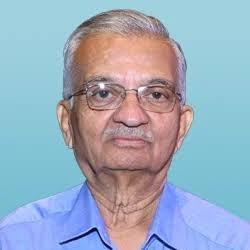
1. Introduction
Dr. Anil Kakodkar is one of India’s most celebrated nuclear physicists and mechanical engineers, whose name is synonymous with the nation’s technological sovereignty and self-reliance. Having served as the Chairman of the Atomic Energy Commission of India and the Secretary to the Government of India, Dr. Kakodkar played a central role in shaping India’s nuclear energy trajectory, steering indigenous reactor developments, and anchoring historic strategic milestones like the 1998 Pokhran-II nuclear tests. Beyond national security, his visionary leadership laid the foundation for long-term energy independence through thorium utilization and massive academic reforms in premier institutions like the Indian Institutes of Technology (IITs).
2. Quick Facts
- Full Name: Anil Purushottam Kakodkar
- Native Name: अनिल কাকোদকর (Marathi)
- Date of Birth: November 11, 1943
- Place of Birth: Barwani (in the erstwhile Barwani princely state, present-day Madhya Pradesh, India)
- Nationality: Indian
- Occupation/Profession: Nuclear Scientist / Mechanical Engineer
- Field of Achievement: Nuclear Science, Nuclear Power Engineering, and Strategic Technology
- Years Active: 1964 – Present
3. Award Information (Focus on Padma Vibhushan)
- Award Name: Padma Vibhushan
- Award Category: India’s Second-Highest Civilian Award
- Award Year: 2009
- Presented By: Pratibha Devisingh Patil (President of India)
- Date of Ceremony: March 31, 2009 (Announced on January 26, 2009)
- Citation/Official Reason: In recognition of his exceptional and distinguished service to the nation in the field of science and engineering.
- Previous Recipients (Notable): Prominent scientists, statesmen, and artists such as A. P. J. Abdul Kalam (1990), R. Chidambaram, and various global luminaries.
- Next Recipients (Notable class of 2009): Co-recipients in 2009 included personalities like Sundarlal Bahuguna and Jasjit Singh.
4. Why Did He Receive the Award?
Dr. Kakodkar was honored with the Padma Vibhushan for his stellar contributions to advancing India’s nuclear program under challenging global embargoes. His leadership during the 1998 Pokhran-II tests, his pioneering design work on indigenous Pressurised Heavy Water Reactors (PHWRs), and his relentless advocacy for transforming India into a thorium-fuel-secure economy cemented his status as a national pillar of scientific excellence.
5. Early Life
Dr. Anil Kakodkar was born into a patriotic and politically active family. His parents, Kamala Kakodkar and Purushottam Kakodkar, were prominent Gandhian freedom fighters deeply rooted in social service. Growing up in an environment charged with nationalistic values, young Anil spent his early years in Barwani and Khargone before moving to Mumbai for his higher education. The ideals of self-reliance, simplicity, and dedication to the motherland heavily influenced his life’s path.
6. Education
- Schooling: Completed his early education in Barwani and Khargone, Madhya Pradesh.
- Undergraduate Degree: Graduated from Ruparel College, followed by a degree in Mechanical Engineering from Veermata Jijabai Technological Institute (VJTI), University of Mumbai in 1963.
- Postgraduate Degree: Earned his Master of Science (M.Sc.) degree in Experimental Stress Analysis from the University of Nottingham, UK, in 1969.
7. Career Journey
- 1964: Joined the Reactor Engineering Division of the Bhabha Atomic Research Centre (BARC), Trombay.
- 1996 – 2000: Served as the Director of the Bhabha Atomic Research Centre (BARC).
- 2000 – 2009: Appointed as the Chairman of the Atomic Energy Commission of India and Secretary to the Department of Atomic Energy (DAE).
- 2006 – 2015: Served as the Chairman of the Board of Governors of the Indian Institute of Technology (IIT), Bombay.
- Other Roles: Held leadership positions on boards including the Reserve Bank of India (Central Board) and the Maharashtra Knowledge Corporation Limited (MKCL).
8. Major Achievements
- The Dhruva Reactor: Played a foundational role in the design and indigenous construction of the high-tech Dhruva reactor at BARC.
- Pokhran Nuclear Tests: Acted as a core team member and key architect of India’s Peaceful Nuclear Tests in both 1974 (Smiling Buddha) and 1998 (Pokhran-II).
- Reactor Rehabilitation: Successfully engineered the complex rehabilitation of heavily damaged reactors at Kalpakkam and Rawatbhata, saving national assets from being written off.
- Advanced Heavy Water Reactor (AHWR): Spearheaded designs for thorium-utilizing reactors to establish a sustainable and clean energy paradigm.
9. Contribution to the Nation
Dr. Kakodkar’s overarching contribution is safeguarding India’s strategic autonomy. When India faced severe international technology denials and economic sanctions following nuclear tests, he led the scientific community to achieve absolute self-reliance. Furthermore, his vision for utilizing India’s vast domestic thorium reserves paved the pathway toward long-term national energy security. In education, his steering committee reports transformed the governance framework and autonomy of the IITs.
10. Other Awards and Honours
Dr. Kakodkar’s cabinet of awards spans national recognitions and international accolades:
- Padma Shri (1998)
- Padma Bhushan (1999)
- Gomant Vibhushan Award (Highest Civilian Award of Goa, 2010)
- Maharashtra Bhushan Award (Highest Civilian Award of Maharashtra, 2011–2012)
- H.K. Firodia Award for Excellence in Science and Technology (1997)
- Homi Bhabha Lifetime Achievement Award (2010)
- Over 20 honorary D.Sc. and D.Litt. degrees from premier universities globally.
11. Legacy and Influence
Dr. Kakodkar is revered as a “technocrat with a Gandhian soul.” His legacy is defined by an uncompromising commitment to indigenous capability. He proved that developing nations can master complex nuclear and strategic sciences without yielding to external pressure. His mentorship of generations of engineers at BARC and his structural reforms in higher education continue to influence India’s scientific and academic ecosystems.
12. Interesting Facts
- Resilience Under Pressure: As a young engineer, he worked tirelessly inside high-radiation environments to fix the crippled Kalpakkam reactor core, showcasing fearless personal dedication.
- Academic Leader: Aside from nuclear science, he had a deep passion for education, famously working pro bono or dedicating years of post-retirement life to upgrading technical education standards across India.
- Roots in Freedom Struggle: Coming from a family of freedom fighters, he viewed his scientific work not just as a job, but as modern nation-building.
13. Quotes
“We need to move towards energy independence. Energy is a key driver of development, and thorium is our best bet for a sustainable, long-term energy future.”
“Science and technology must be pursued with a sense of national pride and a commitment to solving societal problems.”
14. Timeline
- 1943: Born on November 11 in Barwani, Madhya Pradesh.
- 1963: Graduated in Mechanical Engineering from VJTI, Mumbai.
- 1964: Joined the Bhabha Atomic Research Centre (BARC).
- 1974: Part of the core scientific team for India’s first nuclear test (Pokhran-I).
- 1996: Appointed Director of BARC.
- 1998: Played a defining role in the Pokhran-II nuclear tests; awarded the Padma Shri.
- 1999: Conferred the Padma Bhushan.
- 2000: Took charge as Chairman, Atomic Energy Commission of India.
- 2009: Conferred India’s second-highest civilian honor, the Padma Vibhushan.
- 2011: Awarded the Maharashtra Bhushan.
15. References
- Ministry of Home Affairs, Government of India – Padma Awards Directory.
- Department of Atomic Energy (DAE), Government of India archives.
- Wikipedia Biographies and Official Portals on Dr. Anil Kakodkar.
16. Related Personalities
- Dr. Homi J. Bhabha (Founding father of India’s nuclear program)
- Dr. Vikram Sarabhai (Father of India’s space program)
- Dr. R. Chidambaram (Nuclear physicist and key partner in India’s nuclear tests)
- A. P. J. Abdul Kalam (Aerospace scientist and former President of India)
17. Frequently Asked Questions (FAQ)
- Q: What is Dr. Anil Kakodkar best known for?A: He is best known for his leadership in India’s 1998 Pokhran-II nuclear tests, his pioneering development of indigenous nuclear reactors, and his championing of thorium-based nuclear energy for self-reliance.
- Q: Which civilian awards has Dr. Kakodkar received?A: He has received India’s top three civilian honors: the Padma Shri (1998), Padma Bhushan (1999), and Padma Vibhushan (2009).
- Q: What was his role at the Atomic Energy Commission?A: He served as the Chairman of the Atomic Energy Commission of India and Secretary to the Government of India from 2000 to 2009.
About the Author




