
Introduction
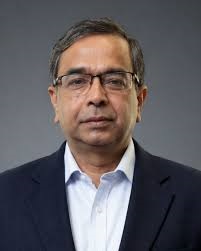
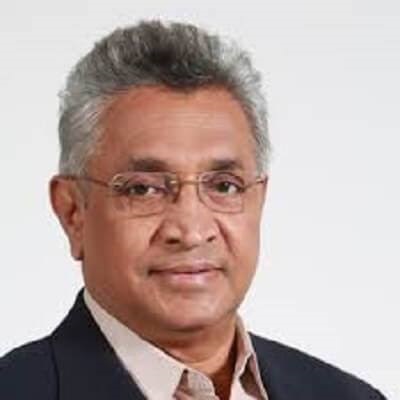
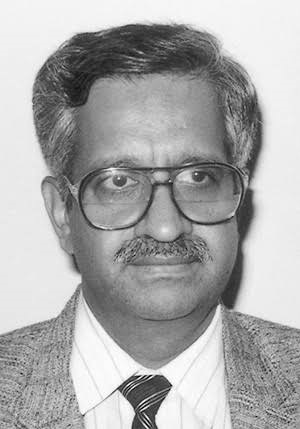
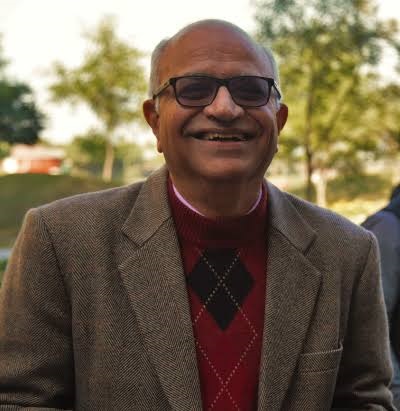
Rajendra Bhatia is one of India’s most distinguished mathematicians, renowned for his contributions to matrix analysis, operator theory, linear algebra, and functional analysis. His research has had a profound impact on modern mathematics and has found applications in physics, engineering, statistics, and quantum information theory. Through his influential books, research papers, and academic leadership, Bhatia has earned international recognition as a leading authority in matrix theory and operator inequalities.
Early Life and Education
Rajendra Bhatia was born on June 30, 1952, in India. He displayed a strong aptitude for mathematics from an early age and pursued higher studies in the subject with great dedication. He completed his undergraduate and postgraduate education in mathematics before pursuing advanced research.
Bhatia obtained his Ph.D. in Mathematics from the Indian Statistical Institute (ISI), New Delhi, one of India’s premier research institutions. During his doctoral studies, he developed a deep interest in operator theory and matrix analysis, areas that would define much of his future research.
Scientific Career & Research
After completing his doctoral studies, Bhatia joined the Indian Statistical Institute, where he spent a significant part of his academic career. He later became a professor and senior researcher, contributing extensively to both research and education.
His primary research areas include:
- Matrix Analysis
- Linear Algebra
- Operator Theory
- Functional Analysis
- Operator Inequalities
- Positive Definite Matrices
- Mathematical Aspects of Quantum Theory
Throughout his career, he collaborated with mathematicians from around the world and published numerous influential research papers in leading mathematical journals.
Major Discoveries and Inventions
Matrix Analysis and Operator Theory
Bhatia’s most celebrated contributions are in matrix analysis and operator theory. He developed important results concerning matrix inequalities and operator functions, helping mathematicians better understand the behavior of matrices and linear operators.
Operator Inequalities
His research significantly advanced the theory of operator inequalities. These inequalities have applications in various branches of mathematics, quantum mechanics, and information theory.
Positive Definite Matrices
Bhatia conducted groundbreaking studies on positive definite matrices, which play an essential role in optimization, statistics, machine learning, and engineering. His work provided new insights into their geometric and algebraic properties.
Matrix Geometric Means
He made important contributions to understanding matrix geometric means and related mathematical structures, which have applications in signal processing and quantum information science.
Influential Mathematical Books
Bhatia is also known for authoring several highly respected books, including:
- Matrix Analysis (1997)
- Positive Definite Matrices (2007)
- Perturbation Bounds for Matrix Eigenvalues
- Matrix Inequalities
These books are widely used by researchers, graduate students, and educators worldwide.
Awards and Honours
Rajendra Bhatia has received numerous prestigious awards and recognitions for his contributions to mathematics, including:
Shanti Swarup Bhatnagar Prize
He was awarded the prestigious Shanti Swarup Bhatnagar Prize for Science and Technology in Mathematical Sciences, one of India’s highest scientific honors.
Fellowships
He has been elected Fellow of several prestigious academies, including:
- Indian Academy of Sciences
- National Academy of Sciences, India
- Indian National Science Academy
International Recognition
His research has earned global recognition, leading to invitations to lecture at international conferences and collaborate with leading mathematicians worldwide.
Academic Distinctions
Several universities and research institutions have honored him for his outstanding contributions to mathematical sciences.
Later Life and Career
In the later stages of his career, Bhatia continued to remain active in research, writing, and mentoring young mathematicians. He served as a visiting professor and researcher at numerous international institutions, sharing his expertise with scholars across the globe.
His continued engagement with mathematics has helped maintain his position as one of the most respected figures in contemporary mathematical research.
Legacy and Impact
Rajendra Bhatia’s contributions have had a lasting impact on modern mathematics. His legacy includes:
- Transforming the field of matrix analysis.
- Advancing the study of operator inequalities.
- Influencing research in quantum information theory.
- Providing foundational textbooks for future generations.
- Mentoring students and young researchers worldwide.
- Strengthening India’s reputation in international mathematical research.
His books and research papers continue to be widely cited and studied, ensuring that his influence extends far beyond his own generation.
Conclusion
Rajendra Bhatia is widely regarded as one of India’s foremost mathematicians. His pioneering work in matrix analysis, operator theory, and linear algebra has enriched mathematical knowledge and influenced numerous scientific disciplines. Through his research, teaching, and publications, he has inspired mathematicians around the world and established a lasting legacy in modern mathematics. His contributions continue to shape contemporary mathematical research and education, making him a prominent figure in the history of Indian mathematics.
About the Author