Introduction
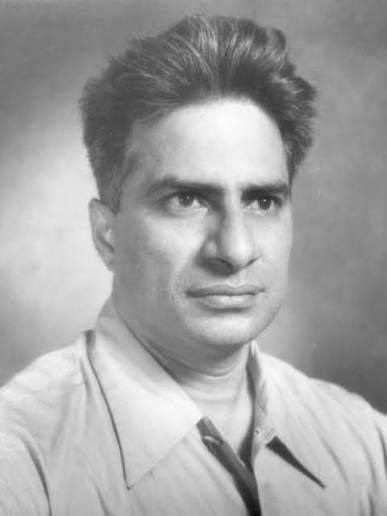
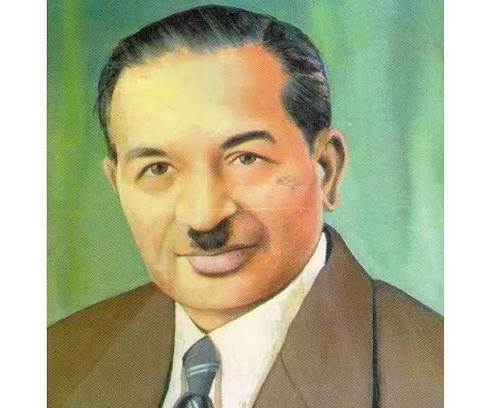
Shanti Swarup Bhatnagar (21 February 1894 – 1 January 1955) was one of India’s most distinguished scientists, often regarded as the “Father of Research Laboratories in India.” A renowned chemist, scientific administrator, and institution builder, he played a crucial role in developing India’s scientific infrastructure after independence. His pioneering work in chemistry and his leadership in establishing national research laboratories helped transform India into a modern scientific nation.
Today, his legacy is honored through the prestigious Shanti Swarup Bhatnagar Prize for Science and Technology, one of India’s highest scientific awards.
Early Life and Education
Shanti Swarup Bhatnagar was born on February 21, 1894, in Bhera, Punjab (now in Pakistan). His father passed away when he was very young, and he was raised by his maternal grandfather, who encouraged his interest in learning and science.
Bhatnagar completed his early education in Punjab and later attended Dayal Singh College, Lahore. He earned a Master’s degree in Chemistry from the University of the Punjab.
His academic excellence earned him a scholarship to study in England. He joined the University College London, where he conducted advanced research in chemistry and obtained a Doctor of Science (D.Sc.) degree in 1921.
During his years abroad, he gained expertise in physical chemistry, colloid chemistry, and industrial applications of scientific research.
Scientific Career & Research
After returning to India, Bhatnagar joined the University of the Punjab as a professor of chemistry. His research quickly gained international recognition.
His major research interests included:
- Physical Chemistry
- Colloid Chemistry
- Magnetochemistry
- Industrial Chemistry
- Petroleum and Lubricants
- Applied Chemical Research
Bhatnagar strongly believed that scientific research should address practical industrial problems. He collaborated with industries and government organizations to solve challenges related to petroleum refining, lubricants, and industrial materials.
Major Discoveries and Inventions
Contributions to Magnetochemistry
Bhatnagar is best known for his pioneering work in magnetochemistry, the study of the magnetic properties of chemical substances.
Working with physicist K. N. Mathur, he developed the Bhatnagar-Mathur Magnetic Interference Balance, an instrument used to measure magnetic susceptibility accurately. This invention gained international recognition and became an important research tool.
Industrial Chemical Research
He developed practical solutions for various industrial problems involving petroleum products, drilling muds, lubricants, and chemical manufacturing processes.
Research on Colloids and Emulsions
His studies on colloidal systems contributed to understanding the behavior of complex chemical mixtures, which had applications in industry and manufacturing.
Promotion of Applied Science
Bhatnagar emphasized the importance of linking scientific research with industrial development. His efforts helped establish a culture of applied scientific research in India.
Establishment of National Research Laboratories
Perhaps his greatest contribution was the creation of a network of scientific institutions that supported research across multiple disciplines.
Awards and Honours
Shanti Swarup Bhatnagar received numerous honors during his lifetime.
OBE (Order of the British Empire)
In 1936, he was appointed an Officer of the Order of the British Empire (OBE) for his scientific contributions.
Knighthood
In 1941, he was knighted by the British Government and became Sir Shanti Swarup Bhatnagar.
Fellow of the Royal Society (FRS)
In 1943, he was elected a Fellow of the Royal Society, one of the highest honors for a scientist.
National Recognition
Following India’s independence, he became one of the country’s most influential scientific leaders and advisors.
Shanti Swarup Bhatnagar Prize
After his death, the Shanti Swarup Bhatnagar Prize for Science and Technology was established in his honor. It remains one of India’s most prestigious awards for scientific research.
Later Life and Death
In independent India, Bhatnagar served as the first Director-General of the Council of Scientific and Industrial Research and played a leading role in shaping the country’s scientific policies.
Under his leadership, several major national laboratories were established, including institutions dedicated to chemistry, physics, metallurgy, fuel research, and engineering.
Despite his demanding responsibilities, he continued to support scientific research and mentor young scientists.
Shanti Swarup Bhatnagar passed away on January 1, 1955, in New Delhi at the age of 60. His death was a significant loss to Indian science.
Legacy and Impact
The impact of Shanti Swarup Bhatnagar on Indian science is immense.
Founder of Modern Scientific Infrastructure
He was instrumental in building India’s network of national research laboratories.
Architect of CSIR
His leadership transformed CSIR into one of the world’s largest publicly funded research organizations.
Advancement of Industrial Research
He demonstrated how scientific research could directly contribute to industrial and economic development.
Inspiration for Scientists
The Bhatnagar Prize continues to inspire generations of Indian researchers to pursue excellence in science.
National Scientific Development
His vision helped establish a strong foundation for India’s growth in science, technology, and innovation.
Conclusion
Shanti Swarup Bhatnagar was far more than an accomplished chemist; he was a visionary institution builder who shaped the future of Indian science. His pioneering research in magnetochemistry, commitment to industrial applications of science, and leadership in establishing research laboratories transformed India’s scientific landscape. Remembered as the “Father of Research Laboratories in India,” Bhatnagar’s legacy continues through the institutions he built and the scientists he inspired. His contributions remain a cornerstone of India’s scientific progress and national development.
About the Author