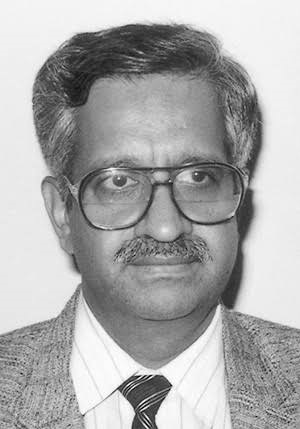

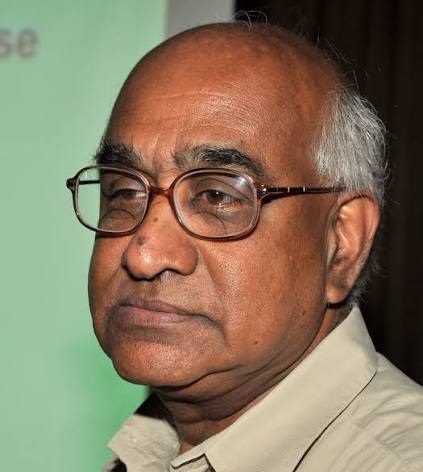
T. V. Ramakrishnan – Condensed Matter Physics
Introduction
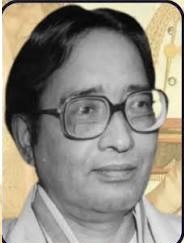
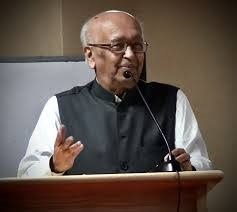
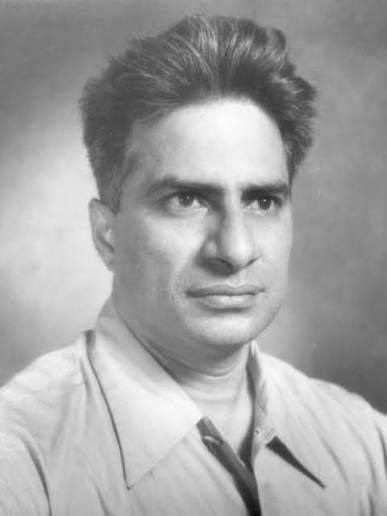
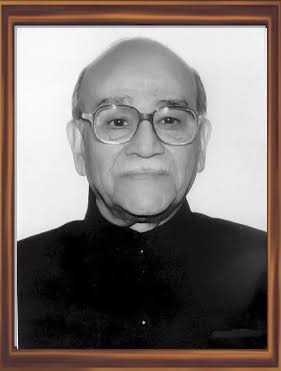
Thiruvengadam Venkatarama Ramakrishnan, commonly known as T. V. Ramakrishnan (TVR), is one of India’s most distinguished condensed matter physicists. His research has significantly advanced the understanding of the electronic properties of materials, phase transitions, disordered systems, superconductivity, and strongly correlated electron systems. He is internationally recognized for his theoretical contributions to modern condensed matter physics and for helping build India’s scientific research community.
Early Life and Education
T. V. Ramakrishnan was born on November 11, 1941, in Tamil Nadu, India. He displayed a strong aptitude for mathematics and science from an early age.
He completed his undergraduate studies in physics and later pursued advanced studies abroad. Ramakrishnan earned his Ph.D. in Physics from Yeshiva University under the guidance of renowned physicists, where he specialized in theoretical condensed matter physics.
Scientific Career & Research
Throughout his career, Ramakrishnan worked at several prestigious institutions, including:
- Indian Institute of Science
- Tata Institute of Fundamental Research
- Leading universities and research laboratories in the United States
His research areas include:
- Condensed Matter Physics
- Superconductivity
- Metal-Insulator Transitions
- Disordered Systems
- Strongly Correlated Electron Systems
- Statistical Physics
His theoretical work has provided deep insights into how electrons behave in complex materials, helping explain many unusual physical phenomena.
Major Discoveries and Inventions
Scaling Theory of Localization
One of Ramakrishnan’s most influential contributions was his work with P. W. Anderson and collaborators on the theory of electron localization in disordered materials. This research helped explain how disorder can transform a conductor into an insulator.
Metal-Insulator Transitions
He developed theoretical frameworks that improved understanding of transitions between metallic and insulating states in solids.
Strongly Correlated Electron Systems
His studies contributed significantly to understanding interactions among electrons in complex materials, an area crucial for modern condensed matter physics.
Superconductivity Research
Ramakrishnan made important contributions to the theory of superconductors, including high-temperature superconducting materials.
Statistical and Many-Body Physics
His research advanced theoretical methods used to study large systems of interacting particles.
Awards and Honours
T. V. Ramakrishnan has received numerous prestigious awards and recognitions:
- Shanti Swarup Bhatnagar Prize in Physical Sciences
- Padma Shri (2001)
- Fellow of the Indian Academy of Sciences
- Fellow of the Indian National Science Academy
- Fellow of the The World Academy of Sciences
- Numerous international scientific honours and visiting professorships
Later Life and Death
T. V. Ramakrishnan is alive and continues to contribute to science through research, mentorship, and academic activities. He remains an influential figure in theoretical physics and continues to inspire young scientists around the world.
Legacy and Impact
Ramakrishnan’s work has had a lasting influence on condensed matter physics. His theoretical contributions have shaped modern understanding of electron behavior in solids and have impacted fields ranging from materials science to nanotechnology.
His legacy includes:
- Advancing the theory of disordered electronic systems.
- Improving understanding of metal-insulator transitions.
- Contributing to superconductivity research.
- Training and mentoring future physicists.
- Strengthening theoretical physics research in India.
His research continues to be widely cited and remains relevant to contemporary studies of quantum materials.
Conclusion
T. V. Ramakrishnan is a pioneering condensed matter physicist whose work has significantly expanded our understanding of complex materials and electronic systems. Through his groundbreaking contributions to localization theory, superconductivity, and strongly correlated electron systems, he has helped shape modern condensed matter physics. His scientific achievements and dedication to education continue to inspire physicists worldwide.
Short Blog Summary (200 Words)
T. V. Ramakrishnan is a renowned Indian theoretical physicist best known for his contributions to condensed matter physics. Born in Tamil Nadu in 1941, he pursued advanced studies in physics and earned his Ph.D. from Yeshiva University in the United States. Throughout his career, he has worked at leading institutions such as the Indian Institute of Science and the Tata Institute of Fundamental Research.
Ramakrishnan’s research focuses on understanding the behavior of electrons in solids, particularly in complex and disordered materials. One of his most influential contributions is his work on the scaling theory of localization, which explains how disorder can cause materials to transition from conductors to insulators. He also made important advances in the study of metal-insulator transitions, superconductivity, and strongly correlated electron systems.
His theoretical insights have had a major impact on condensed matter physics and materials science, helping researchers understand the properties of advanced materials used in modern technologies. In recognition of his achievements, he has received prestigious honours including the Shanti Swarup Bhatnagar Prize and the Padma Shri.
Today, T. V. Ramakrishnan is regarded as one of India’s leading physicists. His groundbreaking research and dedication to scientific education continue to influence condensed matter physics and inspire future generations of scientists.
About the Author