Introduction
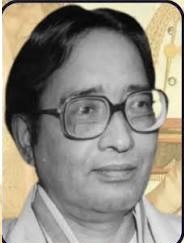
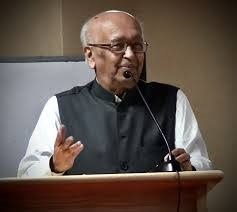
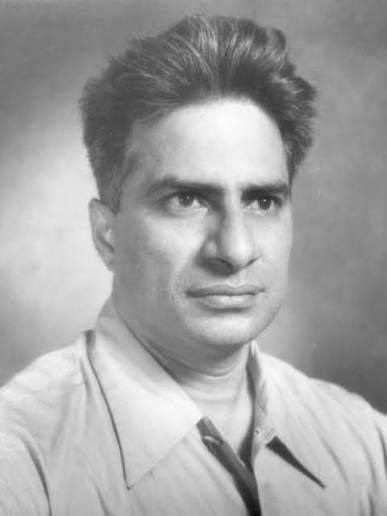
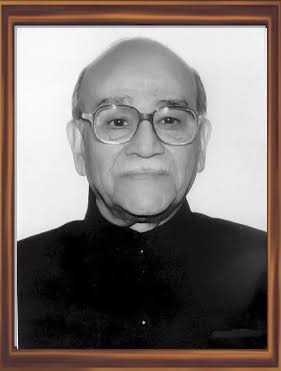
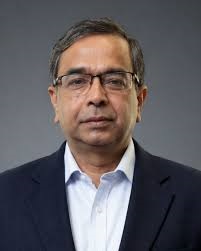
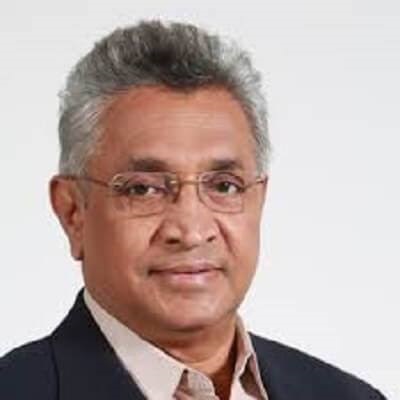
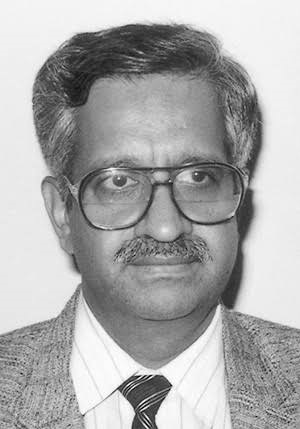
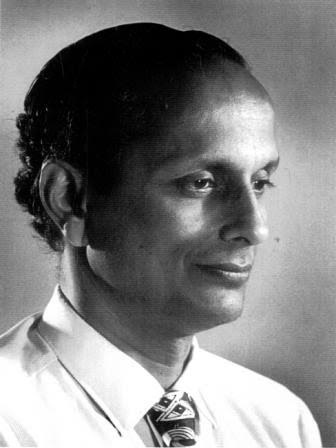
Sivaramakrishna Chandrasekhar Ramaseshan, commonly known as S. Ramaseshan, was a renowned Indian physicist and crystallographer who made significant contributions to crystal physics, solid-state physics, and optics. He is best remembered for his pioneering work in X-ray crystallography and for advancing India’s research capabilities in structural science.
Early Life and Education
S. Ramaseshan was born on 3 January 1923 in Mysore, India. He came from a highly academic family; his father was the famous scientist C. V. Raman’s brother, making him part of a strong scientific lineage.
He studied physics at the University of Madras and later went to the Indian Institute of Science (IISc), Bengaluru, where he developed a deep interest in crystallography under the influence of leading scientists of that time.
Scientific Career & Research
Ramaseshan built a distinguished research career at the Indian Institute of Science (IISc), where he worked for most of his professional life.
His major research areas included:
- X-ray crystallography
- Crystal symmetry and structure analysis
- Solid-state physics
- Optical properties of crystals
He played a key role in strengthening crystallography research in India and trained many future scientists in the field.
Major Discoveries and Inventions
Work in X-ray Crystallography
Ramaseshan made significant contributions to understanding atomic arrangements in crystals using X-ray diffraction techniques. His work helped in determining complex crystal structures with high precision.
Crystal Physics Contributions
He studied:
- Symmetry properties of crystals
- Phase transitions in solids
- Relationship between structure and physical properties
Optics Research
He also contributed to the study of:
- Optical birefringence in crystals
- Interaction of light with crystalline materials
His interdisciplinary approach helped connect crystallography with optical physics.
Awards and Honours
S. Ramaseshan received several prestigious recognitions, including:
- Fellowship of the Indian National Science Academy (INSA)
- Fellowship of the Indian Academy of Sciences
- Leadership roles in scientific institutions and journals
He was widely respected both in India and internationally for his scientific contributions.
Later Life and Death
In his later years, Ramaseshan continued his academic and research activities, mentoring young scientists and contributing to scientific policy and education in India. He also served in editorial and advisory roles in scientific organizations.
He passed away on 29 May 2003, leaving behind a strong legacy in crystallography and physics research.
Legacy and Impact
S. Ramaseshan played a major role in building India’s strength in crystallography and solid-state physics. His contributions helped:
- Establish advanced crystal structure research in India
- Train generations of physicists and crystallographers
- Promote interdisciplinary research in physics and materials science
His work continues to influence modern materials science, nanotechnology, and solid-state physics research.
Conclusion
S. Ramaseshan was a pioneering scientist whose work in crystallography and optics greatly advanced the understanding of material structures. His contributions strengthened India’s position in experimental and theoretical physics and continue to inspire researchers in the field of crystallography.
About the Author