Introduction
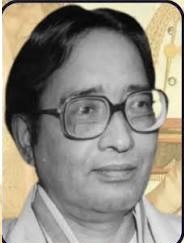
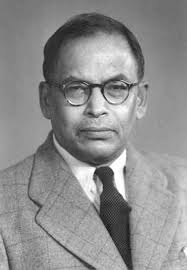
Meghnad Saha was one of India’s most influential astrophysicists and a pioneer in the field of astrophysical spectroscopy. He is best known for developing the Saha Ionization Equation, which explains the physical and chemical properties of stars based on their temperature and ionization state. His work transformed modern astrophysics by providing a scientific method to understand stellar atmospheres and classify stars. Beyond science, Saha also played an active role in nation-building and scientific institution development in India.
Early Life and Education
Meghnad Saha was born on 6 October 1893 in Dhaka (then part of British India). He came from a modest family, and his early education was marked by financial difficulties, but he excelled academically.
He studied at the Dhaka Collegiate School and later at the Presidency College, where he studied alongside other brilliant scientists like Satyendra Nath Bose.
Saha completed his Master’s degree in Mathematics and Physics in 1915, securing high academic distinction.
Scientific Career & Research
After completing his education, Saha began teaching and conducting research at the University of Calcutta. He later worked at the University of Allahabad, where he expanded his research in astrophysics and thermodynamics.
In 1920, he went to London and worked with leading physicists, gaining exposure to advanced research in atomic physics. Upon returning to India, he focused on explaining stellar spectra using principles of ionization and thermodynamics.
Saha also contributed significantly to scientific institution building. He was instrumental in establishing:
- Indian Association for the Cultivation of Science
- Institute of Nuclear Physics (Kolkata)
He also served as a Member of Parliament and contributed to science policy in independent India.
Major Discoveries and Inventions
1. Saha Ionization Equation
His most famous contribution is the Saha Ionization Equation, which explains how atoms in stars ionize depending on temperature and pressure.
nini+1ne=Zi2Zi+1(h22πmekT)3/2e−kTχ
This equation helps determine:
- Temperature of stars
- Chemical composition of stellar atmospheres
- Spectral classification of stars
2. Astrophysical Spectroscopy
Saha developed methods to interpret stellar spectra, helping astronomers understand what stars are made of and how hot they are.
3. Contribution to Thermodynamics and Plasma Physics
His work also contributed to:
- Plasma state understanding
- Ionization equilibrium
- High-temperature physics
Awards and Honours
Meghnad Saha received several prestigious recognitions:
- Fellow of the Royal Society
- Honorary doctorates from several universities
- Recognition from international scientific institutions
- Served as President of the Indian Science Congress Association
Later Life and Death
In his later years, Saha focused on science administration, education reform, and national planning for scientific development in India. He also served as a Member of Parliament, advocating for scientific progress in policymaking.
Meghnad Saha passed away on 16 February 1956 in New Delhi at the age of 62.
Legacy and Impact
Meghnad Saha’s contributions remain foundational in astrophysics and space science. His work enabled scientists to:
- Understand stellar composition
- Classify stars accurately
- Develop modern astrophysical models
His legacy includes:
- Establishment of major scientific institutions in India
- Inspiration for generations of astrophysicists
- Strong influence on space research and plasma physics
Today, the Saha Ionization Equation remains a core concept in astrophysics textbooks worldwide.
Conclusion
Meghnad Saha was a visionary scientist whose work bridged physics and astronomy. His ionization theory revolutionized the study of stars and remains a cornerstone of astrophysics. Beyond his scientific achievements, his efforts in building scientific institutions helped shape India’s modern research landscape. His life continues to inspire scientists exploring the universe and its fundamental law
About the Author