Introduction
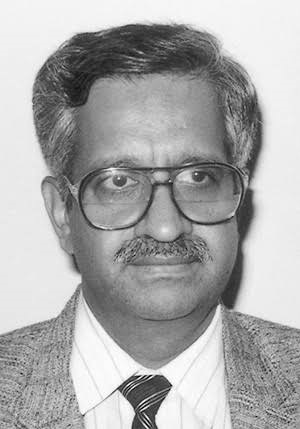
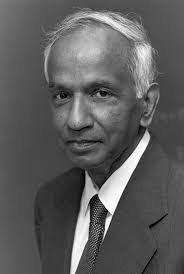
Subrahmanyan Chandrasekhar, popularly known as Chandra, was one of the greatest astrophysicists of the twentieth century. His pioneering work on the structure and evolution of stars revolutionized modern astrophysics. He is best known for formulating the Chandrasekhar Limit, which explains the maximum mass a white dwarf star can have before collapsing into a neutron star or black hole. His contributions significantly advanced the understanding of stellar evolution, black holes, and theoretical physics. In recognition of his groundbreaking work, Chandrasekhar received the Nobel Prize in Physics in 1983.
Early Life and Education
Subrahmanyan Chandrasekhar was born on 19 October 1910 in Lahore (now in Pakistan). He belonged to an academically inclined family and was the nephew of the renowned physicist C. V. Raman.
Chandrasekhar received his early education in Chennai and later attended Presidency College, where he earned a bachelor’s degree in physics. His exceptional academic abilities earned him a scholarship to study at University of Cambridge in 1930.
While traveling to England by ship, he began working on calculations related to stellar structure. These calculations would eventually lead to one of the most important discoveries in astrophysics—the Chandrasekhar Limit.
Scientific Career & Research
At Cambridge, Chandrasekhar conducted extensive research on the life cycle of stars and the effects of relativity on dense stellar objects. His early findings challenged prevailing scientific views and initially faced opposition from prominent astronomers.
Despite these challenges, Chandrasekhar continued his research and established himself as a leading theoretical astrophysicist. In 1937, he joined the University of Chicago, where he spent most of his professional career.
Over several decades, he made significant contributions to:
- Stellar structure and evolution
- White dwarf stars
- Neutron stars
- Black holes
- Radiative transfer
- Fluid dynamics
- Hydrodynamic stability
- General relativity
His rigorous mathematical approach helped shape modern theoretical astrophysics.
Major Discoveries and Inventions
1. Chandrasekhar Limit
Chandrasekhar’s most famous contribution is the Chandrasekhar Limit, which defines the maximum mass of a stable white dwarf star.
MCh≈1.4M⊙
According to this theory:
- White dwarfs with masses below this limit remain stable.
- Stars exceeding this limit collapse under their own gravity.
- Such collapse can lead to the formation of neutron stars or black holes.
This discovery fundamentally changed our understanding of stellar evolution and death.
2. Research on Black Holes
Chandrasekhar conducted pioneering theoretical studies on black holes and their mathematical properties. His work provided important foundations for modern black hole physics and relativistic astrophysics.
3. Stellar Dynamics
He developed advanced mathematical models describing:
- Stellar interiors
- Star clusters
- Gravitational interactions
- Stability of rotating stars
These contributions continue to influence astrophysical research.
4. Radiative Transfer Theory
His work on the movement of radiation through stellar atmospheres became a cornerstone of modern astrophysical modeling and observational astronomy.
Awards and Honours
Subrahmanyan Chandrasekhar received numerous prestigious awards throughout his career, including:
- Nobel Prize in Physics (1983)
- Royal Medal (1962)
- National Medal of Science (1967)
- Copley Medal (1984)
- Fellow of the Royal Society
In his honor, Chandra X-ray Observatory was named after him by NASA, recognizing his extraordinary contributions to astrophysics.
Later Life and Death
Chandrasekhar continued teaching, researching, and publishing influential scientific works throughout his life. He was widely respected not only for his scientific achievements but also for his dedication to mentoring young scientists.
He remained active in academia until his later years and authored several landmark books on astrophysics and mathematical physics.
Subrahmanyan Chandrasekhar passed away on 21 August 1995 in Chicago at the age of 84.
Legacy and Impact
Subrahmanyan Chandrasekhar’s contributions transformed the field of astrophysics and deepened humanity’s understanding of the universe. His work on stellar evolution, black holes, and theoretical physics remains fundamental to modern astronomy.
His legacy includes:
- Establishing the theoretical foundations of stellar evolution.
- Advancing black hole research.
- Inspiring generations of astrophysicists.
- Contributing to mathematical methods used in modern physics.
- Enhancing global understanding of the life cycles of stars.
Today, astrophysicists worldwide continue to rely on concepts and models developed by Chandrasekhar.
Conclusion
Subrahmanyan Chandrasekhar was one of the most influential astrophysicists in history. His discovery of the Chandrasekhar Limit revolutionized our understanding of stars and paved the way for modern studies of neutron stars and black holes. Through his exceptional scientific insight, mathematical brilliance, and lifelong dedication to research, Chandrasekhar left an enduring mark on astronomy and physics. His legacy continues to inspire scientists exploring the mysteries of the universe.
About the Author