Introduction
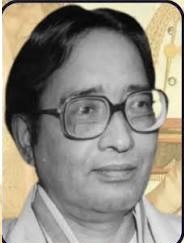
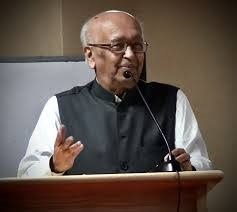
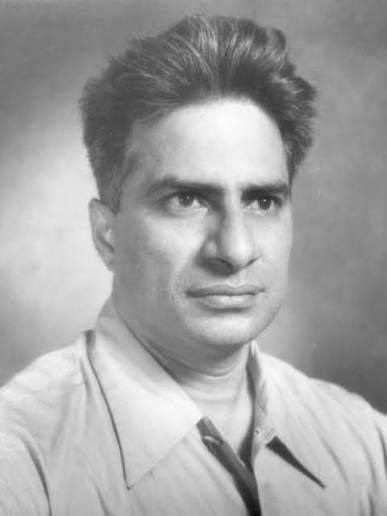
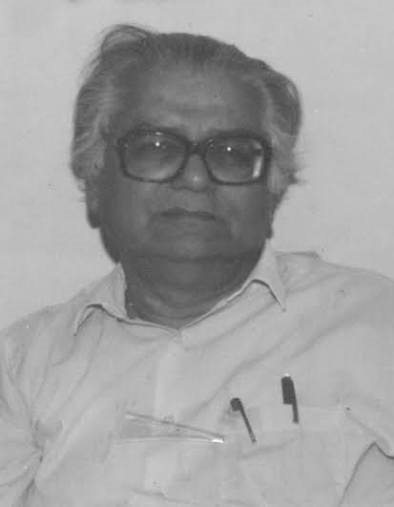
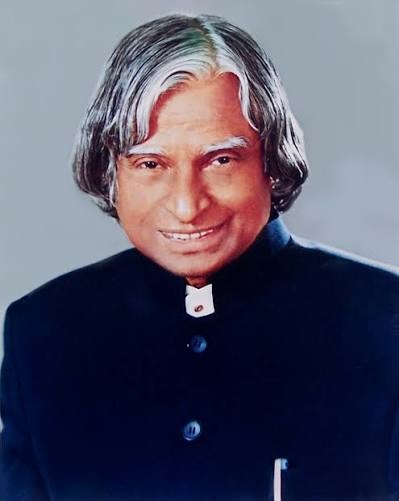
A. P. J. Abdul Kalam, popularly known as the “Missile Man of India,” was one of the most influential scientists in Indian history. He played a crucial role in the development of India’s aerospace and missile programs and contributed significantly to the country’s defense capabilities. His dedication to science, innovation, and national development made him an inspiration to millions. Beyond his scientific achievements, he served as the 11th President of India and was widely admired for his humility, vision, and commitment to education.
Early Life and Education
A.P.J. Abdul Kalam was born on 15 October 1931 in Rameswaram. He came from a modest family, and his father was a boat owner who served pilgrims visiting the town. Despite financial challenges, Kalam was a hardworking student with a strong interest in mathematics and science.
He completed his schooling in Rameswaram and later graduated in Physics from St. Joseph’s College in 1954. He then pursued Aerospace Engineering at Madras Institute of Technology, where he developed a deep passion for aircraft design and aerospace technology.
Scientific Career & Research
After completing his engineering studies, Kalam joined the Defence Research and Development Organisation in 1958. He initially worked on designing small helicopters and defense-related technologies.
In 1969, he joined the Indian Space Research Organisation, where he became the Project Director of India’s first indigenous satellite launch vehicle, the SLV-III. Under his leadership, India successfully launched the Rohini Satellite into orbit in 1980.
Later, Kalam returned to DRDO and led several strategic defense projects. He played a key role in the Integrated Guided Missile Development Programme (IGMDP), which aimed to strengthen India’s missile capabilities.
Major Discoveries and Inventions
Although Kalam was not known for a single scientific discovery, he led and contributed to several groundbreaking aerospace and missile projects:
1. Integrated Guided Missile Development Programme (IGMDP)
Kalam was the chief architect of the IGMDP, which resulted in the development of several indigenous missiles.
2. Prithvi Missile
Prithvi Missile was India’s first indigenously developed ballistic missile designed for short-range tactical operations.
3. Agni Missile Series
Agni Missile became one of India’s most important strategic missile systems. Kalam’s leadership helped establish India as a missile-capable nation.
4. Akash Missile
Akash Missile was developed for air defense and remains an important part of India’s military arsenal.
5. Nag Missile
Nag Missile was developed as a sophisticated anti-tank weapon.
6. Satellite Launch Vehicle (SLV-III)
Kalam’s work on the SLV-III project laid the foundation for India’s future space-launch capabilities and contributed to the growth of the Indian space program.
7. Pokhran-II Nuclear Tests
Kalam played a significant coordinating role in the successful Pokhran-II nuclear tests, which demonstrated India’s nuclear capability.
Awards and Honours
A.P.J. Abdul Kalam received numerous awards and recognitions throughout his life:
- Padma Bhushan (1981)
- Padma Vibhushan (1990)
- Bharat Ratna (1997)
- Honorary doctorates from many universities worldwide
- Numerous national and international science and technology awards
These honors recognized his extraordinary contributions to aerospace engineering, missile technology, and national development.
Later Life and Death
In 2002, Kalam was elected as the 11th President of India. He served until 2007 and became known as the “People’s President” because of his close connection with students and citizens.
After his presidency, he continued teaching, writing books, and motivating young people to pursue education and innovation. On 27 July 2015, while delivering a lecture at Indian Institute of Management Shillong, he suffered a cardiac arrest and passed away at the age of 83.
His death was mourned across India and around the world.
Legacy and Impact
A.P.J. Abdul Kalam’s legacy extends far beyond science and politics. His contributions helped India become self-reliant in missile technology and strengthened its aerospace and defense sectors. His vision for a developed India inspired generations of students, scientists, and innovators.
Through his books, speeches, and educational initiatives, he encouraged young people to dream big and work hard to achieve their goals. Even today, he remains a symbol of knowledge, patriotism, integrity, and scientific excellence.
Conclusion
Dr. A.P.J. Abdul Kalam transformed India’s aerospace and missile technology landscape through his leadership, innovation, and dedication. From launching satellites to developing advanced missile systems, his achievements played a crucial role in strengthening India’s scientific and defense capabilities. Remembered as both a brilliant scientist and a beloved leader, Kalam’s life continues to inspire millions to pursue knowledge, innovation, and service to the nation.
About the Author