1. Introduction
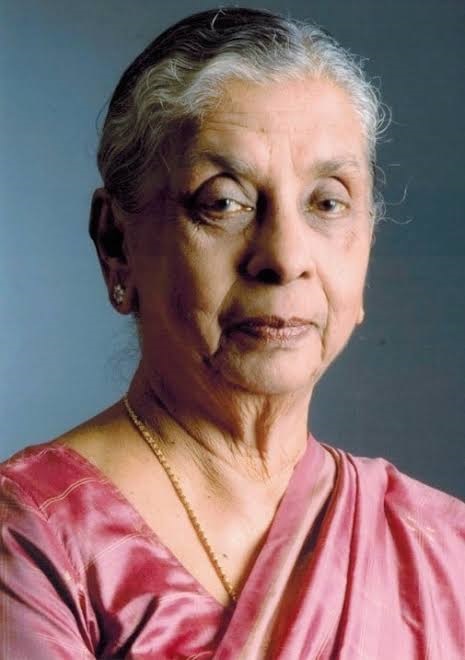
Anna Rajam Malhotra (née George) was a pioneering civil servant who shattered deep-seated gender barriers to become independent India’s first female Indian Administrative Service (IAS) officer. Over a distinguished career spanning nearly four decades, she worked closely with top national leaders, led critical industrial and infrastructural milestones like India’s first computerized port, and paved the way for generations of women in governance.
2. Quick Facts
- Full Name: Anna Rajam Malhotra (née Anna Rajam George)
- Native Name: അന്ന രാജം മലഹോത്ര
- Date of Birth: 17 July 1927
- Place of Birth: Niranam village, Pathanamthitta district, Kerala, British India
- Nationality: Indian
- Occupation / Profession: Civil Servant, IAS Officer, Administrator
- Field of Achievement: Public Administration and Infrastructure Development
- Years Active: 1951 – 1990 (Post-retirement corporate roles thereafter)
3. Award Information (Focus: Padma Bhushan, 1989)
- Award Name: Padma Bhushan
- Award Category: India’s Third-Highest Civilian Award
- Award Year: 1989
- Presented By: The President of India
- Date of Ceremony: March/April 1989 (Rashtrapati Bhavan, New Delhi)
- Citation / Official Reason: In recognition of exceptional and distinguished service to the nation in public administration and civil governance.
- Previous Recipients (Contextual): Noted leaders, scientists, and administrators from preceding years.
- Next Recipients (Contextual): Distinguished achievers of the subsequent national honors cycle.
4. Why She Received the Award
Malhotra was honored with the Padma Bhushan for her monumental contributions to Indian public administration. Beyond being the first woman to crack the civil services, she managed high-stakes public sector projects—most notably heading the Nhava Sheva Port Trust (now Jawaharlal Nehru Port Trust) near Mumbai, successfully building India’s first computerized port. Her administrative grit, integrity, and relentless execution of national infrastructure projects set a gold standard for public service.
5. Early Life
Born in Niranam, Kerala, into a progressive family that deeply valued education, Anna grew up alongside a rich literary heritage (she was the granddaughter of the renowned Malayalam author Pailo Paul). Moving across regions for her education, she cultivated an early resilience and intellectual curiosity that would later help her navigate a rigid, male-dominated colonial and post-colonial bureaucracy.
6. Education
- Schooling: Completed her early education at Kozhikode (Calicut), Kerala, attending Providence Women’s College and Malabar Christian College.
- Higher Education: Moved to Chennai and obtained her Master’s degree in English Literature from the University of Madras in 1949.
7. Career Journey
- 1950–1951: Cleared the Civil Services Examination and stood her ground before a skeptical UPSC interview panel that initially nudged her toward the “more suitable” Foreign or Central services.
- 1951 Batch IAS: Appointed to the Madras (now Tamil Nadu) cadre, serving under legendary leaders like Chief Minister C. Rajagopalachari.
- Field & Secretariat Roles: Handled rigorous district assignments (including Hosur as Sub-Collector) and later served in the Ministry of Home Affairs, becoming the first woman to hold a secretarial post in the central government.
- Key National Projects: Spearheaded the planning and execution of the modern Nhava Sheva Port (JNPT) in Mumbai and worked closely with Rajiv Gandhi on the management of the 1982 Asian Games.
- Post-Retirement: Served as a Director on the board of Hotel Leela Venture Ltd.
8. Major Achievements
- Pioneering Breakthrough: Broke the gender ceiling to become independent India’s very first female IAS officer.
- India’s First Computerized Port: Successfully built and commissioned the greenfield Nhava Sheva Port, revolutionizing maritime trade logistics in India.
- High-Level Advisory: Trusted directly by top leadership, she accompanied Prime Minister Indira Gandhi on multi-state agricultural tours and coordinated national-scale administrative undertakings.
9. Contribution to the Nation
Anna Rajam Malhotra fundamentally altered the landscape of Indian governance. By proving that women could successfully manage rigorous field operations, law and order, and massive economic infrastructure, she dismantled structural gender bias from within. Her meticulous planning of vital national ports contributed significantly to India’s post-independence trade capacity and modernization.
10. Other Awards and Honours
- Padma Bhushan (Government of India, 1989)
- Widely celebrated during her lifetime and posthumously as a trailblazing icon of women’s empowerment and bureaucratic excellence in India.
11. Legacy and Influence
Malhotra’s legacy is written into the foundational structure of modern Indian civil services. When she entered the service in 1951, she was the sole woman in an entirely male workforce; today, women comprise a massive, empowered share of successive IAS batches. She was married to R.N. Malhotra, her IAS batchmate who later served as the Governor of the Reserve Bank of India. She passed away in September 2018 at the age of 91, leaving behind an enduring inspiration for civil service aspirants everywhere.
12. Interesting Facts
- The “Unsuitable” Recommendation: When interviewed by the UPSC board chaired by R.N. Banerjee, she was explicitly advised to opt for the Foreign or Central services because administration was deemed “not suitable for women”—a suggestion she politely but firmly rejected.
- Armed Protection: During her early field postings, given her unconventional role in managing rough terrains and smugglers, she was provided a revolver for self-protection, showcasing the sheer grit required in her early career.
- Played Down Her Own Role: In later interviews, she modestly downplayed her monumental historical status, often referring to her breakthrough as a “fluke” driven simply by hard work and timing.
13. Quotes
“Suppose I had failed, then would you not give another woman her chance? They should be enrolled on merit and given a fair chance.” — Anna Rajam Malhotra
“In walking the corridors of power, Anna Rajam Malhotra opened doors for generations of women to follow.” — Historians / Tributes
14. Timeline
- 1927: Born on July 17 in Niranam, Kerala.
- 1949: Completes her Master’s degree in English Literature from Madras University.
- 1951: Clears the Civil Services Examination and joins the Indian Administrative Service (IAS).
- 1950s–1970s: Serves across various rigorous field and secretariat assignments in the Madras/Tamil Nadu cadre.
- 1982: Coordinates logistical and administrative planning for the Asian Games in New Delhi.
- 1980s: Serves as Chairperson of the Nhava Sheva Port Trust, launching India’s first computerized port.
- 1989: Conferred the Padma Bhushan by the Government of India.
- 2018: Passes away on September 17 at the age of 91.
15. References
- Ministry of Home Affairs, Government of India – Padma Awards Directory.
- The Hindu archives and biographical features (“Grit meets Grace”).
- Mango Seed and Other Stories by M.K.K. Nair.
- National archives on the history of the Indian Administrative Service (IAS).
16. Related Personalities
- R.N. Malhotra (Husband, IAS batchmate, and former RBI Governor)
- C. Rajagopalachari (First Chief Minister under whom she served in the Madras cadre)
- Indira Gandhi & Rajiv Gandhi (Prime Ministers under whom she managed key national portfolios and projects)
- Kiran Bedi (India’s first female IPS officer, another trailblazer in public service)
17. Frequently Asked Questions (FAQ)
Q1: Who was Anna Rajam Malhotra?
A: Anna Rajam Malhotra was independent India’s very first female Indian Administrative Service (IAS) officer, clearing the civil services exam in 1951.
Q2: What was her biggest professional achievement?
A: She is widely celebrated for heading the Nhava Sheva Port Trust, where she successfully planned and built India’s first computerized port, alongside decades of stellar administrative leadership.
Q3: When did she receive the Padma Bhushan?
A: She was awarded the Padma Bhushan by the Government of India in 1989.
About the Author