1. Introduction
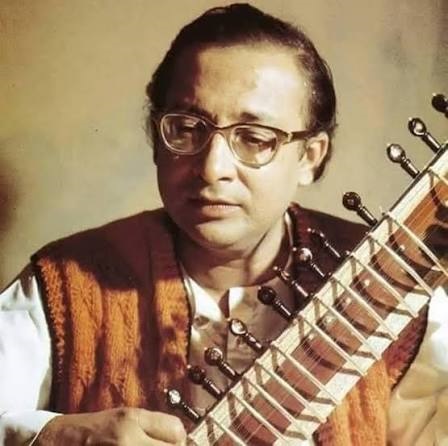
Pandit Nikhil Banerjee (14 October 1931 – 27 January 1986) was a legendary Indian classical sitarist. Along with Pandit Ravi Shankar and Ustad Vilayat Khan, he formed the triumvirate of master sitarists who dominated the global stage of Hindustani classical music during the post-independence era. Revered as a “musician’s musician”, Banerjee was celebrated for his deeply contemplative, emotionally intense, and technically flawless renditions.
2. Quick Facts
- Full Name: Nikhil Ranjan Banerjee
- Native Name: নিখিল রঞ্জন বন্দ্যোপাধ্যায়
- Date of Birth: 14 October 1931
- Place of Birth: Calcutta (Kolkata), Bengal Presidency, British India
- Nationality: Indian
- Occupation/Profession: Classical Sitarist, Composer, Music Educator
- Field of Achievement: Hindustani Classical Instrumental Music (Maihar Gharana)
- Years Active: 1940s–1986
3. Award Information (Focus: Padma Bhushan)
- Award Name: Padma Bhushan
- Award Category: Art / Classical Music
- Award Year: 1986 (Conferred posthumously / around the year of his passing)
- Presented By: The President of India
- Citation/Official Reason: Recognized for exceptional and distinguished service to Indian classical instrumental music and cultural arts.
4. Why Did They Receive the Award?
Pandit Nikhil Banerjee received the Padma Bhushan for his lifelong, uncompromising dedication to the purity and elevation of Hindustani classical music. He single-handedly expanded the expressive limits of the sitar, blending the rigorous architecture of traditional ragas with deep emotional lyricism, and representing India on major international platforms.
5. Early Life
Born in Calcutta into a middle-class conservative Brahmin family, Banerjee grew up with music present in his household—his father, Jitendranath Banerjee, was an amateur sitar player. However, in those times, pursuing music professionally was heavily discouraged for educated families. Displaying prodigious talent from early childhood, young Nikhil spent hours listening to his father practice, eventually receiving a toy sitar at age five before transitioning to rigorous lessons.
6. Education
- Early Grooming: Initially guided by his father Jitendranath and briefly trained by Mushtaq Ali Khan and Jnan Prakash Ghosh.
- Advanced Training (The Maihar Gharana): Studied under the legendary Baba Allauddin Khan (mentor to Ravi Shankar and Ali Akbar Khan) beginning in 1947, enduring years of intense gurukul discipline.
- Further Mentorship: Continued advanced training under Allauddin Khan’s son, Ustad Ali Akbar Khan, and daughter, Annapurna Devi.
7. Career Journey
- Child Prodigy Debut: Won the All-Bengal Sitar Competition and became the youngest artist employed by All India Radio (AIR) in Calcutta at just nine years old.
- Global Concert Tours: Embarked on his first international cultural delegation tour for the Government of India in 1955 (visiting Poland, Russia, and China) and debuted in the United States in 1967.
- Academic Pedagogy: Served for years as a visiting professor and artist-in-residence during summers at the University of California, Berkeley.
8. Major Achievements
- Sangeet Natak Akademi Award (1968): Honored early in his career as India’s outstanding musician of the year.
- Padma Shri (1968): Conferred by the Government of India.
- Stylistic Innovation: Mastered the complex integration of tantrakari (instrumental idioms) and gayaki ang (vocal style), utilizing a fully closed jawari setup that gave his sitar a uniquely sustained, vocalic depth.
9. Contribution to the Nation
Nikhil Banerjee preserved and propagated the pristine, orthodox aesthetics of traditional ragas at a time when commercial pressures pushed many instrumentalists toward fast, flashy crowd-pleasing gimmicks. He served as a cultural ambassador for India, bringing profound spiritual depth and traditional integrity to Western academic and public audiences.
10. Other Awards and Honours
- All-Bengal Sitar Competition Gold Medal (First place as a child prodigy).
- Padma Shri (1968).
- Sangeet Natak Akademi Award (1968).
- Padma Bhushan.
11. Legacy and Influence
Banerjee was famously known as a “maestro’s maestro” or “musician’s musician” due to his absolute disregard for material fame and commercial celebrity. His extensive discography of live concert recordings remains a gold standard and mandatory listening blueprint for contemporary sitar students around the globe.
12. Interesting Facts
- He became the youngest regular musician hired by All India Radio at age nine.
- Unlike many of his contemporaries who aggressively courted Western pop crossover fame (such as collaborations with rock musicians), Banerjee remained fiercely rooted in traditional, uncompromised classical performance.
- Renowned American publication The San Francisco Chronicle famously praised his lightning-fast technique by writing: “technique is a phenomenon, faster than cheetahs, more secure than the dollar”.
13. Quotes
- “Music is a jealous mistress; it demands your entire existence, leaving no room for worldly vanity or superficial pursuits.” — Pandit Nikhil Banerjee (Recalled by his students)
14. Timeline
- 1931: Born on October 14 in Calcutta.
- 1940: Wins the All-Bengal Sitar Competition and joins All India Radio at age nine.
- 1947: Begins his intensive training under Baba Allauddin Khan in Maihar.
- 1955: Undertakes his first official international cultural tour.
- 1968: Awarded the Padma Shri and the Sangeet Natak Akademi Award.
- 1986: Passes away suddenly from a heart attack on January 27 in Calcutta at the age of 54.
15. References
- Wikipedia & Biographical Archives on Pandit Nikhil Banerjee
- The New York Times – Obituary Archives (February 1986)
- Sangeet Natak Akademi Award Directories
- Raga Records liner notes and historical interviews by Ira Landgarten
16. Related Personalities
- Baba Allauddin Khan (Guru and legendary patriarch of the Maihar Gharana)
- Pandit Ravi Shankar (Contemporaneous sitar maestro and fellow disciple)
- Ustad Ali Akbar Khan (Sarod maestro and co-mentor)
17. Frequently Asked Questions (FAQ)
- Q: Who was Pandit Nikhil Banerjee?A: He was one of India’s preeminent classical sitar virtuosos of the 20th century, celebrated for his profound adherence to traditional Maihar gharana aesthetics.
- Q: Who was his primary guru?A: His primary musical mentor was the legendary Baba Allauddin Khan.
- Q: What major honors did he receive?A: He was decorated with the Padma Shri (1968), the Sangeet Natak Akademi Award (1968), and the Padma Bhushan.
About the Author