1. Introduction
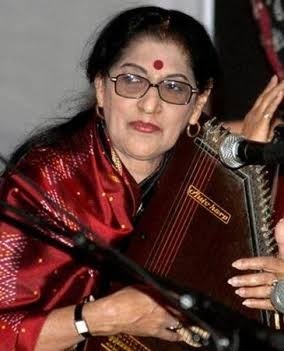
Kishori Amonkar (10 April 1931 – 3 April 2017) was a legendary icon of Indian classical music, celebrated globally as one of the finest and most innovative khyal vocalists in the history of Hindustani music. Belonging to the elite Jaipur gharana, she revolutionized traditional vocal aesthetics by infusing deep emotional expression (bhava) into her performances, earning her the affectionate and reverent title of “Gaan Saraswati”.
2. Quick Facts
- Full Name: Kishori Amonkar
- Native Name: किशोरी अमोनकर
- Date of Birth: 10 April 1931
- Place of Birth: Bombay (now Mumbai), British India
- Nationality: Indian
- Occupation/Profession: Classical Vocalist, Composer, Music Educator
- Field of Achievement: Hindustani Classical Music (Khyal, Thumri, and Bhajan)
- Years Active: 1940s–2017
3. Award Information (Focus: Padma Vibhushan)
- Award Name: Padma Vibhushan
- Award Category: Art / Classical Music
- Award Year: 2002
- Presented By: The President of India
- Citation/Official Reason: Recognized for exceptional and distinguished service to the field of classical music and arts, elevating the global standing of Indian vocal performance.
4. Why Did They Receive the Award?
Kishori Amonkar received India’s second-highest civilian honor, the Padma Vibhushan, for her lifelong dedication to expanding and preserving the depth of Hindustani classical music. Her unique ability to blend rigorous classical discipline with profound emotional resonance transformed the listening experience of Indian vocal art, securing her place among the cultural immortals of the nation.
5. Early Life
Born in Bombay into a family deeply steeped in musical heritage, Kishori was the eldest daughter of the legendary Jaipur gharana vocalist Mogubai Kurdikar. Growing up surrounded by master musicians, her childhood was shaped by rigorous listening and early exposure to masterclasses. However, her early life was also touched by personal loss when her father passed away when she was just seven years old, leaving her mother to guide her through life and intensive musical training single-handedly.
6. Education
- Schooling & General Studies: Completed her foundational schooling in Bombay.
- Musical Training (The Guru-Shishya Parampara): Received intense, rigorous vocal training under the strict tutelage of her mother, Mogubai Kurdikar.
- Additional Guidance: Later trained under other musical stalwarts of various traditions, including Anjanibai Malpekar, Anwar Hussain Khan, Sharadchandra Arolkar, and Balkrishnabuwa Parwatkar, allowing her to develop a uniquely expansive musical vocabulary.
7. Career Journey
- Early Stage Debut (1940s–1950s): Began performing publicly as a young woman, steadily carving out her distinct space in the classical circuit.
- Temporary Hiatus & Comeback: Overcame a severe illness that temporarily affected her voice in her 20s, returning with a renewed, deeply internalized vocal philosophy.
- Mainstream Prominence (1960s–1980s): Rose to become the preeminent female vocalist of her generation, headlining major music festivals across India and the world.
- Rare Film Venture: Lent her legendary voice to classical-based film numbers, notably for the acclaimed film Drishti (1990) and Geet Gaya Patharon Ne (1964), though she largely stayed away from commercial cinema to protect the purity of swaras.
8. Major Achievements
- Mastery of Emotional Expression: Pioneered a romanticist shift in Hindustani classical music, prioritizing emotional weight (bhava) and poetry over dry technical rigidity.
- Sangeet Natak Akademi Fellowship (2009): Awarded the highest fellowship by the national academy for music, dance, and drama.
- Padma Bhushan (1987) & Padma Vibhushan (2002): Conferred with two of India’s highest civilian honors.
9. Contribution to the Nation
Amonkar broke conventional boundaries by refusing to let rigid school rules (gharanas) stifle musical expression. By incorporating delicate nuances from other traditions into her core Jaipur style, she gave Indian classical music a fresh, evergreen vitality. She also served as an uncompromising cultural ambassador, taking traditional Indian vocal arts to premier global stages.
10. Other Awards and Honours
- Sangeet Natak Akademi Award (1985).
- Padma Bhushan (1987).
- Dr. T.M.A. Pai Outstanding Konkani Award (1991).
- Padma Vibhushan (2002).
- Sangeet Natak Akademi Fellowship (2009).
- M.S. Subbulakshmi Award (2016).
11. Legacy and Influence
Kishori Amonkar is remembered as a titan who demanded absolute focus and reverence from her audiences—famously halting concerts if listeners caused distractions. Her legacy lives on through countless recordings that remain textbooks for aspiring vocalists, proving that classical tradition and emotional innovation can exist in breathtaking harmony.
12. Interesting Facts
- She was famously uncompromising about concert etiquette, once refusing to perform because the audience was behaving poorly, prioritizing absolute respect for the divine art form.
- Though she belonged strictly to the Jaipur gharana, she fearlessly borrowed emotional elements from the Gwalior and Agra styles to serve the mood of the raga.
- Both she and her mother, Mogubai Kurdikar, were honored with the Padma Bhushan in their respective lifetimes.
13. Quotes
“Music is an expression of the search for the infinite. It is not meant for mere entertainment; it is a spiritual journey inward.” — Kishori Amonkar
14. Timeline
- 1931: Born on April 10 in Bombay.
- 1985: Receives the Sangeet Natak Akademi Award.
- 1987: Conferred with the Padma Bhushan.
- 1990: Composes and sings masterwork classical tracks for the film Drishti.
- 2002: Awarded the Padma Vibhushan by the President of India.
- 2009: Honored with the Sangeet Natak Akademi Fellowship.
- 2017: Passes away on April 3 in Prabhadevi, Mumbai, at the age of 84.
15. References
- Wikipedia & Britannica Profiles on Kishori Amonkar
- Sangeet Natak Akademi Archives & Fellowship Directories
- Between Two Tanpuras by Vamana Hari Deshpande
- Obituary archives from The Hindu, The Indian Express, and The Guardian
16. Related Personalities
- Mogubai Kurdikar (Mother, legendary vocalist, and primary guru)
- Ustad Alladiya Khan (Founder of the Jaipur-Atrauli gharana)
- Bhimsen Joshi (Contemporaneous vocal maestro of Hindustani classical music)
17. Frequently Asked Questions (FAQ)
- Q: What title was Kishori Amonkar popularly known by?A: She was widely known as “Gaan Saraswati” due to her divine mastery over classical vocal music.
- Q: Which musical tradition did she belong to?A: She was primarily trained in the Jaipur gharana by her mother Mogubai Kurdikar, though she integrated elements from other styles into her singing.
- Q: What are her highest national honors?A: She was awarded both the Padma Bhushan (1987) and the Padma Vibhushan (2002) by the Government of India.
About the Author