1. Introduction
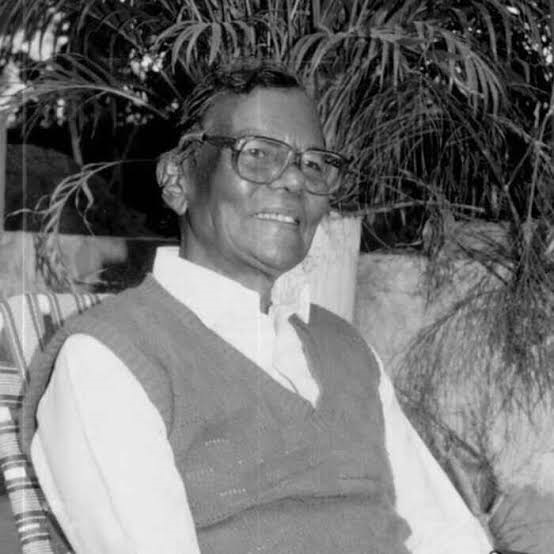
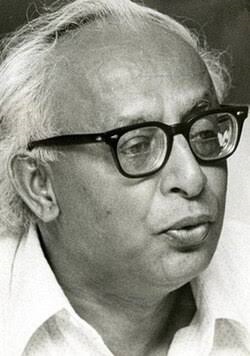
Mysore Narasimhachar Srinivas (1916–1999), widely known as M. N. Srinivas, was one of India’s most celebrated sociologists and social anthropologists. He is internationally acclaimed for transforming the study of Indian society from text-bound Indology to empirical, field-based ethnography. By introducing revolutionary sociological frameworks like “Sanskritization,” “Westernization,” and the “Dominant Caste,” Srinivas fundamentally altered how scholars understand caste, rural life, and social mobility in India.
2. Quick Facts
- Full Name: Mysore Narasimhachar Srinivas
- Native Name: ಮೈಸೂರು ನರಸಿಂಹಾಚಾರ್ ಶ್ರೀನಿವಾಸ್
- Date of birth: November 16, 1916
- Place Of birth: Mysore, Kingdom of Mysore, British India (now Karnataka, India)
- Nationality: Indian
- Occupation/ Profession: Sociologist and Social Anthropologist
- Field of Achievement: Sociology, Social Anthropology, and Ethnographic Research
- Years Active: 1940s – 1999
3. Award Information (Focus: Padma Bhushan)
- Award Name: Padma Bhushan
- Award Category: Civil Honour (Third-highest civilian award in India)
- Award Year: 1977
- Presented By: Government of India
- Date of Ceremony: 1977 (Annual Investiture Ceremony, Rashtrapati Bhavan)
- Citation/Official Reason: For exceptional and distinguished services to literature, education, and the development of social sciences in India.
- Previous Recipients: Notable figures in science, arts, public affairs, and literature from preceding years.
- Next Recipients: Notable scholars, administrators, and artists from subsequent years.
4. Why They Receive the Award
M. N. Srinivas was awarded the Padma Bhushan in recognition of his monumental role in establishing modern sociology and social anthropology in India. His pioneering fieldwork, deep structural analysis of Indian villages, and world-renowned theoretical models provided critical analytical tools for policymakers, sociologists, and historians.
5. Early Life
Born in Mysore into a traditional Tamil-speaking Hebbar Iyengar Brahmin family, Srinivas grew up in an environment that deeply valued education. His father was a government servant, and his older brothers pursued academic paths. Early in life, he developed a sharp observational eye, frequently wandering through local neighborhoods and observing diverse community interactions in Mysore and surrounding rural areas, planting the seeds for his future ethnographic career.
6. Education
- Undergraduate & Early Studies: Graduated from the University of Mysore, studying social philosophy under notable teachers like A. R. Wadia.
- Post-Graduation: Earned his master’s degree and D.Phil. in Sociology from the University of Bombay (now Mumbai) under the guidance of pioneering sociologist G.S. Ghurye.
- Doctoral & Post-Doctoral Studies: Went to the University of Oxford (Exeter College and All Souls College), where he earned a second D.Phil. under the intellectual mentorship of legendary anthropologists A.R. Radcliffe-Brown and E.E. Evans-Pritchard.
7. Carrier Journey
- Academic Pioneer in Baroda: Returned to India and founded the Department of Sociology at Maharaja Sayajirao University of Baroda in 1951.
- Delhi School of Economics: Joined the University of Delhi in 1959 as the first Professor of Sociology at the Delhi School of Economics, building one of Asia’s most prominent sociology departments.
- Institution Building in Bangalore: Helped establish the Institute for Social and Economic Change (ISEC) in Bangalore as Joint Director in 1972, followed by associations with the National Institute of Advanced Studies (NIAS).
8. Major Achievements
- The Remembered Village (1976): Wrote a classic anthropological monograph on Rampura village. Notably, after his original field notes were destroyed in a fire at Stanford University, he reconstructed the entire book largely from memory.
- Conceptual Frameworks: Coined and popularized globally recognized sociological terms: Sanskritization, Westernization, and Dominant Caste.
- Professionalizing Indian Sociology: Served as President of the Indian Sociological Society and overhauled the Sociological Bulletin, shaping generations of global scholars.
9. Contribution to the Nation
M. N. Srinivas shifted India’s intellectual posture away from western-centric theories and colonial textual stereotypes, urging scholars to look at India through the “field view” rather than just the “book view”. His empirical studies provided independent India’s planners, sociologists, and legal systems with realistic ground-level insights into caste dynamics, rural poverty, social stratification, and the actual implementation of affirmative action policies.
10. Other Awards and Honours
- Padma Bhushan (1977) – Government of India
- Rivers Memorial Medal (1956) – Royal Anthropological Institute, Great Britain and Ireland
- R.N. Saxena Memorial Award (Indian Sociological Society)
- Honorary Fellow of the Royal Anthropological Institute of Great Britain and Ireland
- Foreign Honorary Member of the American Academy of Arts and Sciences
11. Legacy and Influence
M. N. Srinivas is celebrated as the founding father of empirical sociology in India. His concepts remain foundational modules in social science curricula worldwide. By demonstrating that caste is not a static, rigid script but a dynamic system of political competition, economic leverage, and social mobility, he changed how modern India evaluates its social structure.
12. Interesting Facts
- The Phoenix Manuscript: His famous book The Remembered Village almost never existed; when anti-Vietnam war protesters accidentally burned down his office at Stanford University in the 1970s, his meticulous field notes from Rampura turned to ash. He bravely rewrote the entire masterpiece from memory.
- The Earthworm Perspective: He famously advised his students to adopt an “earthworm’s-eye view” rather than a “bird’s-eye view,” emphasizing deep, ground-level immersion into everyday human lives over distant, abstract theorizing.
- Oxford Honor: Oxford University created a special lectureship tailored explicitly for him during his academic travels.
13. Quotes
“To look at the world from the earthworm’s-eye view rather than a bird’s-eye view is essential for a true understanding of society.”
14. Timeline
- 1916: Born on November 16 in Mysore, Karnataka
- 1936: Completed undergraduate studies at the University of Mysore
- 1942: Published his first major work, Marriage and Family in Mysore
- 1947: Earned his D.Phil. from Oxford University under Radcliffe-Brown
- 1952: Published his seminal study, Religion and Society among the Coorgs of South India
- 1959: Appointed Professor of Sociology at the Delhi School of Economics
- 1976: Published The Remembered Village
- 1977: Awarded the Padma Bhushan by the Government of India
- 1999: Passed away on November 30 in Bangalore at the age of 83
15. References
- Wikipedia contributors. M. N. Srinivas. Wikipedia, The Free Encyclopedia.
- The Guardian – Obituary: M. N. Srinivas (December 1999).
- eGyanKosh (IGNOU Archives) – Unit 10: M. N. Srinivas Biographical and Theoretical Profiles.
- Testbook & Triumph IAS – Academic analysis of Sanskritization, Westernization, and Dominant Caste frameworks.
16. Related Personalities
- G. S. Ghurye – Legendary Indian sociologist and Srinivas’s mentor at the University of Bombay.
- A. R. Radcliffe-Brown – Celebrated British social anthropologist and Srinivas’s supervisor at Oxford.
- Andre Beteille – Prominent Indian sociologist and notable student/colleague of M.N. Srinivas.
17. Frequently Asked Questions (FAQ)
Q: Who was M. N. Srinivas?
A: M. N. Srinivas was a pioneering Indian sociologist and social anthropologist who transformed the study of Indian society through rigorous field-based ethnography.
Q: What are the main sociological concepts introduced by M. N. Srinivas?
A: He introduced three major concepts: Sanskritization (upward social mobility via emulating higher caste customs), Westernization (social changes driven by Western technology, education, and values), and Dominant Caste (castes holding local economic and political power).
Q: What is The Remembered Village about?
A: It is a classic ethnographic account of social life in a South Indian village named Rampura, famously reconstructed by Srinivas entirely from memory after his field notes were destroyed in a fire.
Q: Did M. N. Srinivas receive any national awards?
A: Yes, he was honored with the Padma Bhushan by the Government of India in 1977.
About the Author