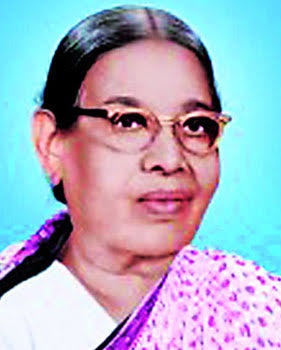
Tarabai Modak (19 April 1892 – 31 August 1973) was a pioneering Indian educationist and social reformer who transformed early childhood education in India. She is widely known as the “Montessori of India” for adapting Montessori methods to suit the needs of rural and underprivileged children. Through her innovative, low-cost teaching techniques and community-based preschool models, she helped make education accessible to thousands of children. In recognition of her outstanding contribution to education and social welfare, the Government of India awarded her the Padma Bhushan in 1962.
1. Introduction
Tarabai Modak was one of India’s foremost pioneers in preschool education and child development. She dedicated her life to improving educational opportunities for young children, particularly in rural and tribal communities. By combining the principles of the Montessori method with locally available materials, she developed affordable and practical teaching methods that could be used across India. Her work laid the foundation for the country’s modern preschool and Anganwadi systems.
2. Quick Facts
| Information | Details |
|---|---|
| Full Name | Tarabai Bapuji Modak |
| Native Name | ताराबाई मोडक (Marathi) |
| Date of Birth | 19 April 1892 |
| Place of Birth | Indore, Central India Agency, British India (present-day Madhya Pradesh, India) |
| Date of Death | 31 August 1973 |
| Nationality | Indian |
| Profession | Educationist, Social Reformer |
| Field of Achievement | Early Childhood Education |
| Years Active | 1910s–1973 |
| Known For | Pioneer of preschool education in India; “Montessori of India” |
3. Award Information
| Field | Details |
|---|---|
| Award Name | Padma Bhushan |
| Award Category | Education |
| Award Year | 1962 |
| Presented By | President of India |
| Date of Ceremony | 1962 Investiture Ceremony |
| Official Citation | Distinguished service in the field of education and child welfare |
| Previous Recipients (Education) | Prominent educationists recognized in earlier Padma Awards |
| Next Recipients (Education) | Educationists honoured in subsequent Padma Awards |
4. Why Did She Receive the Padma Bhushan?
Tarabai Modak was awarded the Padma Bhushan for:
- Revolutionizing preschool education in India.
- Adapting the Montessori method for Indian conditions.
- Making early childhood education affordable for rural and tribal communities.
- Promoting child-centered learning through play and activity.
- Training teachers and establishing preschool education centres across India.
- Improving educational opportunities for disadvantaged children.
5. Early Life
Tarabai Modak was born on 19 April 1892 in Indore. She grew up in a family that valued education, which encouraged her interest in learning and social service. At a time when higher education for women was uncommon, she pursued her studies and developed a strong commitment to educational reform.
Her experiences as a teacher inspired her to focus on the educational needs of young children.
6. Education
- Completed her early education in Maharashtra.
- Graduated from Wilson College, Bombay (now Mumbai).
- Initially worked as a teacher and later became deeply involved in educational reform.
- Studied modern teaching methods, including the Montessori approach, and adapted them for Indian children.
7. Career Journey
Early Teaching Career
Tarabai Modak began her career as a teacher and later served as the principal of a girls’ school.
Preschool Education Movement
Recognizing the importance of education during the early years of childhood, she shifted her focus to preschool education.
Collaboration with Anutai Wagh
She worked closely with Anutai Wagh, another renowned educationist, to expand preschool education in rural Maharashtra.
Rural Innovation
Tarabai developed low-cost educational toys and learning materials using locally available resources such as clay, bamboo, seeds, leaves, and stones. This made preschool education practical and affordable in villages.
Establishment of Rural Balwadis
She established Balwadis (preschools) and teacher-training centres in tribal and rural areas, creating a model that influenced later government child development programmes.
8. Major Achievements
- Pioneer of preschool education in India.
- Popularly known as the “Montessori of India.”
- Adapted Montessori methods to Indian rural conditions.
- Established numerous Balwadis (preschools).
- Developed inexpensive educational materials using local resources.
- Trained hundreds of preschool teachers.
- Inspired the development of India’s early childhood education programmes.
9. Contribution to the Nation
Tarabai Modak made significant contributions by:
- Expanding access to preschool education.
- Improving literacy and learning opportunities for rural and tribal children.
- Empowering women through teacher training.
- Promoting child-centered education.
- Influencing national policies on early childhood care and education.
- Providing educational models that later inspired the Anganwadi system under the Integrated Child Development Services (ICDS).
10. Other Awards and Honours
- Padma Bhushan (1962) – Government of India.
- Widely honoured by educational institutions for her pioneering work.
- Remembered as one of India’s greatest early childhood education reformers.
11. Legacy and Influence
Tarabai Modak’s ideas continue to shape preschool education in India. Her emphasis on learning through play, community participation, and low-cost teaching aids remains influential in teacher training and child development programmes.
She is regarded as one of the architects of India’s early childhood education movement, and her work continues to inspire educators and policymakers.
12. Interesting Facts
- She is often called the “Montessori of India.”
- She promoted the use of locally available materials as educational tools.
- Her Balwadi model became a foundation for community-based preschool education.
- She devoted much of her life to educating tribal children.
- She believed that every child, regardless of economic background, deserved quality early education.
- Her work influenced the later development of the Anganwadi system.
13. Quotes
No widely verified quotations by Tarabai Modak are available in reliable historical records. It is recommended not to attribute unverified quotes to her.
14. Timeline
| Year | Event |
|---|---|
| 1892 | Born in Indore |
| Early 1900s | Completed higher education |
| 1910s–1920s | Began teaching career |
| 1930s | Focused on preschool education |
| 1940s–1950s | Established Balwadis and rural education centres |
| 1962 | Awarded the Padma Bhushan |
| 1973 | Passed away on 31 August |
15. References
- Government of India – Padma Awards.
- Ministry of Women and Child Development, Government of India.
- Encyclopaedia of Indian Education.
- Maharashtra State Archives.
- Biographical works on Tarabai Modak and early childhood education in India.
16. Related Personalities
- Anutai Wagh – Educationist and collaborator in preschool education.
- Maria Montessori – Italian physician and founder of the Montessori method.
- Savitribai Phule – Pioneer of women’s education in India.
- Gijubhai Badheka – Pioneer of child-centered education in India.
- Mahatma Gandhi – Advocate of basic education and rural development.
17. Frequently Asked Questions (FAQ)
1. Who was Tarabai Modak?
Tarabai Modak was an Indian educationist and social reformer who pioneered preschool education and child-centered learning in India.
2. Why is Tarabai Modak called the “Montessori of India”?
She adapted the Montessori method to suit Indian rural conditions by using affordable, locally available teaching materials and community-based learning.
3. Which award did Tarabai Modak receive?
She received the Padma Bhushan in 1962 for her outstanding contributions to education and child welfare.
4. What was Tarabai Modak’s major contribution?
She introduced innovative preschool education methods, established Balwadis, trained teachers, and made early childhood education accessible to rural and tribal children.
5. Who worked closely with Tarabai Modak?
She collaborated with Anutai Wagh to expand preschool education and teacher training in rural Maharashtra.
6. How did Tarabai Modak influence modern education in India?
Her ideas helped shape community-based preschool education and influenced the development of the Anganwadi system under the Integrated Child Development Services (ICDS).
7. Why is Tarabai Modak remembered today?
She is remembered as one of the pioneers of early childhood education in India, whose innovative and inclusive educational methods continue to inspire educators and policymakers.
About the Author