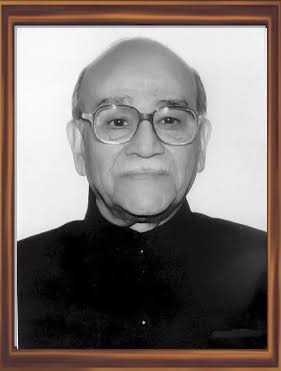

Vinayak Sitaram Sarwate, popularly known as Tatya Sarwate, was an Indian lawyer, nationalist, freedom fighter, political leader, educationist and author associated closely with Indore. He played an important role in the political and educational life of the former Indore State and later represented the region in India’s Constituent Assembly, Provisional Parliament and Rajya Sabha.
He received the Padma Bhushan in 1966 in the field of Literature and Education. The Government of India’s official Padma Awards database records him as a 1966 Padma Bhushan recipient from Madhya Pradesh.
1. Introduction
Vinayak Sitaram Sarwate was one of the prominent nationalist leaders of Indore during the period before Indian independence. A lawyer by profession, he became involved in public life and the movement for constitutional reform in the princely state of Indore.
He was popularly known as Tatya Sarwate and was associated with the Indore Praja Mandal, which worked for political and constitutional reforms in the Holkar State. He led Satyagraha activities during the 1940s and later became Education Minister of Indore State in 1947–48.
Sarwate was also an author who wrote in Marathi and Hindi. His book Samajik-Vade, published in 1919, has been described by the Bal Niketan Sangh as an early Marathi analysis of socialism.
His public service continued after independence. He served in the Constituent Assembly, the Provisional Parliament and the Rajya Sabha.
2. Quick Facts
| Particular | Information |
|---|---|
| Full Name | Vinayak Sitaram Sarwate |
| Popular Name | Tatya Sarwate |
| Date of Birth | 2 April 1884 |
| Place of Birth | Not clearly specified in the authoritative sources consulted |
| Nationality | Indian |
| Profession | Lawyer, Politician, Author, Educationist, Freedom Fighter |
| Fields of Achievement | Literature and Education; Public Life; Freedom Movement |
| Political Association | Indian National Congress |
| Region | Indore, Madhya Pradesh |
| Years Active | Early 20th century–1972 |
| Major Award | Padma Bhushan |
| Award Year | 1966 |
| Award Field | Literature and Education |
| Father’s Name | Sitaram Vishnu Sarwate |
| Spouse | Saraswati |
| Children | 3 sons and 4 daughters |
| Date of Death | 1972 |
| Parliamentary Service | Constituent Assembly, Provisional Parliament and Rajya Sabha |
The Rajya Sabha’s official biographical record gives his date of birth as 2 April 1884, identifies his father as Sitaram Vishnu Sarwate, and records his BA and LLB qualifications.
Important note about his birth year
Some online sources, including the Nehru Archive, list his birth year as 1872. However, the official Rajya Sabha biographical sketch gives 2 April 1884, and the Bal Niketan Sangh’s own founder biography also gives 1884. For a blog, 2 April 1884 is therefore the better-supported date to use.
3. Award Information
Padma Bhushan – 1966
| Award Detail | Information |
|---|---|
| Award Name | Padma Bhushan |
| Award Category | Literature and Education |
| Award Year | 1966 |
| Awardee | Shri Vinayak Sitaram Sarwate |
| State | Madhya Pradesh |
| Presented By | President of India |
| Award Announcement | 26 January 1966 |
| Ceremony | Rashtrapati Bhavan, New Delhi |
| Official Field | Literature and Education |
The official Government of India Padma Awards database specifically lists:
“Padma Bhushan (1966) – Shri Vinayak Sitaram Sarwate – Literature and Education – Madhya Pradesh.”
The 1966 Padma Awards Gazette identifies him as:
“Shri Vinayak Sitaram Sarwate, Social Worker, Indore.”
Presented By
Padma Awards are presented by the President of India at an investiture ceremony at Rashtrapati Bhavan. The Ministry of Home Affairs’ Padma Awards scheme states that the awards are announced on 26 January and presented by the President at Rashtrapati Bhavan.
Date of Ceremony
The official Padma records available online confirm the 1966 award year, but I could not verify a separate ceremony date specifically for Sarwate from an authoritative record. Therefore, it is better for your blog to write:
Ceremony Date: Not independently confirmed in the available official online record.
Do not present a guessed date as fact.
Citation / Official Reason
The official award category was Literature and Education. The Gazette describes Sarwate as a social worker in Indore, while biographical sources document his work in education, literature, political reform and public service.
Previous Recipients
Because the Padma Bhushan is awarded to many people every year, there is no single “previous recipient.”
For comparison, 1965 Padma Bhushan recipients in Literature and Education included figures such as Narasinh Narayan Godbole.
Other 1966 Padma Bhushan Recipients
Sarwate’s fellow 1966 Padma Bhushan recipients included:
- Dr. Bhai Jodh Singh – Literature and Education
- Dr. Puliyur Krishnaswamy Duraiswami – Medicine
- Dr. Vikram Sarabhai – Science and Engineering
- K. P. Kesava Menon – Public Affairs
- Mannathu Padmanabhan – Social Work
- K. Shankar Pillai – Art
- Verghese Kurien – Trade and Industry
- Homi Nusserwanji Sethna – Civil Service
- Zubin Mehta – Art
Next Recipients
In 1967, the Padma Bhushan in Literature and Education included personalities such as D. C. Pavate, Datto Vaman Potdar, B. Shiva Rao, Khwaja Ghulam Saiyidain, Mulk Raj Anand and Krishna Kanta Handique.
4. Why Did Vinayak Sitaram Sarwate Receive the Award?
Sarwate received the Padma Bhushan in 1966 for Literature and Education.
His recognition can be understood in the context of his broad contribution to:
- Education
- Literature
- Public service
- Nationalist politics
- Constitutional reform
- Social work
- Political leadership in Indore
He was not simply a politician. He combined education, writing, public service and the freedom movement.
The Bal Niketan Sangh describes him as a nationalist, freedom fighter and major political leader of Indore, while the official Padma database places his award in Literature and Education.
5. Early Life
Vinayak Sitaram Sarwate was born on 2 April 1884. He grew up to become closely associated with the political and social life of Indore.
His father was Sitaram Vishnu Sarwate. He later married Saraswati and had three sons and four daughters, according to the Rajya Sabha biographical record.
The political environment of the princely states had a major influence on his public career. In Indore, Sarwate became associated with efforts to achieve greater constitutional representation and political reform.
He eventually became one of the leading figures of the Indore Praja Mandal.
6. Education
Sarwate was professionally trained in law.
According to the official Rajya Sabha biography, his educational qualifications were:
- B.A.
- LL.B.
His legal education provided a foundation for his later political and constitutional work. He became involved not only in legal practice but also in public affairs, education and nationalist politics.
Educational Qualification
B.A., LL.B.
7. Career Journey
Legal Career
Sarwate began his professional life as a lawyer.
His legal background became valuable when he entered public life, particularly during debates concerning constitutional reform and governance in Indore State.
Indore Praja Mandal
Sarwate became an important leader of the Indore Praja Mandal.
The Praja Mandal movement sought greater political rights and constitutional reforms in princely states. Sarwate became one of the leading political figures associated with this movement in Indore.
Satyagraha
During 1941–47, Sarwate led Satyagraha demonstrations demanding constitutional reform in the Holkar Government.
His activities established him as one of the major nationalist leaders of Indore.
Education Minister of Indore State
In 1947, Sarwate joined the Holkar Cabinet and served as Education Minister of Indore State during 1947–48.
This position connected directly with his later recognition in the field of Literature and Education.
Constituent Assembly
After independence, Sarwate became a member of the Constituent Assembly of India.
He served during the crucial period in which India’s new constitutional and political system was being established.
Provisional Parliament
He subsequently served as a member of the Provisional Parliament of India from 1950 to 1952.
Rajya Sabha
Sarwate then became a member of the Rajya Sabha, serving from 3 April 1952 to 2 April 1958, according to the official parliamentary biography.
8. Major Achievements
1. Leader of Indore’s Nationalist Movement
Sarwate was one of the most prominent nationalist leaders of Indore before independence.
2. Indore Praja Mandal
He played an important role in the movement for constitutional reform in the former Holkar State.
3. Led Satyagraha
He led Satyagraha demonstrations during 1941–47 for constitutional reforms.
4. Education Minister
He served as Education Minister of Indore State in 1947–48.
5. Constituent Assembly Member
He participated in the constitutional transition of India as a member of the Constituent Assembly.
6. Parliamentary Service
He served in India’s Provisional Parliament and Rajya Sabha.
7. Author
He wrote books in Hindi and Marathi.
8. Samajik-Vade
His book Samajik-Vade, published in 1919, dealt with socialism and is described by the Bal Niketan Sangh as the first analysis of socialism published in Marathi.
9. Child Education
In 1947, he founded Bal Niketan Sangh with his daughter Shalini “Tai” Moghe. They also initiated a training centre for pre-primary school teachers.
10. All India Child Education Conference
Sarwate organised the All India Child Education Conference in 1955, which was presided over by Dr. Zakir Hussain.
9. Contribution to the Nation
Sarwate’s contribution to India can be divided into several areas.
Freedom Movement
He participated in nationalist politics and led movements demanding constitutional reforms in Indore State.
Democratic Development
His membership of the Constituent Assembly, Provisional Parliament and Rajya Sabha allowed him to contribute to India’s transition from colonial rule to parliamentary democracy.
Education
As Education Minister of Indore State and through his work with child-education organisations, Sarwate promoted education as an important part of social development.
Literature
His writings in Hindi and Marathi contributed to political and social discussion. His 1919 work Samajik-Vade was particularly notable for discussing socialism in Marathi.
Child Welfare
His association with Bal Niketan Sangh helped promote child education and teacher training in Indore.
10. Other Awards and Honours
Padma Bhushan – 1966
The principal national honour associated with Sarwate is the Padma Bhushan, awarded in 1966 for Literature and Education.
Other Recognition
Beyond the Padma Bhushan, Sarwate’s legacy is reflected in the recognition he received as:
- A major nationalist leader of Indore
- A freedom fighter
- A member of the Constituent Assembly
- An Education Minister
- A parliamentarian
- An author
- A pioneer of child-education initiatives
The Bal Niketan Sangh refers to him as the “grand old man” of the Indore Praja Mandal and also notes that he was popularly associated with the title “Gandhi of Indore.”
11. Legacy and Influence
Vinayak Sitaram Sarwate’s legacy is especially important in Madhya Pradesh and Indore.
Political Legacy
His participation in the Indore Praja Mandal and later constitutional politics helped connect the struggle for political reform in princely India with independent India’s parliamentary democracy.
Educational Legacy
His work in education, particularly child education, continued through institutions such as Bal Niketan Sangh.
Literary Legacy
His writings demonstrate his interest in political and social ideas, including socialism.
Family Legacy
His daughter Shalini “Tai” Moghe became a noted educationist and social worker. She worked extensively in child education and founded organisations including Bal Niketan Sangh-related initiatives. A government publication identifies her as Sarwate’s daughter and notes the influence of her father on her social-work career.
12. Interesting Facts
- Vinayak Sitaram Sarwate was popularly known as Tatya Sarwate.
- He was born on 2 April 1884, according to the official Rajya Sabha record.
- He was a lawyer.
- He held B.A. and LL.B. degrees.
- He was an important nationalist leader in Indore.
- He was associated with the Indore Praja Mandal.
- He led Satyagraha demonstrations between 1941 and 1947.
- He served as Education Minister of Indore State.
- He was a member of India’s Constituent Assembly.
- He served in the Provisional Parliament.
- He was a Rajya Sabha member from 1952 to 1958.
- He wrote in both Hindi and Marathi.
- His book Samajik-Vade was published in 1919.
- He was involved in the All India Child Education Conference in 1955.
- He founded Bal Niketan Sangh with his daughter Shalini Moghe in 1947.
- He received the Padma Bhushan in 1966.
- His Padma Bhushan field was Literature and Education.
- The official Padma Gazette described him as a Social Worker, Indore.
- He was sometimes referred to as the “Gandhi of Indore.”
- He died in 1972.
13. Quotes
Unlike some better-documented national leaders, there are not many reliably sourced, widely circulated quotations by Vinayak Sitaram Sarwate available in authoritative online archives.
For a factual blog, it is better not to attribute popular motivational statements to him without a primary source.
A useful phrase associated with his public legacy is the description “Gandhi of Indore,” but this is a historical characterization rather than a quotation by Sarwate.
Suggested Blog Note
Note: Reliable primary-source quotations by Vinayak Sitaram Sarwate are limited in easily accessible online archives. Quotes should therefore be checked against his original speeches, books or parliamentary records before publication.
This approach is preferable to using an unattributed quote from a secondary website.
14. Timeline
| Year | Event |
|---|---|
| 1884 | Born on 2 April |
| Early 20th century | Practised law and entered public life |
| 1919 | Samajik-Vade published in Marathi |
| 1941–47 | Led Satyagraha for constitutional reform in Indore State |
| 1947 | Joined the Holkar Cabinet as Education Minister |
| 1947 | Founded Bal Niketan Sangh with daughter Shalini Moghe |
| 1948–50 | Served in the Constituent Assembly |
| 1950–52 | Member of the Provisional Parliament |
| 1952 | Entered Rajya Sabha |
| 1955 | Organised All India Child Education Conference |
| 1958 | Completed his Rajya Sabha term |
| 1966 | Awarded Padma Bhushan for Literature and Education |
| 1972 | Died |
The parliamentary dates are from the official Rajya Sabha biography, while the Indore educational and political milestones are documented by Bal Niketan Sangh.
15. References
For a blog, these are the strongest sources I found:
1. Government of India – Padma Awards Database
Official Padma Awards Database – Vinayak Sitaram Sarwate, 1966
This is the best source for his Padma Bhushan, 1966, Literature and Education, Madhya Pradesh.
2. Government of India – 1966 Padma Awards Gazette
1966 Padma Awards Gazette – Government of India
The Gazette records Sarwate as “Social Worker, Indore.”
3. Rajya Sabha – Official Biographical Sketch
Rajya Sabha biographical sketch of Vinayak Sitaram Sarwate
This is particularly valuable for his date of birth, education, parliamentary career, family details and death.
4. Bal Niketan Sangh – Founders
Bal Niketan Sangh – Tatya Sarwate biography
This source is useful for his Indore political career, Praja Mandal activities, education work, writings and relationship with Shalini Moghe.
5. Nehru Archive
Useful for locating parliamentary material concerning Sarwate, although its displayed birth year differs from the official Rajya Sabha record.
16. Related Personalities
Shalini “Tai” Moghe
Sarwate’s daughter, Shalini Moghe, became an important educationist and social worker. She worked in child education and helped establish educational and welfare initiatives in Indore.
Dr. Zakir Hussain
Dr. Zakir Hussain presided over the All India Child Education Conference organised by Sarwate in 1955.
Mahatma Gandhi
Sarwate’s nationalist and Satyagraha activities belonged to the wider Indian freedom movement associated with Gandhian methods. The title “Gandhi of Indore” is associated with Sarwate in accounts of his public career.
Haribhau Upadhyaya
Haribhau Upadhyaya was another 1966 Padma Bhushan recipient in Literature and Education, making him a useful related personality for a series on the 1966 awardees.
Dr. Bhai Jodh Singh
Bhai Jodh Singh also received the 1966 Padma Bhushan in Literature and Education.
Vikram Sarabhai
Vikram Sarabhai was another 1966 Padma Bhushan recipient, honoured in Science and Engineering. Both men represent different aspects of institution building and public service in post-independence India.
17. Frequently Asked Questions (FAQ)
Who was Vinayak Sitaram Sarwate?
Vinayak Sitaram Sarwate, popularly known as Tatya Sarwate, was an Indian lawyer, freedom fighter, nationalist leader, author, educationist and parliamentarian associated with Indore.
What was Vinayak Sitaram Sarwate famous for?
He was known for his role in the Indore Praja Mandal, his struggle for constitutional reform in Indore State, his work in education and literature, and his service in the Constituent Assembly and Parliament.
When was Vinayak Sitaram Sarwate born?
According to the official Rajya Sabha biographical record, he was born on 2 April 1884.
Where was Vinayak Sitaram Sarwate born?
The authoritative sources consulted for this article do not clearly state his exact birthplace. Indore is strongly associated with his public and political career, but it should not automatically be stated as his birthplace.
What was Tatya Sarwate’s profession?
He was a lawyer, as well as a politician, author, educationist and freedom fighter.
Which award did Vinayak Sitaram Sarwate receive?
He received the Padma Bhushan in 1966.
In which field did he receive the Padma Bhushan?
He received it in Literature and Education.
Which state was associated with his Padma Bhushan award?
The official Padma database lists Madhya Pradesh.
Why did Vinayak Sitaram Sarwate receive the Padma Bhushan?
His national recognition reflected his contributions to literature and education, alongside his broader public service, nationalist activities and educational work in Indore.
Was Vinayak Sarwate a freedom fighter?
Yes. The Bal Niketan Sangh describes him as a nationalist and freedom fighter and records his leadership of Satyagraha demonstrations in Indore during 1941–47.
What was the Indore Praja Mandal?
It was a political organisation associated with the movement for constitutional and representative reforms in the princely state of Indore. Sarwate was one of its prominent leaders.
Was Sarwate a member of the Constituent Assembly?
Yes. The official Rajya Sabha biography records him as a member of the Constituent Assembly from 1949–50.
Was he a member of the Rajya Sabha?
Yes. He served as a Rajya Sabha member from 3 April 1952 to 2 April 1958.
What did Sarwate do after independence?
He served as Education Minister of Indore State, participated in the Constituent Assembly, served in the Provisional Parliament and later represented the region in the Rajya Sabha.
What books did Vinayak Sitaram Sarwate write?
The Rajya Sabha biography confirms that he authored books in Hindi and Marathi. One documented work is Samajik-Vade, published in 1919.
What is Samajik-Vade?
Samajik-Vade was a Marathi work on socialism published in 1919. Bal Niketan Sangh describes it as the first analysis of socialism published in Marathi.
Who was Shalini Moghe?
Shalini “Tai” Moghe was Sarwate’s daughter and became a noted educationist and social worker. She worked with her father in establishing Bal Niketan Sangh and later became known for her work in child education.
What is Bal Niketan Sangh?
Bal Niketan Sangh is an organisation associated with child education and social welfare in Indore. Sarwate founded it in 1947 with his daughter Shalini Moghe.
When did Vinayak Sitaram Sarwate die?
He died in 1972. The Rajya Sabha record notes an obituary on 13 March 1972.
About the Author