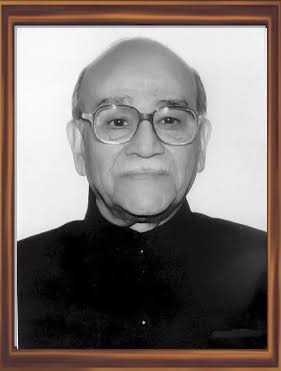


Homi Nusserwanji Sethna (1923–2010) was one of the key architects of India’s early nuclear programme. A chemical engineer and nuclear technocrat, he played a major role in establishing India’s nuclear-fuel cycle, including uranium and thorium processing, the Trombay reprocessing plant, heavy-water technology and nuclear-material production.
He later became Director of the Bhabha Atomic Research Centre (BARC) and Chairman of India’s Atomic Energy Commission (AEC) from 1972 to 1983. He was also closely associated with India’s first nuclear test at Pokhran in 1974. The Government of India honoured him with the Padma Bhushan in 1966, in the field of Civil Service.
1. Introduction
Homi Nusserwanji Sethna was an eminent Indian chemical engineer, nuclear scientist and administrator who made major contributions to the development of India’s indigenous nuclear capabilities.
His career began in the years immediately after independence, when India was attempting to develop advanced scientific and industrial capabilities with limited resources. Sethna became particularly important in the chemical and engineering side of atomic energy.
According to the Department of Atomic Energy, he began as General Manager of Indian Rare Earths in 1949 and subsequently led chemical-engineering programmes connected with the Atomic Energy Establishment, Trombay. He oversaw the development of uranium and thorium facilities and helped build India’s nuclear-fuel-cycle capabilities.
His most important institutional positions included:
- Director, Bhabha Atomic Research Centre
- Secretary, Department of Atomic Energy
- Chairman, Atomic Energy Commission
- Adviser and representative in international atomic-energy forums
He was Chairman of the Atomic Energy Commission from 1972 to 1983.
2. Quick Facts
| Particular | Information |
|---|---|
| Full Name | Homi Nusserwanji Sethna |
| Popular Name | Homi N. Sethna / Homi Sethna |
| Date of Birth | 24 August 1923 |
| Place of Birth | Bombay (now Mumbai), Bombay Presidency |
| Nationality | Indian |
| Profession | Chemical Engineer, Nuclear Scientist, Technocrat and Administrator |
| Field of Achievement | Nuclear Science, Chemical Engineering and Atomic Energy |
| Years Active | Approximately 1949–2000s |
| Major Institution | Department of Atomic Energy / BARC |
| Major Position | Chairman, Atomic Energy Commission |
| AEC Tenure | 1972–1983 |
| Major National Award | Padma Bhushan |
| Padma Bhushan Year | 1966 |
| Padma Bhushan Field | Civil Service |
| Padma Shri | 1959 |
| Padma Vibhushan | 1975 |
| Date of Death | 5 September 2010 |
| Place of Death | Mumbai, Maharashtra |
The Government’s Padma Awards database confirms his 1966 Padma Bhushan in Civil Service and his 1975 Padma Vibhushan. It also records his 1959 Padma Shri in Science and Engineering.
3. Award Information
Padma Bhushan – 1966
| Award Detail | Information |
|---|---|
| Award Name | Padma Bhushan |
| Award Category | Civil Service |
| Award Year | 1966 |
| Awardee | Homi Nusserwanji Sethna |
| State | Maharashtra |
| Presented By | President of India |
| Official Field | Civil Service |
The official Government of India Padma Awards database lists:
“Padma Bhushan (1966) – Shri Homi Nusserwanji Sethna – Civil Service – Maharashtra.”
Date of Ceremony
The award year is officially confirmed as 1966. However, a separate ceremony date specifically for Sethna is not clearly established in the online Padma record. For a factual blog, it is safer to state:
Ceremony date: 1966; exact individual investiture date not independently confirmed in the available online official record.
Citation / Official Reason
The official category was Civil Service. His recognition reflected his important public service and leadership in India’s developing atomic-energy establishment. His subsequent career included leadership of BARC and the Atomic Energy Commission.
Other Padma Awards
Sethna’s career was unusual because he received all three major Padma awards during different stages of his career:
| Year | Award | Field |
|---|---|---|
| 1959 | Padma Shri | Science and Engineering |
| 1966 | Padma Bhushan | Civil Service |
| 1975 | Padma Vibhushan | Civil Service |
The official Padma database confirms the three honours.
Previous Recipients
The Padma Bhushan was already being awarded before Sethna received it in 1966. In 1965, recipients included figures such as Jayant Vishnu Narlikar in Science and Engineering and Ramaswamy Rajaram in Civil Service.
Next Recipients
The 1967 Padma Bhushan list included personalities such as Ramanathan Krishnan, Ravi Shankar, Pupul Jayakar and Tara Cherian.
4. Why Did Homi Sethna Receive the Award?
Homi Sethna was honoured for his exceptional contribution to India’s atomic-energy establishment and public scientific administration.
His work went beyond laboratory research. He helped create the industrial infrastructure needed for a self-reliant nuclear programme.
Among his major contributions were:
- Development of uranium and thorium processing
- Establishment of nuclear-material production facilities
- Development of India’s nuclear-fuel cycle
- Establishment of the Trombay reprocessing plant
- Development of heavy-water production capabilities
- Leadership of BARC
- Leadership of the Atomic Energy Commission
- Strengthening India’s technological self-reliance
The Department of Atomic Energy describes him as one of India’s atomic-energy pioneers and highlights his role in building indigenous nuclear-fuel-cycle capabilities.
5. Early Life
Homi Nusserwanji Sethna was born on 24 August 1923 in Bombay, now Mumbai.
He belonged to India’s Parsi community, which produced several important figures in science, industry and public life.
He grew up during a period when modern science and engineering were becoming increasingly important to India’s industrial development.
After completing his education in chemical technology, Sethna pursued advanced studies abroad before returning to India. His engineering background eventually brought him into India’s ambitious atomic-energy programme.
6. Education
Sethna was trained as a chemical engineer.
Major Educational Qualifications
- B.Sc. (Tech.) – Department of Chemical Technology, University of Bombay
- M.S. in Engineering – University of Michigan, United States
The New Indian Express records that he obtained his B.Sc. (Tech.) from the Department of Chemical Technology of Bombay University in 1944 and his master’s degree from the University of Michigan in 1946.
The Indian National Academy of Engineering likewise records his master’s education at the University of Michigan.
His chemical-engineering training proved particularly valuable because India’s nuclear programme needed expertise not only in physics but also in metallurgy, chemistry, chemical processing and industrial engineering.
7. Career Journey
Beginning of His Professional Career
Sethna joined India’s atomic-energy-related activities during the early years of the country’s nuclear programme.
In 1949, he became General Manager of Indian Rare Earths. His early work focused on processing minerals containing rare earths and nuclear materials.
Rare Earths Plant at Alwaye
One of his early major assignments was establishing the Rare Earths Plant at Alwaye, Kerala, to process monazite and separate rare earths and thorium-uranium concentrates.
BARC records this as Sethna’s first major assignment in atomic energy.
Trombay
He subsequently worked at the Atomic Energy Establishment, Trombay, where he led major chemical-engineering projects.
He was involved in the development of:
- Thorium processing
- Uranium processing
- Uranium metal production
- Nuclear fuel materials
- Heavy-water technology
- Reprocessing technology
The Department of Atomic Energy credits him with leading the nuclear-fuel-cycle and heavy-water segments of India’s atomic-energy programme.
CIRUS Reactor
Sethna was appointed Project Manager for the CIRUS reactor during its construction from 1956 to 1958.
The project was an important part of India’s early nuclear-research infrastructure.
Plutonium/Reprocessing Plant
One of Sethna’s most important achievements was the establishment of India’s first major reprocessing plant at Trombay.
The facility was dedicated to the nation on 22 January 1965, according to BARC.
The Department of Atomic Energy describes the Trombay reprocessing plant as India’s maiden reprocessing plant and says it was dedicated in 1965.
Director of BARC
Following the death of Homi J. Bhabha in 1966, Sethna took over the leadership of the Atomic Energy Establishment, Trombay, which became BARC.
He served as Director of BARC from 15 February 1966 to 21 January 1972.
Chairman of Atomic Energy Commission
Sethna became Chairman of the Atomic Energy Commission in 1972.
He remained in the position until 1983.
During this period, India’s nuclear programme faced increasing international restrictions, particularly after the 1974 Pokhran nuclear test.
Sethna played an important role in maintaining India’s nuclear capabilities and pursuing greater technological self-reliance.
8. Major Achievements
1. India’s Nuclear Fuel Cycle
Sethna was a major architect of India’s indigenous nuclear-fuel-cycle capabilities.
The Department of Atomic Energy specifically credits him with initiating and leading the nuclear fuel cycle and heavy-water segments of the programme.
2. Trombay Reprocessing Plant
He played a leading role in establishing India’s first reprocessing plant at Trombay, dedicated in 1965.
3. Uranium Metal Plant
The Uranium Metal Plant at Trombay was commissioned in 1959 under his supervision. The uranium metal later became fuel for the CIRUS reactor.
4. Thorium and Uranium Processing
He oversaw important facilities for processing thorium and uranium, helping India develop domestic nuclear-material capabilities.
5. Jaduguda Uranium Mill
A uranium mill at Jaduguda was commissioned in 1967 under his leadership. It supplied material for India’s research and power reactors.
6. Heavy-Water Programme
Sethna helped expand India’s heavy-water production capacity and encouraged indigenous research into heavy-water production technologies.
7. BARC Leadership
He led BARC from 1966 to 1972 during a critical period of expansion of India’s nuclear research infrastructure.
8. Atomic Energy Commission
As AEC Chairman from 1972 to 1983, he guided India’s nuclear programme during an important period of technological development and international restrictions.
9. Pokhran 1974
Sethna was one of the senior leaders associated with India’s first nuclear test, known as Pokhran-I or Smiling Buddha, conducted on 18 May 1974.
Historical accounts describe him as one of the key figures behind the project.
9. Contribution to the Nation
Homi Sethna’s contribution to India can be understood through the idea of technological self-reliance.
At independence, India lacked much of the industrial infrastructure required for an advanced nuclear programme. Sethna helped develop that infrastructure.
Nuclear Materials
He helped establish facilities for processing and producing nuclear materials.
Nuclear Fuel
His work contributed to India’s ability to produce nuclear fuel domestically.
Reprocessing
The Trombay reprocessing plant gave India an important indigenous capability in the nuclear fuel cycle.
Heavy Water
He helped develop domestic heavy-water production technologies.
Scientific Institutions
As BARC Director and AEC Chairman, he helped expand India’s nuclear scientific institutions.
National Self-Reliance
After international restrictions followed India’s 1974 nuclear test, Sethna’s leadership helped India pursue greater indigenous capability. The Department of Atomic Energy states that India’s nuclear power programme consolidated its self-reliance under his leadership.
10. Other Awards and Honours
Homi Sethna received numerous national and international honours.
Padma Shri – 1959
He received the Padma Shri in 1959 in Science and Engineering.
Shanti Swarup Bhatnagar Prize – 1960
He received the Shanti Swarup Bhatnagar Prize in Engineering Sciences in 1960.
Padma Bhushan – 1966
He received the Padma Bhushan in 1966, in Civil Service.
University of Michigan Sesquicentennial Award – 1967
He received a Sesquicentennial award from the University of Michigan.
Sir Walter Puckey Prize – 1971
He received the Sir Walter Puckey Prize in 1971.
Padma Vibhushan – 1975
He received the Padma Vibhushan in 1975, one of India’s highest civilian awards.
Sir William Jones Memorial Medal – 1974
He was also awarded the Sir William Jones Memorial Medal by the Asiatic Society of Bengal.
Honorary Doctorates
He received honorary doctorates from several Indian universities and institutions, including:
- Marathwada University
- Jawaharlal Nehru Technological University
- University of Roorkee
- Banaras Hindu University
- University of Delhi
The Indian National Academy of Engineering also records several of these honours.
11. Legacy and Influence
Homi Sethna’s greatest legacy is India’s indigenous nuclear infrastructure.
He belonged to the generation of scientists and engineers who transformed India’s nuclear programme from an ambitious idea into a functioning technological and industrial system.
His legacy includes:
- Nuclear fuel-cycle technology
- Uranium and thorium processing
- Nuclear reprocessing
- Heavy-water technology
- Nuclear research infrastructure
- BARC’s institutional development
- Greater technological self-reliance
The Department of Atomic Energy describes Sethna as one of the pioneers who helped realise Homi Bhabha’s vision of making India an advanced nuclear nation.
His influence was also institutional. He served as Chancellor of North-Eastern Hill University and Chairman of the Boards of Governors of IIT Delhi and IIT Bombay, according to the Indian National Academy of Engineering.
12. Interesting Facts
- His full name was Homi Nusserwanji Sethna.
- He was born on 24 August 1923.
- He was a chemical engineer, rather than primarily a theoretical physicist.
- He earned his master’s degree from the University of Michigan.
- His first major atomic-energy assignment involved rare-earth processing at Alwaye, Kerala.
- He worked closely with Homi J. Bhabha, the founder of India’s atomic-energy programme.
- He helped establish uranium and thorium processing facilities.
- The Uranium Metal Plant at Trombay was commissioned under his supervision in 1959.
- He was Project Manager for the CIRUS reactor during its construction.
- India’s first major reprocessing plant at Trombay was dedicated in 1965.
- He became Director of BARC in 1966.
- He became Chairman of the Atomic Energy Commission in 1972.
- He remained AEC Chairman until 1983.
- He was one of the senior figures associated with India’s 1974 Pokhran test.
- He received the Padma Shri, Padma Bhushan and Padma Vibhushan during his career.
- He was associated with the development of India’s heavy-water programme.
- He served as a representative of India in international atomic-energy forums.
- He died on 5 September 2010 in Mumbai.
- The Department of Atomic Energy organised a birth-centenary programme in 2023 to honour his legacy.
- His career demonstrates the importance of chemical engineering in nuclear technology.
13. Quotes
Homi Sethna gave a substantial interview in 1987 for the documentary history project War and Peace in the Nuclear Age. This is one of the most useful primary-source collections for his own words.
One particularly useful statement for your blog is his description of Homi Bhabha:
“the main pillar, and the sort of inspiration.”
Sethna was explaining Bhabha’s role in India’s early atomic-energy programme.
Another notable statement concerns India’s technological independence. In discussing the CIRUS project and foreign assistance, Sethna emphasised that outside cooperation helped India accelerate its development, but that the country’s own effort was fundamental.
He also referred to the 1974 test as a “Peaceful Nuclear Experiment”, reflecting the terminology used by India’s leadership at the time.
Important blog note
Because Sethna’s interviews are available as historical transcripts, it is better to use short, properly attributed quotations rather than unattributed motivational quotes circulating on social media.
14. Timeline
| Year | Event |
|---|---|
| 1923 | Born on 24 August in Bombay |
| 1944 | Completed B.Sc. (Tech.) from Bombay University |
| 1946 | Completed master’s studies at University of Michigan |
| 1949 | Became General Manager of Indian Rare Earths |
| Early 1950s | Worked on rare-earth, thorium and uranium processing |
| 1955 | Associated with development of facilities at Trombay |
| 1956–58 | Project Manager for CIRUS reactor construction |
| 1959 | Uranium Metal Plant commissioned under his supervision; received Padma Shri |
| 1960 | Received Shanti Swarup Bhatnagar Prize |
| 1965 | Trombay reprocessing plant dedicated to the nation |
| 1966 | Became Director of BARC; received Padma Bhushan |
| 1967 | Uranium mill at Jaduguda commissioned under his leadership |
| 1972 | Became Chairman of Atomic Energy Commission |
| 1974 | India conducted its first nuclear test at Pokhran |
| 1975 | Received Padma Vibhushan |
| 1983 | Completed tenure as AEC Chairman |
| 1989–2000 | Served as Chairman of Tata Power |
| 1991–92 | Served as Sheriff of Bombay |
| 2010 | Died on 5 September in Mumbai |
| 2023 | Department of Atomic Energy commemorated his birth centenary |
The dates for his BARC directorship, AEC chairmanship and major nuclear facilities are supported by BARC and the Department of Atomic Energy.
15. References
For your blog, I recommend prioritising government and institutional sources over general biography websites.
1. Department of Atomic Energy – Government of India
Department of Atomic Energy – Homi N. Sethna Birth Centenary
This is one of the best sources for his nuclear career, fuel-cycle work, BARC leadership and AEC chairmanship.
2. Bhabha Atomic Research Centre
BARC – Former Leaders: Homi N. Sethna
Useful for his work at Trombay, uranium-metal production, CIRUS and BARC.
3. Government of India – Padma Awards
Official Padma Awards Database – 1966
Use this for the 1966 Padma Bhushan and Civil Service category.
4. Indian National Academy of Engineering
INAE – Lifetime Achievement Award Recipients: Homi N. Sethna
Useful for his education, engineering career, honours and institutional positions.
5. American Archive of Public Broadcasting
War and Peace in the Nuclear Age – Interview with Homi Sethna, 1987
An excellent primary source for Sethna’s own words and recollections.
16. Related Personalities
Homi J. Bhabha
The founder of India’s modern atomic-energy programme and an important mentor to Sethna. Sethna himself described Bhabha as a major pillar and inspiration of the early programme.
Vikram Sarabhai
Sarabhai served as Chairman of the Atomic Energy Commission before Sethna. Both were important figures in India’s post-independence scientific establishment.
Raja Ramanna
Raja Ramanna succeeded Sethna as Chairman of the Atomic Energy Commission and was another important figure in India’s nuclear programme.
P. K. Iyengar
P. K. Iyengar was another major Indian nuclear scientist who worked within the programme developed by the Bhabha-Sethna generation.
Anil Kakodkar
Kakodkar belonged to a later generation of Indian nuclear scientists and eventually became Chairman of the Atomic Energy Commission.
Vikram Sarabhai
Sarabhai and Sethna belonged to the same broader generation of institution-builders who helped establish India’s scientific infrastructure after independence.
17. Frequently Asked Questions (FAQ)
Who was Homi Nusserwanji Sethna?
Homi Nusserwanji Sethna was an Indian chemical engineer, nuclear scientist and administrator who played a major role in developing India’s nuclear-fuel cycle and atomic-energy infrastructure.
When was Homi Sethna born?
He was born on 24 August 1923.
Where was Homi Sethna born?
He was born in Bombay, now Mumbai, Maharashtra.
What was Homi Sethna’s profession?
He was a chemical engineer, nuclear scientist, technocrat and administrator.
Where did Homi Sethna study?
He studied chemical technology at the University of Bombay and obtained a master’s degree from the University of Michigan.
Which award did Homi Sethna receive in 1966?
He received the Padma Bhushan in 1966.
In which category did he receive the Padma Bhushan?
The official Padma Awards database lists the category as Civil Service.
Did Homi Sethna receive other Padma awards?
Yes. He received:
- Padma Shri – 1959
- Padma Bhushan – 1966
- Padma Vibhushan – 1975
What was Homi Sethna’s biggest contribution?
One of his biggest contributions was helping establish India’s indigenous nuclear-fuel-cycle infrastructure, including uranium and thorium processing, nuclear-material production, reprocessing and heavy-water capabilities.
What was Sethna’s role in BARC?
He became Director of BARC in 1966 and served until 1972.
When did Homi Sethna become Chairman of the Atomic Energy Commission?
He became Chairman of the Atomic Energy Commission in 1972 and served until 1983.
Was Homi Sethna involved in India’s first nuclear test?
Yes. He was one of the senior figures associated with India’s first nuclear test at Pokhran in 1974.
What was the Trombay reprocessing plant?
It was India’s first major nuclear reprocessing facility and was dedicated to the nation in 1965. Sethna played a leading role in its establishment.
What was the CIRUS reactor?
CIRUS was an important research reactor developed with Canadian cooperation. Sethna served as its Project Manager during its construction from 1956 to 1958.
What did Homi Sethna do after becoming AEC Chairman?
He guided India’s nuclear programme through a period of rapid development and increasing international restrictions, with a strong emphasis on domestic technological capability.
When did Homi Sethna die?
He died on 5 September 2010 in Mumbai.
What is Homi Sethna remembered for?
He is remembered primarily for helping build the industrial, chemical and engineering foundations of India’s nuclear programme and for his leadership of BARC and the Atomic Energy Commission.
About the Author