

1. Introduction
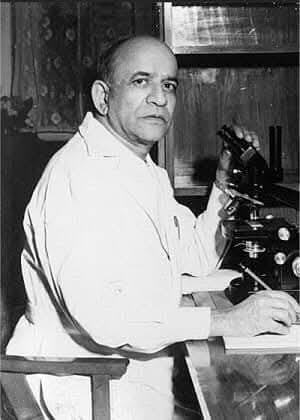
Vasant Ramji Khanolkar (13 April 1895 – 29 October 1978), popularly known as Dr. V. R. Khanolkar, was one of India’s most distinguished pathologists, cancer researchers, and medical educators. He is widely regarded as the Father of Modern Pathology and Medical Research in India for his pioneering contributions to pathology, oncology, leprosy research, genetics, and medical education. His groundbreaking work laid the foundation for cancer research in India and played a key role in establishing world-class medical research institutions.
Dr. Khanolkar’s scientific contributions earned him national and international recognition, including the Padma Bhushan, India’s third-highest civilian award, in 1955. His research, leadership, and dedication continue to inspire generations of medical professionals and researchers.
2. Quick Facts
| Particular | Details |
|---|---|
| Full Name | Vasant Ramji Khanolkar |
| Popular Name | Dr. V. R. Khanolkar |
| Native Name | वसंत रामजी खानोलकर (Marathi) |
| Date of Birth | 13 April 1895 |
| Place of Birth | Quetta, Baluchistan, British India (present-day Balochistan, Pakistan) |
| Date of Death | 29 October 1978 |
| Place of Death | Mumbai, Maharashtra, India |
| Nationality | Indian |
| Occupation / Profession | Pathologist, Medical Scientist, Cancer Researcher, Professor |
| Field of Achievement | Pathology, Cancer Research, Medical Education, Leprosy Research |
| Years Active | 1923–1978 |
| Known For | Father of Modern Pathology and Medical Research in India |
| Alma Mater | University of London |
3. Award Information
Award Name
Padma Bhushan
Award Category
Medicine / Science & Engineering (Civilian Honour)
Award Year
1955
Presented By
President of India on behalf of the Government of India.
Date of Ceremony
The Padma Awards for 1955 were announced on 26 January 1955. The investiture ceremony was held later that year at Rashtrapati Bhavan, New Delhi.
Citation / Official Reason
Dr. Khanolkar was honoured for his distinguished service in pathology, cancer research, medical science, and medical education, which significantly advanced healthcare and scientific research in India.
Previous Recipients (Optional)
The Padma Bhushan is awarded to multiple individuals every year, so there is no single previous recipient.
Next Recipients
The award continued to be conferred annually on distinguished personalities from various fields.
4. Why Did V. R. Khanolkar Receive the Padma Bhushan?
Dr. Khanolkar received the Padma Bhushan because of his extraordinary contributions to Indian medical science.
His achievements included:
- Establishing modern pathology as a scientific discipline in India.
- Conducting pioneering research in cancer biology.
- Advancing knowledge of leprosy and blood group genetics.
- Improving cancer diagnosis through pathological studies.
- Founding India’s first dedicated cancer research institution.
- Strengthening medical education and research infrastructure.
- Representing India in several international scientific organizations.
His work helped position India among the leading nations in medical research during the mid-twentieth century.
5. Early Life
Vasant Ramji Khanolkar was born on 13 April 1895 in Quetta, then part of British India (now in Pakistan). His father, Dr. Ramji Dhondo Khanolkar, was a respected surgeon, and his mother’s encouragement fostered his interest in education and science.
Growing up in an intellectually stimulating environment, Khanolkar developed a passion for biology and medicine at an early age. His academic brilliance earned him opportunities for advanced medical studies in England.
6. Education
Dr. Khanolkar completed his early education in India before pursuing higher medical studies abroad.
Educational Qualifications
- Medical education at Grant Medical College, Bombay.
- Advanced studies at the University of London.
- Earned the degree of Doctor of Medicine (M.D.) in Pathology in 1923.
- Trained under leading British pathologists.
- Received recognition as a promising medical researcher during his postgraduate studies.
His education combined British scientific methods with practical clinical experience, enabling him to introduce modern pathology techniques in India.
7. Career Journey
Early Career
After completing his education in London, Dr. Khanolkar returned to India and joined Grant Medical College as a professor of pathology.
Academic Leadership
Throughout his career, he held several prestigious positions:
- Professor of Pathology at Grant Medical College.
- Professor at Seth G. S. Medical College.
- Director of Laboratories at Tata Memorial Hospital.
- Director of the Indian Cancer Research Centre (ICRC).
- National Research Professor of Medicine.
- Vice-Chancellor of the University of Mumbai.
International Roles
He served as:
- President of the International Cancer Research Commission.
- Member of World Health Organization (WHO) expert committees.
- Adviser to several international cancer research organizations.
His career spanned more than five decades and significantly shaped India’s medical research landscape.
8. Major Achievements
Dr. Khanolkar’s notable achievements include:
- Founded the Indian Cancer Research Centre (1952).
- Established India’s first organized cancer pathology research programme.
- Published more than 100 scientific research papers.
- Authored several influential medical books.
- Conducted pioneering research on oral cancer among Indian populations.
- Made important discoveries in blood group genetics.
- Advanced scientific understanding of leprosy.
- Modernized pathology laboratories across India.
- Guided the development of cancer registries.
- Mentored hundreds of doctors and researchers.
9. Contribution to the Nation
Dr. Khanolkar made lasting contributions to India’s healthcare and scientific development.
His contributions include:
- Built India’s cancer research infrastructure.
- Improved pathology education nationwide.
- Introduced modern laboratory diagnostic techniques.
- Helped formulate national health research policies.
- Supported the development of institutions such as Tata Memorial Hospital and the Indian Cancer Research Centre.
- Promoted scientific collaboration between India and international medical organizations.
- Strengthened India’s reputation in biomedical research.
His work continues to benefit millions of patients through improved diagnosis, treatment, and medical education.
10. Other Awards and Honours
Besides the Padma Bhushan, Dr. Khanolkar received numerous honours:
- National Research Professor of Medicine.
- Founder President of the Indian Association of Pathologists and Microbiologists.
- President of the International Cancer Research Commission.
- Member of the WHO Expert Committee on Cancer.
- Member of several international medical academies.
- Honorary Fellow of numerous scientific organizations.
- The Dr. V. R. Khanolkar Oration was established by the National Academy of Medical Sciences in his honour.
11. Legacy and Influence
Dr. Khanolkar’s legacy continues to shape Indian medicine.
His influence can be seen through:
- Modern pathology education in India.
- National cancer research programmes.
- Medical research institutions inspired by his vision.
- Annual memorial lectures in his honour.
- Scientific publications that continue to be referenced.
- Generations of pathologists trained under his guidance.
Today, he is remembered as one of the architects of India’s modern medical research system.
12. Interesting Facts
- He is known as the Father of Modern Pathology in India.
- He spoke and understood ten languages, including several Indian and European languages.
- Published more than 100 scientific papers.
- Played an important role in planning AIIMS, BARC, PGIMER, and other national institutions.
- Conducted some of India’s earliest large-scale cancer epidemiology studies.
- Helped establish scientific cancer registries in India.
- His work on oral cancer remains historically significant.
- He mentored many future leaders of Indian medical science.
13. Quotes
There are no verified quotations directly attributed to Dr. V. R. Khanolkar in reliable historical or academic sources. For historical accuracy, it is advisable not to attribute inspirational quotes to him without documented evidence.
14. Timeline
| Year | Event |
|---|---|
| 1895 | Born in Quetta, British India |
| 1910s | Studied medicine at Grant Medical College |
| 1923 | Earned M.D. in Pathology from the University of London |
| 1924 | Returned to India and joined Grant Medical College |
| 1941 | Joined Tata Memorial Hospital |
| 1952 | Founded the Indian Cancer Research Centre |
| 1955 | Awarded the Padma Bhushan |
| 1963 | Retired as Director of the Indian Cancer Research Centre |
| 1978 | Passed away in Mumbai on 29 October |
| 1987 | Dr. V. R. Khanolkar Oration instituted in his memory |
15. References
- Government of India – Padma Awards Archives (1955).
- Padma Awards Official Portal, Government of India.
- PubMed Central (PMC): Dr. V. R. Khanolkar: A Revolutionary Pathologist in India.
- Tata Memorial Centre Archives.
- National Academy of Medical Sciences (India).
- University of Mumbai Historical Records.
- Indian Association of Pathologists and Microbiologists.
- Encyclopaedia of Indian Scientists.
16. Related Personalities
- Dr. Bidhan Chandra Roy – Physician and former Chief Minister of West Bengal.
- Dr. Homi Jehangir Bhabha – Nuclear physicist and founder of India’s nuclear programme.
- Dr. Vikram Sarabhai – Father of the Indian Space Programme.
- Dr. Har Gobind Khorana – Nobel Prize-winning molecular biologist.
- Dr. Bhalchandra Babaji Dikshit – Medical researcher and public health expert.
- Dr. Yellapragada Subbarow – Biochemist and pharmaceutical scientist.
17. Frequently Asked Questions (FAQ)
1. Who was Vasant Ramji Khanolkar?
Vasant Ramji Khanolkar was a renowned Indian pathologist, cancer researcher, and medical educator, widely regarded as the Father of Modern Pathology and Medical Research in India.
2. Why is V. R. Khanolkar famous?
He is famous for pioneering cancer research, pathology, leprosy studies, blood group genetics, and for establishing modern medical research institutions in India.
3. Which award did V. R. Khanolkar receive?
He received the Padma Bhushan in 1955 for his outstanding contributions to medicine and medical research.
4. What was his major contribution to India?
His most significant contribution was establishing modern pathology and cancer research in India, including founding the Indian Cancer Research Centre.
5. What was his profession?
He was a pathologist, medical scientist, professor, and cancer researcher.
6. Where was V. R. Khanolkar born?
He was born on 13 April 1895 in Quetta, Baluchistan, British India (now in Balochistan, Pakistan).
7. When did V. R. Khanolkar die?
He passed away on 29 October 1978 in Mumbai, Maharashtra, India.
8. Why is he called the Father of Modern Pathology in India?
He introduced advanced pathology research, established modern diagnostic laboratories, trained generations of pathologists, and laid the foundation for organized cancer research in India.
About the Author




