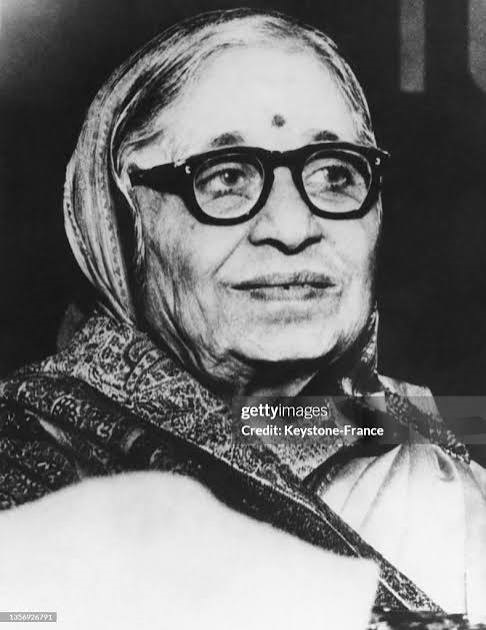
1. Introduction
Rameshwari Nehru (10 December 1886 – 8 November 1966) was a renowned Indian social reformer, freedom fighter, women’s rights activist, and humanitarian. She dedicated her life to the upliftment of women, child welfare, refugee rehabilitation, Harijan (Dalit) welfare, and the promotion of peace and social justice. A member of the distinguished Nehru family through marriage, she played an important role in India’s social reform movement during the freedom struggle and after Independence.
In recognition of her outstanding service to society and the nation, the Government of India awarded her the Padma Bhushan in 1955, one of the country’s highest civilian honours. She also received the Lenin Peace Prize in 1961 for her efforts to promote international peace and understanding.
2. Quick Facts
| Particular | Details |
|---|---|
| Full Name | Rameshwari Nehru |
| Native Name | रमेश्वरी नेहरू (Hindi) |
| Popular Name | Rameshwari Nehru |
| Date of Birth | 10 December 1886 |
| Place of Birth | Lahore, Punjab, British India (now in Pakistan) |
| Date of Death | 8 November 1966 |
| Place of Death | New Delhi, India |
| Nationality | Indian |
| Occupation / Profession | Social Reformer, Freedom Fighter, Writer, Women’s Rights Activist |
| Field of Achievement | Social Service, Women’s Empowerment, Child Welfare, Peace Activism |
| Years Active | 1909–1966 |
| Known For | Women’s rights, refugee rehabilitation, Harijan welfare, peace movement |
3. Award Information
Award Name
Padma Bhushan
Award Category
Social Work / Public Affairs
Award Year
1955
Presented By
President of India, on behalf of the Government of India.
Date of Ceremony
The Padma Awards for 1955 were announced on 26 January 1955, and the investiture ceremony was held later that year at Rashtrapati Bhavan, New Delhi.
Citation / Official Reason
Rameshwari Nehru was honoured for her distinguished service in social welfare, women’s empowerment, refugee rehabilitation, child welfare, and humanitarian work.
Previous Recipients (Optional)
The Padma Bhushan is conferred on multiple recipients annually, so there is no single previous recipient.
Next Recipients
The award continued to be presented annually to distinguished personalities in various fields.
4. Why Did She Receive the Award?
Rameshwari Nehru received the Padma Bhushan because of her lifelong commitment to public service and social reform.
Her major contributions include:
- Promoting women’s education and empowerment.
- Working for the welfare of widows and disadvantaged women.
- Supporting India’s freedom movement.
- Leading refugee rehabilitation after the Partition of India.
- Fighting against untouchability and caste discrimination.
- Improving child welfare and family welfare programmes.
- Promoting communal harmony and international peace.
Her work significantly improved the lives of vulnerable communities and strengthened India’s social welfare system.
5. Early Life
Rameshwari Nehru was born on 10 December 1886 in Lahore, Punjab, British India (now in Pakistan). She belonged to an educated Punjabi family that valued learning and social service.
She married Brij Lal Nehru, a member of the prominent Nehru family, which further connected her with India’s national movement. From a young age, she showed a deep interest in education, literature, and social reform.
6. Education
Rameshwari Nehru received her early education at home, which was common for girls from educated families during that period.
Educational Background
- Home-based education in literature, languages, and social sciences.
- Developed proficiency in Hindi, Urdu, Punjabi, and English.
- Continued self-education through extensive reading and public engagement.
Although she did not receive formal university education, she became a respected writer, editor, and public intellectual.
7. Career Journey
Early Social Work
In 1909, she founded the Hindi women’s magazine Stree Darpan, which promoted women’s education, social awareness, and reform.
Freedom Movement
She actively supported the Indian freedom movement and worked alongside national leaders to improve the status of women and marginalized communities.
Social Welfare
After Independence, she focused on:
- Refugee rehabilitation after the Partition of India.
- Women’s welfare programmes.
- Child welfare initiatives.
- Harijan (Dalit) upliftment.
- Community development.
International Peace
Rameshwari Nehru became an advocate for world peace and represented India at several international conferences. She served in organizations promoting peace, human rights, and cooperation among nations.
8. Major Achievements
- Founded the women’s magazine Stree Darpan.
- Promoted women’s education and empowerment.
- Played an active role in India’s freedom movement.
- Led refugee rehabilitation after the 1947 Partition.
- Worked extensively for Harijan welfare.
- Served as President of the All India Women’s Conference (AIWC).
- Represented India in international peace conferences.
- Received the Lenin Peace Prize (1961).
- Honoured with the Padma Bhushan (1955).
9. Contribution to the Nation
Rameshwari Nehru made lasting contributions in several areas:
Women’s Empowerment
- Encouraged female literacy.
- Promoted equal rights for women.
- Supported vocational education for women.
Refugee Rehabilitation
- Helped rehabilitate thousands displaced by Partition.
- Organized relief camps and welfare programmes.
Social Justice
- Worked against untouchability.
- Promoted equality and communal harmony.
Peace Promotion
- Advocated peaceful international relations.
- Represented India in global peace movements.
Her humanitarian efforts significantly influenced India’s post-independence social development.
10. Other Awards and Honours
Besides the Padma Bhushan (1955), Rameshwari Nehru received several honours:
- Lenin Peace Prize (1961) for promoting international peace.
- President, All India Women’s Conference (AIWC).
- Member of several national and international social welfare organizations.
- Widely recognized as one of India’s pioneering women social reformers.
11. Legacy and Influence
Rameshwari Nehru’s legacy continues through:
- Women’s education initiatives.
- Refugee welfare programmes.
- Social justice campaigns.
- Child welfare organizations.
- Peace advocacy movements.
- The continuing work of organizations such as the All India Women’s Conference.
She remains an inspiration for social workers, women’s rights advocates, and peace activists.
12. Interesting Facts
- She founded Stree Darpan, one of the earliest Hindi magazines for women.
- She was related to the Nehru family through marriage.
- She worked closely with Mahatma Gandhi on social reform initiatives.
- She actively supported the abolition of untouchability.
- She played a key role in refugee rehabilitation after the Partition of India.
- She received both the Padma Bhushan and the Lenin Peace Prize.
- She represented India at numerous international peace conferences.
13. Quotes
There are no widely documented, verified quotations directly attributed to Rameshwari Nehru in authoritative historical sources. For historical accuracy, it is advisable not to attribute inspirational quotes to her without reliable documentation.
14. Timeline
| Year | Event |
|---|---|
| 1886 | Born in Lahore, Punjab, British India |
| 1902 | Married Brij Lal Nehru |
| 1909 | Founded Stree Darpan magazine |
| 1920s–1940s | Active in women’s rights and the Indian freedom movement |
| 1947 | Led refugee rehabilitation after Partition |
| 1955 | Awarded the Padma Bhushan |
| 1961 | Received the Lenin Peace Prize |
| 1966 | Passed away in New Delhi |
15. References
- Government of India, Padma Awards Archives (1955).
- Padma Awards Official Portal, Government of India.
- Encyclopaedia of Indian Women.
- All India Women’s Conference (AIWC) historical records.
- National Archives of India.
- Rameshwari Nehru – Encyclopaedia entries and historical biographies.
- Sahitya Akademi publications on Indian women reformers.
16. Related Personalities
- Mahatma Gandhi – Leader of India’s freedom movement and social reformer.
- Sarojini Naidu – Freedom fighter and poet.
- Kamaladevi Chattopadhyay – Social reformer and freedom activist.
- Hansa Mehta – Women’s rights advocate and educationist.
- Vijaya Lakshmi Pandit – Diplomat and member of the Nehru family.
- Jawaharlal Nehru – India’s first Prime Minister and relative through marriage.
- Rajkumari Amrit Kaur – Freedom fighter and independent India’s first Health Minister.
17. Frequently Asked Questions (FAQ)
1. Who was Rameshwari Nehru?
Rameshwari Nehru was an Indian social reformer, women’s rights activist, freedom fighter, writer, and humanitarian who worked extensively for women’s welfare, child welfare, refugee rehabilitation, and social justice.
2. Why is Rameshwari Nehru famous?
She is best known for founding Stree Darpan, promoting women’s education, leading refugee rehabilitation after the Partition of India, advocating the abolition of untouchability, and supporting international peace initiatives.
3. Which award did Rameshwari Nehru receive?
She received the Padma Bhushan in 1955 for distinguished service in social work and public affairs. She also received the Lenin Peace Prize in 1961.
4. What was Stree Darpan?
Stree Darpan was a Hindi magazine founded by Rameshwari Nehru in 1909 to promote women’s education, social awareness, and reform.
5. How did Rameshwari Nehru contribute after the Partition of India?
She organized relief and rehabilitation efforts for refugees displaced during the 1947 Partition, helping thousands of families rebuild their lives.
6. Was Rameshwari Nehru related to Jawaharlal Nehru?
Yes. She became part of the Nehru family through her marriage to Brij Lal Nehru, a cousin of Motilal Nehru, making her related by marriage to Jawaharlal Nehru.
7. When did Rameshwari Nehru die?
She passed away on 8 November 1966 in New Delhi, India.
8. Why is Rameshwari Nehru remembered today?
She is remembered as a pioneer of women’s empowerment, a champion of social justice, a humanitarian who helped refugees after Partition, and an advocate for peace whose work left a lasting impact on Indian society.
About the Author