

1. Introduction
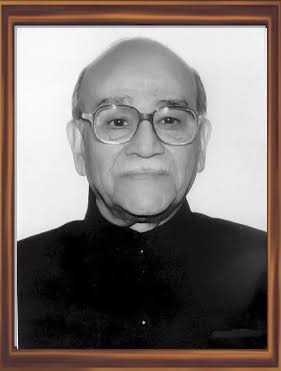
V. K. Narayana Menon, formally listed in the Government of India’s Padma Awards records as Dr. Vatakke Kurupath Narayana Menon, was an Indian musician, broadcaster, scholar and cultural administrator who played an important role in the development of broadcasting and the performing arts in India.
Born on 27 June 1911 in Trichur (now Thrissur), Kerala, he studied at the University of Madras and the University of Edinburgh. He worked with the BBC Eastern Service during the Second World War and returned to India in 1947. He subsequently held several senior positions in All India Radio (AIR), becoming its Director-General from 1965 to 1968.
The Government of India awarded him the Padma Bhushan in 1969, in the field officially recorded as Science and Engineering, with Kerala as the state associated with the award.
His career was unusual because it brought together broadcasting, music, literature, international cultural exchange and public administration.
2. Quick Facts
| Particular | Details |
|---|---|
| Full Name | Vatakke Kurupath Narayana Menon |
| Common Name | V. K. Narayana Menon |
| Native Name | വി. കെ. നാരായണ മേനോൻ |
| Date of Birth | 27 June 1911 |
| Place of Birth | Trichur (Thrissur), Kerala, India |
| Nationality | Indian |
| Profession | Broadcaster, musician, scholar, cultural administrator |
| Field of Achievement | Broadcasting, music, culture and arts administration |
| Years Active | Approximately 1930s–1990s |
| Major Organisation | All India Radio |
| Major Position | Director-General, All India Radio |
| BBC Role | BBC Eastern Service |
| Major Award | Padma Bhushan |
| Award Year | 1969 |
| Award Field | Science and Engineering* |
| State Listed | Kerala |
| Date of Death | 1997 |
| Place of Death | India |
*The Government of India’s official Padma database categorises his 1969 Padma Bhushan under Science and Engineering. This is important because modern biographies sometimes describe him primarily as a broadcaster, musician or cultural administrator.
3. Award Information
Padma Bhushan
Award Name
Padma Bhushan
Award Category
Science and Engineering
Award Year
1969
Presented By
Government of India
Date of Ceremony
The official Padma Awards database confirms the 1969 award year, but a reliable source establishing the exact individual investiture date was not located. For your blog, it is better to state “Padma Bhushan, 1969” rather than publish an unverified ceremony date.
Citation / Official Reason
The Government of India’s database officially lists:
Dr. Vatakke Kurupath Narayana Menon — Padma Bhushan — 1969 — Science and Engineering — Kerala.
The surviving biographical material indicates that his professional contribution centred particularly on broadcasting, communication, music and cultural administration.
Previous Recipients
The Padma Bhushan is awarded to multiple people in different fields rather than to a single annual winner.
Among Kerala recipients before Menon was G. Sankara Kurup, who received the Padma Bhushan in 1968 in Literature and Education.
Next Recipients
Among subsequent Kerala recipients was Kandathil Mammon Cherian, who received the Padma Bhushan in 1971 in Literature and Education.
4. Why Did V. K. Narayana Menon Receive the Padma Bhushan?
V. K. Narayana Menon’s Padma Bhushan recognised his substantial contribution to the development of broadcasting and cultural communication in India.
His career included:
- Senior leadership positions at All India Radio
- Direction of major AIR stations
- Leadership of AIR’s External Services
- Service as Director-General of All India Radio
- International broadcasting experience with the BBC
- Work in music and performing arts administration
- International cultural cooperation
- Promotion of Indian music and performing arts
- Work with organisations concerned with music, broadcasting and cultural exchange
His career demonstrated how broadcasting could be used not only for news and entertainment but also for education, cultural exchange and the promotion of India’s artistic traditions.
The official award record, however, categorises the honour as Science and Engineering, so a blog should retain that official classification rather than replacing it with an inferred category.
5. Early Life
V. K. Narayana Menon was born on 27 June 1911 in Trichur (present-day Thrissur), Kerala.
He was the son of Parameswaran Nambudiripad. His early education eventually led him to higher studies in both India and Britain.
Menon’s interests were broad. He was not only associated with music and broadcasting but also with literature and academic study.
His intellectual interests later became particularly visible in his work on William Butler Yeats and English literature.
6. Education
Menon studied at the University of Madras and later at the University of Edinburgh.
During his time in Edinburgh, he became a Carnegie Scholar in English.
He completed a PhD in English for a thesis on the development of the Irish poet William Butler Yeats. His research was subsequently published as a book in 1942.
His academic background in literature was unusual for someone who later became one of India’s leading broadcasting administrators.
7. Career Journey
Early Academic and Literary Career
Menon’s early career was connected with literature and academic work.
His doctoral research on William Butler Yeats established him as a serious literary scholar. His book on Yeats was published in 1942.
He was also an accomplished veena player, showing that his interest in the arts was both academic and practical.
Work with the BBC
During the Second World War, Menon worked with the BBC Eastern Service.
He was in Britain from 1938 to 1947, and his work in broadcasting gave him valuable experience with one of the world’s leading broadcasting organisations.
This experience later proved important when he returned to India and joined the country’s expanding broadcasting system.
Return to India
Menon returned to India in 1947.
He became Director of Broadcasting of Baroda State from 1947 to 1948.
All India Radio
In 1948, Menon joined All India Radio as Director of Staff Training.
He subsequently held several senior positions, including:
- Director of Delhi Station
- Director of Madras Station
- Director of Calcutta Station
- Director of External Services
- Deputy Director-General
His progression demonstrated the importance of his expertise in broadcasting and administration.
Director-General of All India Radio
One of the most important stages of Menon’s career came when he became Director-General of All India Radio from 1965 to 1968.
As Director-General, he was responsible for an organisation that played a central role in India’s national communications network.
AIR was particularly important at a time when radio was the country’s most extensive mass medium.
International Cultural Work
Menon was also involved in international music and cultural organisations.
He served as president of the International Music Council associated with UNESCO during 1966–1968 and again from 1976–1978, according to biographical records.
This gave him a role in international discussions about music and cultural exchange.
National Centre for the Performing Arts
After his period at All India Radio, Menon became Executive Director of the National Centre for the Performing Arts (NCPA), Bombay, serving from 1968 to 1982 according to the biographical record.
His work there further connected his career with the development and promotion of India’s performing arts.
8. Major Achievements
1. Leadership of All India Radio
Menon’s tenure as Director-General of AIR from 1965 to 1968 was one of his most important achievements.
2. International Broadcasting Experience
His work with the BBC Eastern Service gave him international broadcasting experience before he returned to India.
3. Development of Indian Broadcasting
His various leadership positions at AIR helped strengthen India’s broadcasting administration.
4. Promotion of Indian Music
As a musician and administrator, Menon supported the wider dissemination of Indian classical and performing arts through broadcasting and cultural institutions.
5. International Cultural Exchange
His work with the International Music Council connected Indian cultural institutions with international organisations.
6. Leadership in Performing Arts
His work with the NCPA helped establish his reputation as an important cultural administrator.
7. Literary Scholarship
His doctoral work on William Butler Yeats and his published book demonstrated his contribution to literary scholarship.
9. Contribution to the Nation
V. K. Narayana Menon’s contribution to India can be understood through several areas.
Broadcasting
He helped develop All India Radio at a time when radio was one of the most important tools for reaching India’s large and diverse population.
Cultural Preservation
His work helped bring Indian music and performing arts to wider audiences.
International Representation
His involvement in international music organisations strengthened India’s participation in global cultural discussions.
Education and Knowledge
His literary scholarship and broadcasting work reflected his belief in the importance of knowledge and communication.
Performing Arts
Through his later work with cultural institutions, he contributed to the development and presentation of India’s performing arts.
10. Other Awards and Honours
Padma Bhushan – 1969
The Padma Bhushan was the major national honour received by V. K. Narayana Menon. The official Government of India database lists the award under Science and Engineering.
International and Institutional Recognition
His professional career also brought him positions of distinction, including:
- President, International Music Council
- Executive Director, National Centre for the Performing Arts
- Senior roles in All India Radio
- British broadcasting experience with the BBC
- Association with international comparative music studies
These positions illustrate his stature in international broadcasting and cultural administration.
11. Legacy and Influence
V. K. Narayana Menon’s legacy lies at the intersection of broadcasting, music, literature and cultural administration.
At a time when radio was transforming the way information and culture reached ordinary people, he helped shape the institutional development of Indian broadcasting.
His career also demonstrated the importance of combining Indian cultural knowledge with international experience.
The British Library’s archival catalogue, for example, preserves correspondence between Menon, then Director-General of All India Radio, and composer Francis Chagrin in 1968. This provides evidence of his engagement with international musical networks.
His work with the NCPA and International Music Council extended his influence beyond broadcasting into the broader world of performing arts.
12. Interesting Facts
1. He was both a scholar and musician
Menon studied English literature at a high academic level while also being an accomplished veena player.
2. He studied William Butler Yeats
His doctoral research focused on Yeats, and his study was published as a book in 1942.
3. He worked for the BBC
Before returning to India, he worked with the BBC Eastern Service during the Second World War.
4. He headed All India Radio
He served as Director-General of AIR from 1965 to 1968.
5. He had an international role in music
He served as president of the International Music Council during two periods.
6. He worked in the performing arts
He became Executive Director of the National Centre for the Performing Arts in Bombay.
7. He received the Padma Bhushan in 1969
The Government of India’s official database lists him among the 1969 Padma Bhushan awardees.
8. His work connected India and Britain
His career included both the BBC and All India Radio, giving him experience in two major broadcasting systems.
13. Quotes
There are relatively few widely authenticated quotations from V. K. Narayana Menon available in easily accessible primary sources.
For that reason, it is better not to use unattributed internet quotations in a blog.
A useful way to describe his philosophy without falsely presenting it as a quotation is:
V. K. Narayana Menon’s career reflected a belief in using broadcasting and the arts to connect people with knowledge, music and culture.
Note: This is a modern summary of his career, not a direct quotation by Menon.
14. Timeline
| Year | Event |
|---|---|
| 1911 | Born on 27 June in Trichur (Thrissur), Kerala |
| 1938 | Arrived in Britain |
| 1939–1941 | Worked as a Carnegie Scholar in English at Edinburgh |
| 1941–1942 | Continued advanced academic work; earned his PhD on Yeats |
| 1942 | His study of William Butler Yeats was published |
| 1940s | Worked with BBC Eastern Service during the Second World War |
| 1947 | Returned to India |
| 1947–1948 | Director of Broadcasting, Baroda State |
| 1948 | Joined All India Radio as Director of Staff Training |
| 1950s–1960s | Held senior positions at AIR stations and External Services |
| 1963–1965 | Secretary of the national academy concerned with music, dance and drama |
| 1965–1968 | Director-General, All India Radio |
| 1966–1968 | President, International Music Council |
| 1968 | Became Executive Director of NCPA, Bombay |
| 1969 | Received Padma Bhushan |
| 1969–1977 | Trustee of a broadcasting-related institute, according to biographical records |
| 1973 | Scholar-in-Residence at Aspen Institute for Humanistic Studies |
| 1976–1978 | Again served as President of International Music Council |
| 1982 | Ended his long tenure as Executive Director of NCPA |
| 1997 | Died |
The exact dates of some institutional positions vary across biographical sources, so the table above should be treated as a concise career timeline rather than an official government chronology.
15. References
For a blog, I recommend using the following sources.
1. Government of India – Padma Awards
The official Padma Awards database confirms that Dr. Vatakke Kurupath Narayana Menon received the Padma Bhushan in 1969 for Science and Engineering, from Kerala.
Government of India – Padma Awards database
2. South Asian Britain – Narayana Menon
This biographical resource provides information about his birth, education, BBC career, Yeats scholarship and death in 1997.
South Asian Britain – Narayana Menon
3. British Library Archives
The British Library catalogue contains correspondence involving Menon in his capacity as Director-General of All India Radio.
British Library Archives – V. K. Narayana Menon correspondence
4. New Indian Express
Contemporary retrospective material provides evidence of Menon’s role in India’s cultural and performing-arts administration and his association with artists.
16. Related Personalities
Francis Chagrin
British composer who corresponded with Menon during Menon’s time as Director-General of All India Radio.
Yehudi Menuhin
International violinist whose connection with Indian classical musicians formed part of the wider international cultural environment in which Menon worked.
Lalgudi Jayaraman
Celebrated Indian violinist whose international performance opportunities were connected with the broadcasting and cultural networks of the period.
Subbudu
Well-known Indian music and dance critic whose career was influenced by Menon’s broadcasting and cultural administration work.
Vikram Sarabhai
Indian scientist and institution builder who belonged to the same broad generation of Indian cultural and scientific institution builders.
William Butler Yeats
Irish poet and Nobel laureate whose work was the subject of Menon’s doctoral research and published study.
17. Frequently Asked Questions (FAQ)
Who was V. K. Narayana Menon?
V. K. Narayana Menon was an Indian broadcaster, musician, literary scholar and cultural administrator who served as Director-General of All India Radio.
What was V. K. Narayana Menon’s full name?
His full name was Vatakke Kurupath Narayana Menon.
When was V. K. Narayana Menon born?
He was born on 27 June 1911 in Trichur, now known as Thrissur, Kerala.
When did V. K. Narayana Menon die?
Biographical records from South Asian Britain give his year of death as 1997.
Which award did V. K. Narayana Menon receive?
He received the Padma Bhushan in 1969.
What was the official Padma Bhushan category?
The Government of India’s official database lists his award under Science and Engineering.
Why did V. K. Narayana Menon receive the Padma Bhushan?
His distinguished career included major contributions to Indian broadcasting, cultural administration, music and international cultural exchange. The official Padma record categorises the honour as Science and Engineering.
Was V. K. Narayana Menon associated with All India Radio?
Yes. He joined AIR in 1948 and eventually became Director-General from 1965 to 1968.
Did V. K. Narayana Menon work for the BBC?
Yes. He worked with the BBC Eastern Service during the Second World War before returning to India in 1947.
Did he study abroad?
Yes. He studied at the University of Edinburgh after studying at the University of Madras.
What did V. K. Narayana Menon study?
He studied English literature and completed doctoral research on William Butler Yeats.
Was he a musician?
Yes. He was an accomplished veena player and had a strong interest in Indian music.
What was his connection with the National Centre for the Performing Arts?
He served as Executive Director of NCPA, Bombay, according to biographical records.
What was his international contribution?
He was involved with the International Music Council and served as its president during 1966–1968 and 1976–1978, according to biographical records.
Why is V. K. Narayana Menon remembered today?
He is remembered as an important figure in India’s early broadcasting and cultural administration. His career connected All India Radio, the BBC, Indian music, literature and international cultural institutions.
Conclusion
V. K. Narayana Menon was a remarkable figure who brought together scholarship, music, broadcasting and cultural administration.
His journey from Thrissur to Edinburgh, the BBC, All India Radio and India’s major performing-arts institutions reflects the international outlook of an important generation of Indian cultural leaders.
His service as Director-General of All India Radio, international work with the International Music Council, leadership at the National Centre for the Performing Arts, and lifelong engagement with music and literature established a distinctive legacy.
The Government of India recognised his contribution with the Padma Bhushan in 1969, officially recording the award under Science and Engineering.
For your blog, one particularly useful point to highlight is that Narayana Menon should not be confused with other people named V. K. Narayana Menon. The person discussed here is the 1911–1997 broadcaster, musician and cultural administrator from Kerala.
About the Author