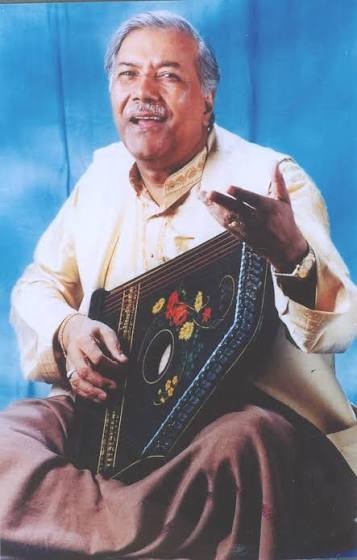
Standalone Title:Ustad Abdul Halim Jaffer Khan: The Legendary Innovator of the Sitar
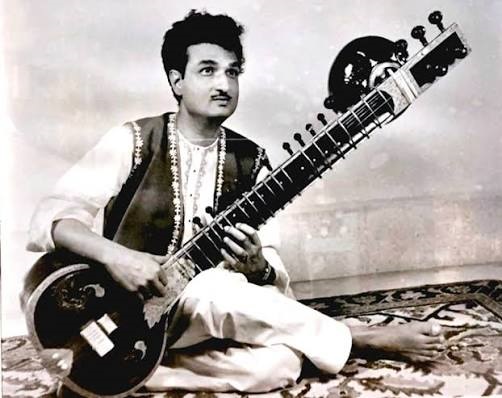
Ustad Abdul Halim Jaffer Khan (18 February 1927 – 4 January 2017) was a towering titan of Indian classical music. Celebrated as one of the “holy trinity” of the sitar alongside Pandit Ravi Shankar and Ustad Vilayat Khan, he carved an entirely unique path through his innovative playing technique known as the Jafferkhani Baaj. A master collaborator, film composer, and purist, he brought rare microtonal nuances, Carnatic ragas, and global musical dialogues to the instrument.
2. Quick Facts: At a Glance
Standalone Title:Ustad Abdul Halim Jaffer Khan: Quick Facts and Profile Overview
Full Name: Ustad Abdul Halim Jaffer Khan
Native Name: عبد الحلیم جعفر خان (Urdu) / अब्दुल हलीम जफर खाँ (Hindi)
Date of Birth: 18 February 1927
Place of Birth: Jaora, Madhya Pradesh, British India (approx. 35 km from Ratlam)
Nationality: Indian
Occupation/Profession: Sitar Player, Composer, Music Director
Field of Achievement: Hindustani Classical Music, Instrumental Innovation, Film Scoring
Award Name: Padma Bhushan (following earlier honors including the Padma Shri)
Award Category: Civilian Award (Third Highest Civilian Honor in India)
Award Year: 2006
Presented By: Dr. A.P.J. Abdul Kalam (then President of India)
Date of Ceremony: March 2006 (Republic Day Announcement)
Citation/Official Reason: For distinguished services and lifelong contributions to art, Hindustani classical music, and cultural enrichment.
Other Major Accolades: Padma Shri (1970), Sangeet Natak Akademi Award (1987), Maharashtra Gaurav Puraskar (1990), and the Haafiz Ali Khan Award (1994).
4. Why Did He Receive the Award?
Standalone Title:A Lifetime of Sonic Innovation: Why Ustad Abdul Halim Jaffer Khan Was Awarded
Ustad Abdul Halim Jaffer Khan received the Padma Bhushan in recognition of his decades-long dedication to expanding the boundaries of the sitar. By inventing the Jafferkhani Baaj, seamlessly weaving Carnatic ragas into the Hindustani fold, blazing trails in global fusion with jazz and western classical icons, and enriching the golden era of Hindi cinema music, he fundamentally reshaped the landscape of Indian instrumental music.
5. Early Life: Formative Years in a Musical Dynasty
Standalone Title:The Roots of a Maestro: Musical Lineage in Madhya Pradesh
Born in 1927 in Jaora, Madhya Pradesh, Abdul Halim grew up in an exceptional artistic ecosystem. He was the son of Ustad Jaffer Khan, a versatile vocalist, sitarist, and beenkar (master of the rudra veena) who belonged to the royal court traditions. Immersed in music from infancy, he absorbed complex vocal nuances and instrumental techniques directly from his father before seeking specialized training from master teachers.
6. Education: Grounded in the Indore Beenkar Gharana
Standalone Title:Rigorous Training: Mastering the Tradition of the Veena
Under the tutelage of his father, young Abdul Halim trained extensively in the Dhrupad-influenced style of the Indore Beenkar Gharana. He later expanded his repertoire by studying under legendary masters like Ustad Mehboob Khan and the renowned beenkarUstad Baboo Khan. This rigorous grounding enabled him to translate the deep, resonant, and meditative qualities of the veena onto the fretboard of the sitar.
7. Career Journey: From All India Radio to Global Stages
Standalone Title:A Storied Career: Broadcasting, Collaboration, and Film Scoring
Early Broadcasts: Became a featured All India Radio (AIR) artist as a teenager in the early 1940s, rapidly gaining national acclaim for his distinct tone.
Cinematic Footprint: Introduced to Bombay’s film industry in 1946 by composer Khwaja Khurshid Anwar, playing crucial sitar tracks for iconic cinematic masterpieces.
Global Collaborations: Broke cross-cultural boundaries decades before “fusion” became mainstream, collaborating with jazz legend Dave Brubeck (1958) and classical guitarist Julian Bream (1963).
Institutional Leadership: Established the Halim Academy of Sitar in Mumbai in 1976 to preserve his unique style for future generations.
8. Major Achievements: The Jafferkhani Baaj and Carnatic Integration
Standalone Title:Milestones in Innovation: Inventing the Jafferkhani Baaj and New Ragas
The Jafferkhani Baaj: Developed a signature style characterized by structural clarity, structural symmetry, lightning-fast execution (taiyyari), and a vigorous, vocalistic attack that prioritized microtones (meend and gamak).
Carnatic Ragas on Sitar: Pioneered the introduction of complex South Indian Carnatic ragas—such as Kirwani, Latangi, Karaharapriya, and Manavati—into the Hindustani sitar repertoire.
Creation of New Ragas: Composed distinct new ragas including Chakradhun, Kalpana, Madhyami, and Khusrubani.
9. Contribution to the Nation: Enriching Classical Music and Cinema
Standalone Title:Nation Building Through Art: Shaping the Golden Era of Hindi Film Soundtracks
Ustadji played a pivotal role in popularizing classical instrumentation within mainstream Indian consciousness. His sitar work formed the haunting emotional backbone of monumental cinematic classics such as Mughal-e-Azam (1960), Jhanak Jhanak Payal Baaje (1955), Goonj Uthi Shehnai (1959), and Kohinoor (1960). Working alongside legendary music directors like Naushad, Madan Mohan, and C. Ramachandra, he elevated film background scores to high art.
10. Other Awards and Honours
Standalone Title:Beyond the Padma Bhushan: Recognition of a Lifetime in Music
Sangeet Natak Akademi Award (1987): India’s highest recognition for performing artists.
Mayor of Bombay Silver Medal (1985): Honored for civic and cultural contributions.
Ustad Allauddin Sangeet Ratna (1986): Celebrating his deep roots in classical mastery.
Srestha Kala Acharya: Awarded for lifetime educational and artistic leadership.
11. Legacy and Influence: The Sitarist’s Sitarist
Standalone Title:An Enduring Legacy: The Unfading Echo of the Jafferkhani Baaj
Ustad Abdul Halim Jaffer Khan is lovingly remembered in musical circles as the “sitarist’s sitarist” due to his deep theoretical insight, precision, and technical audacity. Even after his passing on January 4, 2017, at his home in Mumbai, his unique style continues to be carried forward by his son and disciple, Zunain Khan, ensuring the Jafferkhani Baaj remains a living, breathing tradition.
12. Interesting Facts: Surprising Insights
Standalone Title:Did You Know? Fascinating Facts About Ustad Abdul Halim Jaffer Khan
Pioneering East-West Jazz Fusion: In 1958, years before Ravi Shankar collaborated with Western rock icons, Khan jammed with American jazz master Dave Brubeck during the U.S. State Department’s Jazz Ambassadors Program. Brubeck later remarked that Khan’s improvisational genius fundamentally changed how he understood music.
A Cinematographic Backbone: If you hum the background motifs of Mughal-e-Azam, you are listening to Abdul Halim Jaffer Khan’s intricate sitar work guiding the emotional tension of historical cinema.
Praise from Peers: Even rival giants of the string world acknowledged his astonishing command; Pandit Ravi Shankar famously admired Khan’s blinding technical speed (taiyyari), while Santoor legend Shivkumar Sharma recalled being transfixed by hearing his unique tone wafting through a night radio in the 1950s.
13. Quotes: Words of Wisdom
Standalone Title:In His Words: Memorable Quotes by and About Ustad Abdul Halim Jaffer Khan
“My baaj is a synthesis of precision in technique, systematic thought, and the deep emotional freedom of the raga.” — Ustad Abdul Halim Jaffer Khan
“He was the last absolute giant of the sitar—a musician whose tone could be identified instantly among a thousand.” — Obituary Tribute
14. Timeline: Key Milestones in His Life
1927: Born on February 18 in Jaora, Madhya Pradesh.
Early 1940s: Emerges as a regular featured artist on All India Radio.
1946: Makes his debut in Hindi cinema scoring and performing under Khwaja Khurshid Anwar.
1958: Collaborates with jazz icon Dave Brubeck in Bombay.
1970: Conferred the Padma Shri by the Government of India.
1976: Founds the Halim Academy of Sitar in Mumbai.
1987: Receives the prestigious Sangeet Natak Akademi Award.
2006: Honored with the Padma Bhushan by President Dr. A.P.J. Abdul Kalam.
2017: Passes away on January 4 following a cardiac arrest in Mumbai at the age of 89.
15. References: Sources and Further Reading
Standalone Title:Sources and Archives: Further Reading on Ustad Abdul Halim Jaffer Khan
Wikipedia & Open Biographical Archives: Abdul Halim Jaffer Khan Profile
Jafferkhani Baaj: Innovation in Sitar Music by Abdul Halim Jaffer Khan (Kohinoor Printers)
The Times of India & The Hindu Archives: Obituaries and Historical Music Reviews
Official Portal: Jafferkhani Baaj Foundation Archives
16. Related Personalities: Peers and Collaborators
Standalone Title:In Good Company: Contemporaries, Mentors, and Collaborators
Dave Brubeck: Legendary American jazz pianist and composer who collaborated with Khan in 1958.
Naushad: Iconic Bollywood music director who utilized Khan’s sitar work to define the sound of historical cinematic epics.
Pandit Ravi Shankar: Contemporary sitar maestro and peer who shaped the global profile of Indian classical music.
17. Frequently Asked Questions (FAQ)
Standalone Title:All Your Questions Answered: FAQs About Ustad Abdul Halim Jaffer Khan
Q: Who was Ustad Abdul Halim Jaffer Khan?
A: He was a legendary Indian sitar player and composer renowned for inventing the Jafferkhani Baaj and pioneering cross-genre global collaborations.
Q: What is the Jafferkhani Baaj?
A: It is his unique style of playing the sitar that combines the weighty, meditative precision of the rudra veena (beenkar style) with vigorous physical attack, crystal-clear articulation, and vocalistic microtones.
Q: What major honors did he receive?
A: He was awarded the Padma Shri in 1970, the Sangeet Natak Akademi Award in 1987, and India’s prestigious Padma Bhushan in 2006.