
1. Introduction
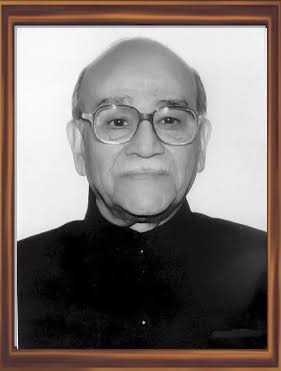
Tonse Ananth Pai, universally known as T. A. Pai (1922–1981), was a visionary Indian banker, astute administrator, and prominent cabinet minister. He is best celebrated for transforming Syndicate Bank into an engine of grassroots financial inclusion, spearheading premier public institutions like the Life Insurance Corporation (LIC), and laying structural frameworks for India’s heavy industries and industrial development during the 1970s.
2. Quick Facts
- Full Name: Tonse Ananth Pai
- Native Name: तोन्से अनन्त पै
- Date of Birth: January 17, 1922
- Place of Birth: Udupi, Madras Presidency (now Karnataka), British India
- Nationality: Indian
- Occupation/Profession: Banker, Politician, and Industrial Administrator
- Field of Achievement: Banking, Public Sector Leadership, and Economic Policy
- Years Active: 1943–1981
3. Award Information (Padma Bhushan)
- Award Name: Padma Bhushan
- Award Category: Civil Honours (Third-highest civilian award in India)
- Award Year: 1972
- Presented By: President of India
- Date of Ceremony: Conferred in 1972
- Citation/Official Reason: Awarded in recognition of his exceptional services to banking, public sector management, and national economic development.
- Previous Recipients: Eminent personalities across public service, literature, science, and the arts.
- Next Recipients: Conferred annually alongside other national civilian honorees.
4. Why They Received the Award
T. A. Pai received the Padma Bhushan for his pioneering role in redefining Indian commercial banking. Through Syndicate Bank, he moved institutional credit away from urban elites toward small farmers, artisans, and common citizens. His exceptional turnaround of major public sector institutions—including his leadership of the Life Insurance Corporation (LIC)—cemented his status as one of India’s most effective economic administrators.
5. Early Life
Born on January 17, 1922, in Udupi, Karnataka, into a respected Konkani-speaking family as the eldest son of Tonse Upendra Pai and nephew of the legendary educationist Dr. T. M. A. Pai, T. A. Pai grew up surrounded by a strong ethos of entrepreneurship and community service. His formative years in coastal Karnataka deeply sensitized him to the financial struggles of rural laborers and small business owners.
6. Education
- Schooling: Completed preliminary studies in Udupi and coastal Karnataka.
- Higher Education: Traveled to Bombay (now Mumbai) to pursue higher studies, graduating with a Bachelor of Commerce (B.Com.) degree from the prestigious Sydenham College of Commerce and Economics in 1943.
7. Career Journey
- Syndicate Bank Leadership (1943–1964): Joined Syndicate Bank as a Deputy Manager in 1943 immediately upon graduation. Climbing rapidly through the ranks, he served as General Manager (1944–1961) and Managing Director (1962–1964), driving its phenomenal expansion and small-savings mobilization models.
- FCI & Return to Banking (1965–1970): Served briefly as the Chairman of the Food Corporation of India (FCI) starting in 1965 before rejoining Syndicate Bank as its Chairman in 1967 following its major nationalization milestones.
- LIC Chairmanship (1970–1972): Appointed by the Government of India as the Chairman of the Life Insurance Corporation (LIC) in 1970, where he injected corporate efficiency and expanded rural insurance outreach.
- Union Cabinet Minister (1972–1977): Entered active politics, was elected to the Rajya Sabha in 1972, and held several crucial portfolios in the Union Cabinet:
- Minister for Railways (1972)
- Minister of Heavy Industries, and Steel and Mines (1973)
- Minister of Industry and Civil Supplies (1974–1977)
8. Major Achievements
- Conceptualized and championed micro-savings mobilization strategies—most notably the Pigmy Deposit scheme structures—that allowed ordinary rural workers to build secure savings.
- Served as the founding Chairman of the Indian Institute of Management Bangalore (IIMB), setting up its administrative bedrock.
- Oversaw India’s industrial manufacturing expansion during the mid-1970s as Union Industry Minister, promoting indigenous self-reliance.
9. Contribution to the Nation
T. A. Pai democratized access to capital in India. By shifting banking from a class-banking model to mass-banking, he empowered millions of small entrepreneurs, agriculturalists, and weavers who previously relied on predatory moneylenders. Later, as a central minister, his administrative oversight ensured that India’s industrial backbone remained resilient during challenging macroeconomic windows.
10. Other Awards and Honours
- Doctor of Letters (D.Litt.): Conferred honoris causa by Karnataka University (1973) and Andhra University (1975).
- Legacy Institutions: The prestigious T. A. Pai Management Institute (TAPMI) in Manipal was founded in his honor to carry forward his vision of professional business education.
11. Legacy and Influence
T. A. Pai is remembered as a titan of Indian institutional building. He demonstrated that financial organizations could be both intensely profitable and socially responsible. Long after his tenure, the operational framework he engineered for rural financing and public sector accountability serves as a blueprint for contemporary financial inclusion policies in developing nations.
12. Interesting Facts
- Despite managing giant national corporations and high-profile government ministries, he always considered himself first and foremost a grassroots banker who understood the value of a single rupee saved by a laborer.
- He was known for his sharp administrative independence, famously choosing institutional integrity and public transparency over blind political compliance during turbulent constitutional eras.
- His uncle, Dr. T. M. A. Pai, built the educational hub of Manipal, while T. A. Pai perfected its financial and managerial ecosystem, making the Pai family synonymous with modern nation-building in Karnataka.
13. Quotes
“Banking cannot remain a privilege of the rich; its true test of success lies in how effectively it touches and transforms the economic life of the common man.” — T. A. Pai
14. Timeline
| Year | Milestone |
| 1922 | Born on January 17 in Udupi, Karnataka. |
| 1943 | Graduated from Sydenham College, Mumbai; joined Syndicate Bank. |
| 1962 | Appointed Managing Director of Syndicate Bank. |
| 1970 | Appointed Chairman of the Life Insurance Corporation (LIC). |
| 1972 | Elected to the Rajya Sabha; conferred the Padma Bhushan; appointed Minister for Railways. |
| 1974 | Took charge as Union Minister of Industry and Civil Supplies. |
| 1977 | Elected to the Lok Sabha representing the Udupi constituency. |
| 1981 | Passed away on May 29 at the age of 59. |
15. References
- Wikipedia contributors. “T. A. Pai.” Wikipedia, The Free Encyclopedia.
- TAPMI / Manipal Academy of Higher Education (MAHE) official archives — Founder profiles.
- Pai, T. A. Banking and Economic Growth in India. University publication records.
- Reserve Bank of India (RBI) historical documentation on commercial bank evolution.
16. Related Personalities
- Dr. T. M. A. Pai: Founder of Syndicate Bank and the Manipal Group of institutions (and T. A. Pai’s uncle).
- Indira Gandhi: Former Prime Minister of India who inducted Pai into her federal cabinet.
- Upendra Ananth Pai: Co-founder of Syndicate Bank and father of T. A. Pai.
17. Frequently Asked Questions (FAQ)
- What is T. A. Pai best known for?He is best known for his monumental leadership in turning Syndicate Bank into a pioneer of rural and small-scale banking, and for serving as a key Union Cabinet Minister managing India’s heavy industries and public enterprises during the 1970s.
- Did T. A. Pai found any management institute?Yes, the T. A. Pai Management Institute (TAPMI) in Manipal was established to honor his management philosophy and vision.
- Which high-profile public sector companies or bodies did he head?He served as the Managing Director/Chairman of Syndicate Bank, Chairman of the Food Corporation of India (FCI), Chairman of the Life Insurance Corporation (LIC), and the first
About the Author