
1. Introduction
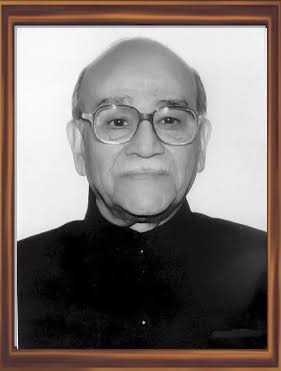
Ashwini Kumar (1920–2015) was a towering figure in Indian sports administration and a highly decorated police officer. Fulfilling dual roles with legendary distinction, he served as a top-tier Indian Police Service (IPS) officer—retiring as the Director General of the Border Security Force (BSF)—while simultaneously shaping the destiny of domestic and international sports. As the long-serving President of the Indian Hockey Federation and the first individual from Asia, Africa, or Latin America to become Vice-President of the International Olympic Committee (IOC), Kumar left an indelible mark on the global Olympic movement.
2. Quick Facts
- Full Name: Ashwini Kumar
- Native Name: अश्wini कुमार
- Date of Birth: December 28, 1920
- Place of Birth: Jalandhar, Punjab Province, British India
- Nationality: Indian
- Occupation/Profession: Police Officer and Sports Administrator
- Field of Achievement: Law Enforcement, National Security, and International Sports Administration
- Years Active: 1942–2000 (Police career: 1942–1978; active sports governance spanning decades)
3. Award Information (Padma Bhushan)
- Award Name: Padma Bhushan
- Award Category: Civil Honours (Third-highest civilian award in India)
- Award Year: 1972
- Presented By: President of India
- Date of Ceremony: Conferred in 1972
- Citation/Official Reason: Recognized for exceptional contributions and distinguished service in public administration, national security, and sports leadership.
- Previous Recipients: Eminent personalities across arts, literature, science, public service, and sports.
- Next Recipients: Conferred annually alongside other national civilian honorees.
4. Why They Received the Award
Ashwini Kumar was awarded the Padma Bhushan in 1972 for his exemplary dual service to the nation. On one hand, he was a fearless top-ranking police officer who successfully handled complex internal security operations and border threats; on the other, he was a visionary sports administrator who elevated India’s stature internationally, notably steering the Indian Hockey Federation and representing India with high distinction on global platforms.
5. Early Life
Born on December 28, 1920, in Jalandhar, Punjab, into a prominent family (his father, Dr. Vishwa Nath, was a leading physician), Ashwini Kumar grew up immersed in a disciplined environment. In his youth, he was an enthusiastic multi-sport athlete, excelling as a competitive boxer, fine hockey player, rower, and national-level athlete. Alongside his physical pursuits, he possessed a deep affinity for literature, history, and poetry.
6. Education
- Schooling: Completed preliminary education in Punjab.
- Higher Education: Attended the prestigious Government College, Lahore, where he served as Assistant Editor of the college magazine “Ravi” and earned his Master’s degree in History.
7. Career Journey
- Imperial Police & IPS Career (1942–1978): Joined the elite Imperial Police (precursor to the IPS) in 1942 as one of the few Indian officers selected during the British era. Over a stellar 36-year career, he hunted down notorious dacoits, managed volatile inter-state law and order, and capped off his police tenure as the Director General of the Border Security Force (BSF) from 1972 to 1977.
- Indian Sports Administration (1950s–1970s): Served as Secretary-General of the Indian Olympic Association (IOA) for multiple terms and took over as the President of the Indian Hockey Federation (IHF) in 1958, leading it through a 16-year tenure. He also led the Amateur Athletic Federation of India and the Basketball Federation of India.
- Global Olympic Leadership (1973–2000): Inducted as a member of the International Olympic Committee (IOC) in 1973. He rose swiftly through its ranks, serving on the Executive Board and acting as Vice-President of the IOC from 1983 to 1987—the first person from Asia, Africa, or Latin America to hold that prestigious post.
8. Major Achievements
- Spearheaded Indian hockey during a golden era, witnessing the national team win gold at the 1964 Tokyo Olympics and 1966 Asian Games, alongside podium finishes in 1968 and 1972.
- Appointed as the exclusive IOC Security Delegate, overseeing safety operations across consecutive Olympic Games from Moscow 1980 to Sydney 2000, earning him global renown as “Policeman of the Millennium”.
- Honored with the Olympic Order of Merit in silver by the IOC in 2002 and the prestigious IOC Centenary Award in 1994.
- Personally credited with utilizing his diplomatic goodwill to help lift international sports bans affecting India during critical diplomatic junctures.
9. Contribution to the Nation
Ashwini Kumar bridged the worlds of rigorous national security and peaceful international diplomacy through sports. Domestically, he secured India’s borders and maintained public order during critical post-independence decades. Internationally, he placed India firmly on the map of the global Olympic movement, ensuring that Indian voices played a primary role in defining world sports policies, ethics, and security frameworks.
10. Other Awards and Honours
- President’s Police Medal for Gallantry: Awarded twice for exceptional bravery during police operations.
- President’s Police Medal for Distinguished Service & Police Medal for Meritorious Service
- Olympic Council of Asia Order of Merit (1990): For the promotion of sports across Asia.
- Sports Distinction Medal by the Brazilian Government (1996).
- Life President of the Indian Olympic Association (IOA).
- Honorary Member of the IOC (2000–2015).
11. Legacy and Influence
Remembered as a textbook example of a “super cop” turned master diplomat, Ashwini Kumar’s legacy is defined by unmatched authority and administrative stamina. He was present at nearly every major sporting milestone, boasting the rare distinction of having attended 17 consecutive Summer Olympic Games from London 1948 to London 2012. His pioneering work on modern Olympic security protocols forever transformed how the world protects athletes and spectators at global mega-events.
12. Interesting Facts
- So deeply passionate was he about his primary sport that he playfully named his first-born child “Hockey”.
- During the height of geopolitical tensions surrounding the 1988 Seoul Olympics, Kumar spent grueling hours conducting delicate backchannel negotiations with North Korean leadership to ensure the games proceeded safely.
- Beyond law enforcement and sports, he was an accomplished Urdu poet and a deep scholar of Indian philosophy.
13. Quotes
“The Olympic Movement is not merely about winning medals; it is an enduring instrument for international peace, discipline, and the unity of mankind.” — Ashwini Kumar
14. Timeline
| Year | Milestone |
| 1920 | Born on December 28 in Jalandhar, Punjab. |
| 1942 | Joined the Imperial Police service at age 22. |
| 1958 | Appointed President of the Indian Hockey Federation (IHF). |
| 1964 | Led the Indian delegation to victory at the Tokyo Olympics. |
| 1972 | Conferred the Padma Bhushan; assumed office as Director General of the BSF. |
| 1973 | Elected as a member of the International Olympic Committee (IOC). |
| 1983 | Made Vice-President of the IOC (first from South/East/West Asia, Africa, or Latin America). |
| 2000 | Transitioned to Honorary Member of the IOC; named Policeman of the Millennium for Olympic security contributions. |
| 2002 | Awarded the Olympic Order of Merit. |
| 2015 | Passed away on October 19 in New Delhi at the age of 94. |
15. References
- Wikipedia contributors. “Ashwini Kumar (sports administrator).” Wikipedia, The Free Encyclopedia.
- Olympedia biographical database. “Ashwini Kumar.”
- The Economic Times archives. “Remembering Ashwini Kumar – The brilliant police officer and great sports administrator.”
- Stick2Hockey archival profiles on Indian hockey legends.
16. Related Personalities
- Juan Antonio Samaranch: Long-serving President of the International Olympic Committee who worked closely with Ashwini Kumar.
- Raja Bhalindra Singh: Eminent Indian sports administrator and IOC colleague.
- Naval Tata: Former Indian Hockey Federation President whom Kumar succeeded.
17. Frequently Asked Questions (FAQ)
- What were Ashwini Kumar’s primary professional fields?He excelled concurrently as a high-ranking Indian Police Service (IPS) officer (retiring as DG of the BSF) and an elite international sports administrator.
- What makes his position in the International Olympic Committee historic?In 1983, he became the Vice-President of the IOC, marking the very first time an individual from Asia, Africa, or Latin America achieved that rank.
- Why is he celebrated in Olympic security history?He served as the official IOC Security Delegate from 1980 to 2000, designing and directing safety protocols across multiple Olympic Games that earned him international acclaim.
About the Author