Tiruppur_Kumaran
Tiruppur Kumaran – The Fearless Martyr of India
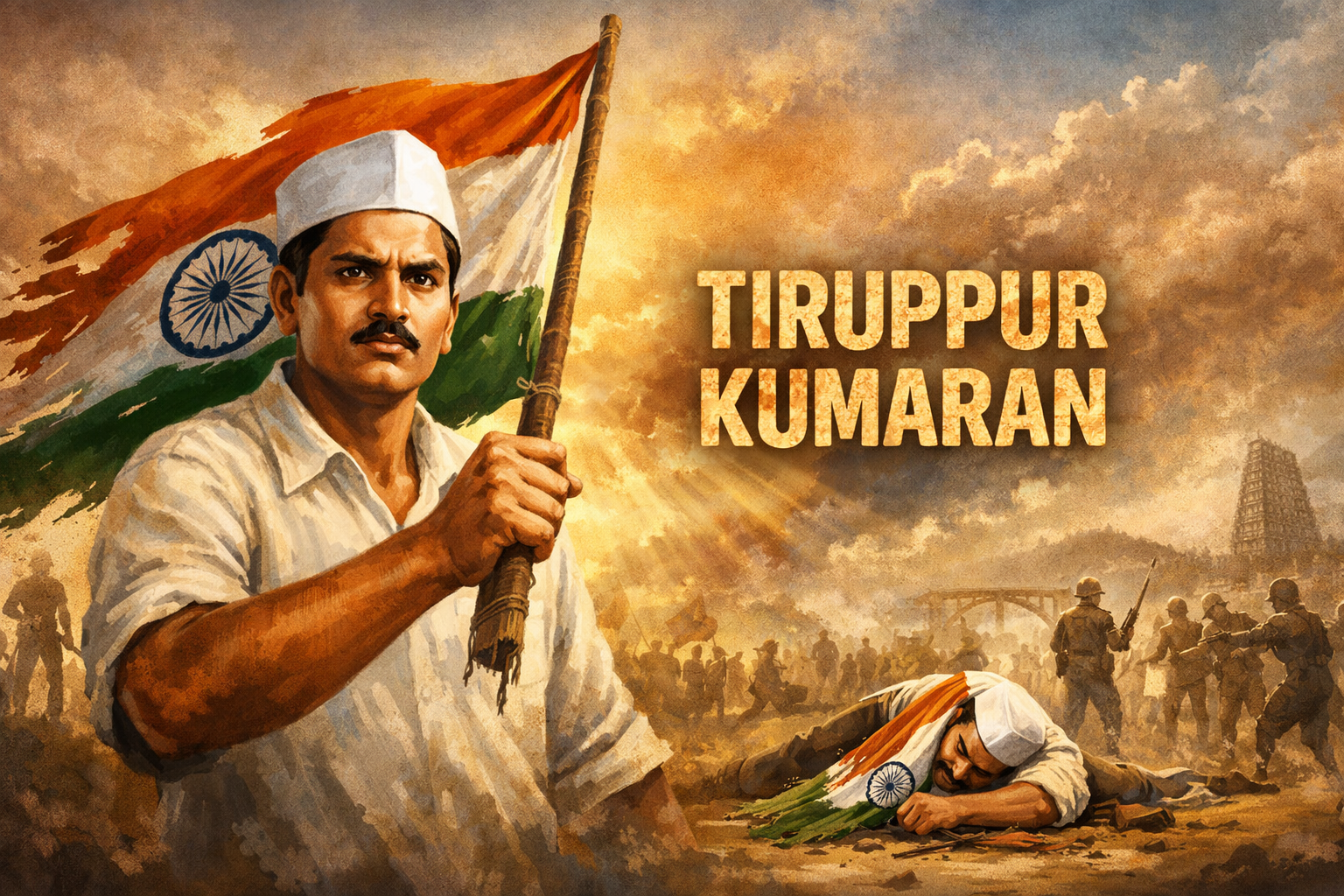
Tiruppur Kumaran was one of the brave young freedom fighters of India who sacrificed his life for the nation at a very young age. He is remembered as a symbol of courage, patriotism, and determination. He is popularly known as “Kodi Kaththa Kumaran,” which means “Kumaran who protected the flag.” This title was given to him because he died holding the Indian national flag during a protest against British rule.
His life is a powerful story of youthful bravery and love for the motherland.
Birth and Early Life
Tiruppur Kumaran was born on 4 October 1904 in Chennimalai, near Erode, in present-day Tamil Nadu. His parents were Nachimuthu Mudaliar and Karuppayi Ammal. He was born into a simple family and grew up with strong cultural and moral values.
Due to financial difficulties, Kumaran could not continue his education for long. He later moved to Tiruppur and worked in a cotton mill. During this time, he became aware of the freedom movement that was spreading across India.
Even though he was young, he developed a deep sense of patriotism and wanted to contribute to India’s independence.
Influence of the Freedom Movement
During the early 20th century, India was under British rule. The British imposed strict laws, heavy taxes, and restrictions on Indian citizens. National leaders like Mahatma Gandhi were inspiring people to fight peacefully for freedom through movements such as the Non-Cooperation Movement and Civil Disobedience Movement.
Kumaran was deeply influenced by these movements. He believed that every Indian, including young people, had a duty to fight for independence.
To actively participate in the struggle, he founded a youth organization called Desa Bandhu Youth Association in Tiruppur. The aim of this group was to spread patriotic ideas and encourage people to join the freedom movement.
The Historic Protest and Martyrdom
In 1932, during the Civil Disobedience Movement, the British government banned the use of the Indian national flag. They did not allow people to carry or hoist it during protests.
On 11 January 1932, Tiruppur Kumaran led a protest march in Tiruppur against British rule. During the procession, he held the banned Indian national flag high in his hands.
The British police attacked the protesters with severe lathi charges (beatings with sticks). Despite being brutally beaten, Kumaran refused to drop the flag. Even when he fell to the ground, he held the flag tightly in his hands.
He died from his injuries, but the flag never touched the ground.
Because of this heroic act, he earned the title “Kodi Kaththa Kumaran” — the man who protected the national flag with his life.
Personal Qualities
Tiruppur Kumaran was:
- Fearless and determined
- Deeply patriotic
- A strong believer in freedom and justice
- A symbol of youth courage
Though he was only 27 years old at the time of his death, his bravery left a lasting impact on the freedom movement in Tamil Nadu.
Death and Legacy
Tiruppur Kumaran passed away on 11 January 1932 as a martyr for India’s independence. His sacrifice inspired many young Indians to join the struggle against British rule.
Today, he is honored as one of Tamil Nadu’s great freedom fighters. Memorials and statues have been erected in his memory, especially in Tiruppur. His story is taught to students as an example of courage and patriotism.
He remains a shining symbol of devotion to the national flag and the country.
Conclusion
Tiruppur Kumaran’s life proves that age does not matter when it comes to serving the nation. With strong determination and love for his country, he stood fearlessly against British oppression.
By sacrificing his life while holding the national flag, he showed the world that India’s spirit could not be broken. His bravery continues to inspire generations of Indians.
Tiruppur Kumaran will always be remembered as the young hero who protected the honor of the Indian flag with his life.
About the Author