

1. Introduction
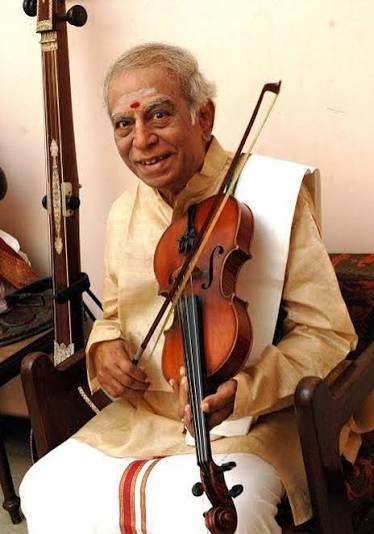
Lalgudi Gopal Jayaraman was a legendary Carnatic violinist, composer, and vocalist who revolutionized the role of the violin in South Indian classical music. He transformed the instrument from a mere accompanying tool for vocalists into an independent, expressive solo voice capable of capturing every nuance of human emotion. Renowned for his crystal-clear gayaki (vocal style) technique, impeccable intonation, and breathtaking aesthetic brilliance, he stands as one of the greatest instrumentalists in the history of Indian classical music.
2. Quick Facts
- Full Name: Lalgudi Gopal Jayaraman
- Native Name: லால்குடி கோபால ஐயர் ஜெயராமன்
- Date of Birth: September 17, 1930
- Place of Birth: Lalgudi, near Tiruchirappalli, Tamil Nadu, India
- Nationality: Indian
- Occupation / Profession: Carnatic Violinist, Composer, Teacher, Vocalist
- Field of Achievement: Carnatic Instrumental Music and Composition
- Years Active: 1937 – 2013
3. Award Information (Spotlight: Padma Bhushan)
- Award Name: Padma Bhushan
- Award Category: Art – Classical Music (Civilian Honour)
- Award Year: 2001
- Presented By: Government of India (President of India)
- Date of Ceremony: March 2001
- Citation / Official Reason: In recognition of his mastery over the violin, his pioneering contributions to Carnatic music performance and pedagogy, and his lifelong dedication to enriching Indian classical arts.
- Previous Recipients: Eminent classical artists and musicians of preceding years.
- Next Recipients: Successive civilian honorees in subsequent years.
4. Why He Received the Award
Lalgudi G. Jayaraman received the Padma Bhushan—India’s third-highest civilian honor—because of his monumental, evolutionary impact on Carnatic music. He single-handedly redefined violin technique, ensuring that every lyrical phrase, gamaka (oscillation), and emotional depth of vocal music could be replicated and elevated on the violin. His globally acclaimed solo concerts, jugalbandis with Hindustani masters, and vast repertoire of original compositions (tillanas and varnams) cemented his legacy as a national cultural treasure.
5. Early Life
Born in the town of Lalgudi, Tamil Nadu, Jayaraman was born into a deeply musical family with a lineage tracing back to Tyagaraja’s direct disciples. His father, Lalgudi V. Gopala Iyer, was a renowned violin maestro and music teacher. Jayaraman gave his first public concert at the tender age of 12 as an accompanist, showing exceptional precocity. Growing up immersed in rigorous traditional training under his father, he developed a profound devotion to the purity of Raga Bhava and melodic perfection.
6. Education
- Schooling & Early Training: Received intensive, traditional gurukul-style training exclusively from his father, practicing for hours a day to build unmatched finger dexterity and tonal purity.
- Academic & Musical Synthesis: Combined traditional classical learning with extensive self-study of literature and musical aesthetics, absorbing the deep nuances of vocal music to apply them to instrumental performance.
7. Career Journey
- Child Prodigy to Accompanying Master (1940s–50s): Accompanied virtually all legendary vocalists of the era—including Ariyakudi Ramanuja Iyengar, Chembai Vaidyanatha Bhagavatar, and G. N. Balasubramaniam—earning widespread acclaim for supporting singers without overpowering them while matching their every note.
- Pioneering Soloist (1960s Onward): Transitioned into a trailblazing solo and duet performer, creating a new format of violin-duet concerts alongside his sister Lalgudi Srimathi and later his children, Lalgudi G.J. Krishnan and Lalgudi Vijayalakshmi.
- International Acclaim: Performed at prestigious global venues, including the United Nations, Festival of India in various countries, and major international music festivals, spreading Carnatic music worldwide.
8. Major Achievements
- Padma Bhushan (2001): Conferred India’s third-highest civilian honor.
- Sangeet Natak Akademi Award (1979): Honored by India’s national academy for music, dance, and drama.
- Sangeetha Kalanidhi (1979): Awarded the highest accolade in Carnatic music by the Music Academy, Chennai, making him one of the youngest musicians to receive the title at the time.
- Prolific Composer: Composed numerous varnams, tillanas, and krithis in rare and common ragas, which are studied and performed by dancers and musicians globally.
9. Contribution to the Nation
- Revolutionizing the Violin: Invented and popularized a distinct bowing and fingering technique that allowed the violin to sing rather than just play notes, eliminating harsh frictions and maximizing sweetness (saukhyam).
- Pedagogical Legacy: Trained a generation of exceptionally talented students, passing down a pristine school of playing known globally as the Lalgudi Baani.
- Bridging Traditions: Collaborated closely with Hindustani maestros (such as sitar virtuoso Pt. Ravi Shankar and flutist Hariprasad Chaurasia), fostering national musical integration and cross-genre appreciation.
10. Other Awards and Honours
- Padma Bhushan (2001) by the Government of India.
- Sangeetha Kalanidhi (1979) by the Music Academy, Chennai.
- Kalaimamani Award by the Government of Tamil Nadu.
- Sangeet Natak Akademi Fellowship (2006), the highest honor conferred by the Academy.
11. Legacy and Influence
Lalgudi G. Jayaraman is revered as a modern sage of Carnatic music. His style—characterized by absolute devotion to purity, deep emotional resonance, and zero theatrical gimmicks—became the gold standard for violinists worldwide. His tillanas, known for their rhythmic complexity and lyrical beauty, are a staple in Bharatanatyam and Carnatic repertoires. His children continue to uphold the prestigious Lalgudi tradition.
12. Interesting Facts
- The “Singing” Violin: He firmly believed that the violin should not sound like a Western instrument adapted to India, but rather like a human voice singing in Sanskrit or Tamil—a philosophy that guided his unique tonal training.
- Balancing Roles: Unlike many artists who abandoned accompaniment entirely once they became soloists, Jayaraman maintained deep respect for vocalists, noting that accompanying taught him invaluable listening skills.
- Multi-Talented Creator: Beyond instrumental mastery, he was an accomplished vocalist and composed ballet scores for renowned classical dancers like Yamini Krishnamurthy.
13. Quotes
“The violin must not merely produce sound; it must speak, weep, rejoice, and sing just like the human voice.” – Lalgudi G. Jayaraman
14. Timeline
- 1930: Born on September 17 in Lalgudi, Tamil Nadu.
- 1942: Gives his debut public concert as a young accompanist.
- 1979: Awarded the prestigious Sangeetha Kalanidhi by the Music Academy, Chennai, and the Sangeet Natak Akademi Award.
- 2001: Conferred the Padma Bhushan by the Government of India.
- 2006: Receives the Sangeet Natak Akademi Fellowship.
- 2013: Passes away on April 22 in Chennai at the age of 82.
15. References
- Music Academy, Chennai archives and historical records.
- Sangeet Natak Akademi award directories.
- Government of India Padma Awards registry.
- Published biographical memoirs and musicological journals (Sruti magazine).
16. Related Personalities
- Lalgudi V. Gopala Iyer: Father and primary musical guru.
- Lalgudi Srimathi: Sister and longtime concert partner.
- Semmangudi Srinivasa Iyer & M. S. Subbulakshmi: Legendary vocalists with whom he frequently collaborated on stage.
17. Frequently Asked Questions (FAQ)
Q1: What is Lalgudi G. Jayaraman best known for?
A: He is best known as a legendary Carnatic violinist who revolutionized violin technique, making it sound remarkably like the human voice (gayaki style), and as a master composer of intricate tillanas.
Q2: What is the highest Carnatic music honor he received?
A: He received the coveted title of Sangeetha Kalanidhi from the Music Academy, Chennai, in 1979.
Q3: Did he receive any national civilian honors?
A: Yes, he was awarded the Padma Bhushan in 2001 by the Government of India.
About the Author




