

1. Introduction
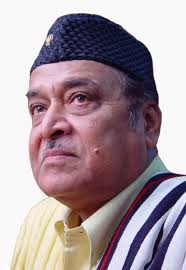
Dr. Bhupendra Kumar Hazarika, affectionately known as Bhupen Da, was a towering cultural institution, legendary playback singer, lyricist, musician, poet, and filmmaker from Assam. Renowned as the “Bard of the Brahmaputra”, his powerful baritone voice and soul-stirring compositions bridged regional folk traditions with universal themes of humanity, brotherhood, and social justice. For over seven decades, his art served as a unifying bridge across India and international borders, particularly resonating deeply within Bangladesh and global forums.
2. Quick Facts
- Full Name: Dr. Bhupendra Kumar Hazarika
- Native Name: ভূপেন হাজৰিকা
- Date of Birth: September 8, 1926
- Place of Birth: Sadiya, Assam Province, British India
- Nationality: Indian
- Occupation / Profession: Singer, Composer, Lyricist, Filmmaker, Poet, Author, Academic
- Field of Achievement: Music, Cinema, Literature, and Cultural Integration
- Years Active: 1936 – 2011
3. Award Information (Spotlight: Bharat Ratna)
- Award Name: Bharat Ratna
- Award Category: India’s Highest Civilian Honour
- Award Year: 2019 (Posthumously)
- Presented By: Government of India (President of India)
- Date of Ceremony: 2019
- Citation / Official Reason: In recognition of his monumental contribution to Indian music, art, and culture, and his lifelong dedication to fostering national integration and universal humanism through his creative works.
- Previous Recipients: Pranab Mukherjee, Nanaji Deshmukh (co-recipients in 2019)
- Next Recipients: (Subsequent civilian honorees in later years)
4. Why He Received the Award
Dr. Bhupen Hazarika was awarded the Bharat Ratna—India’s supreme civilian distinction—because of his unmatched role as a cultural ambassador of the nation. Through immortal masterpieces like Bistirno Parore and Manuhe Manuhor Babe, he transcended linguistic barriers, using his art to champion the cause of the downtrodden, labor rights, and communal harmony. His work permanently etched the indigenous folk music of Northeast India onto the global map.
5. Early Life
Born in the remote river-town of Sadiya, Assam, on the banks of the Brahmaputra, Bhupen Hazarika was the eldest of ten children born to Nilakanta and Shantipriya Hazarika. Immersed in music by his mother’s traditional lullabies, his extraordinary talent was discovered at age 10 by Assamese literary icons Jyotiprasad Agarwala and Bishnu Prasad Rabha in Tezpur. He recorded his first song at age 12 and was writing socially conscious, revolutionary poetry by his early teens.
6. Education
- Schooling: Completed early education across Assam (Guwahati, Dhubri, and Tezpur).
- Undergraduate & Postgraduate: Earned a Bachelor of Arts (B.A.) and a Master of Arts (M.A.) in Political Science from Banaras Hindu University (BHU).
- Doctoral Studies: Received a prestigious scholarship to Columbia University, New York, where he earned his Ph.D. in Mass Communication (1952), focusing on audio-visual media’s role in adult education.
7. Career Journey
- Early Artistic Beginnings (1930s–40s): Child artist and playback singer for early Assamese cinema landmarks like Indramalati (1939).
- Global Academic & Cultural Exchange: Studied in New York, where he was deeply influenced by the African-American civil rights movement and singer Paul Robeson, a connection that inspired his legendary translated song Bistirno Parore (“O majestic Brahmaputra…”).
- Cinematic and Musical Maestro: Directed critically acclaimed Assamese films that won national honors, including Shakuntala, Pratidhwani, and Chameli Memsaab (for which he won the National Film Award for Best Music Direction).
- Institutional Leadership: Served as the Chairman of the Sangeet Natak Akademi from 1998 to 2003.
8. Major Achievements
- Bharat Ratna (2019): Conferred India’s highest civilian honor posthumously.
- Padma Vibhushan (2012) & Padma Bhushan (2001): Received India’s second and third-highest civilian recognitions.
- Dadasaheb Phalke Award (1992): India’s highest award for lifetime contribution to cinema.
- International Acclaim: Became the first Indian to win the Best Music Director Award at the Asia Pacific International Film Festival in Japan (1993) for the film Rudaali.
9. Contribution to the Nation
- Voice of the Marginalized: His compositions constantly fought against caste bias, economic disparity, and religious intolerance, urging humanity to unite.
- Diplomacy Through Music: Deeply supported the Liberation War of Bangladesh, composing historic songs like Muktir Mondir Anondo Alo that cemented eternal cultural ties between India and Bangladesh.
- Cultural Preservation: Single-handedly popularized Assamese folk and Borgeet traditions across mainstream Indian and global consciousness.
10. Other Awards and Honours
- Padma Shri (1977) by the Government of India.
- Sangeet Natak Akademi Fellowship (2008).
- Asom Ratna (2009), the highest civilian award of Assam.
- Friends of Liberation War Honour by the Government of Bangladesh (2011).
11. Legacy and Influence
Dr. Bhupen Hazarika remains a immortal icon whose songs continue to echo through the hills and valleys of Assam and across the subcontinent. The iconic Dhola–Sadiya Bridge (spanning the Lohit river) was officially named the Bhupen Hazarika Setu in his honor. His life stands as a testament to the fact that art can transcend political borders, heal communities, and challenge injustice.
12. Interesting Facts
- The Paul Robeson Connection: His deeply philosophical song Bistirno Parore was directly inspired by Paul Robeson’s famous song Ol’ Man River, reflecting Hazarika’s global outlook on human suffering and resilience.
- Political Stint: He served as an Independent Member of the Assam Legislative Assembly (MLA) from the Nauboicha constituency between 1967 and 1972.
- Multilingual Genius: Though primarily celebrated in Assamese and Hindi cinema, he composed and sang effortlessly in Bengali, English, and several other tribal dialects.
13. Quotes
“Manuhe manuhor babe, jodi aapun nuhoy, kohunu koba sun, kun ba hobo aapun?” (If man does not stand for man, tell me, who will?) – Dr. Bhupen Hazarika
“I am a wanderer of the world, a vagabond carrying the songs of my river.”
14. Timeline
- 1926: Born on September 8 in Sadiya, Assam.
- 1939: Sings as a child artist in the film Indramalati.
- 1952: Completes his Ph.D. from Columbia University, New York.
- 1977: Awarded the Padma Shri by the Government of India.
- 1992: Conferred the Dadasaheb Phalke Award.
- 2001: Awarded the Padma Bhushan.
- 2011: Passes away on November 5 in Mumbai at the age of 85.
- 2019: Posthumously conferred India’s highest civilian honor, the Bharat Ratna.
15. References
- Official Government of India Padma Awards and Bharat Ratna citation records.
- Sangeet Natak Akademi archives and historical registers.
- Biographical publications including Bhupen Hazarika: Asom Ratna and regional media archives (The Hindu, Assam Tribune).
- Cultural documentation by the Srimanta Sankaradev Kalakshetra, Guwahati.
16. Related Personalities
- Jyotiprasad Agarwala: Legendary Assamese playwright, filmmaker, and early mentor.
- Bishnu Prasad Rabha: Renowned revolutionary artist, poet, and mentor.
- Kalpana Lajmi: Noted filmmaker and long-time creative collaborator.
- Paul Robeson: Legendary American singer and ideological inspiration for his musical ethos.
17. Frequently Asked Questions (FAQ)
Q1: Why is Dr. Bhupen Hazarika called the “Bard of the Brahmaputra”?
A: He earned this title because his music deeply celebrated the mighty Brahmaputra River, the culture of Assam, and the resilient lives of its people, weaving regional identity with universal human values.
Q2: When did Bhupen Hazarika receive the Bharat Ratna?
A: He was posthumously awarded the Bharat Ratna—India’s highest civilian honor—in 2019.
About the Author




