

1. Introduction
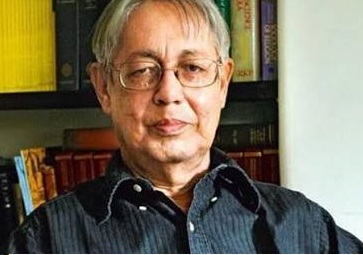
Prof. André Béteille (1934–2026) was one of India’s most distinguished sociologists and social anthropologists. Renowned for his empirical studies on social stratification, caste, class, and power, he fundamentally transformed how modern India understands inequality and democratic institutions. Spending the majority of his academic career at the Delhi School of Economics, his sharp, unostentatious intellect and commitment to rigorous fieldwork left an enduring imprint on global social science.
2. Quick Facts
- Full Name: André Béteille
- Native Name: আন্দ্রে বেতেইয়ে (Bengali)
- Date of Birth: September 30, 1934
- Place of Birth: Chandannagar, Bengal Presidency, British India
- Nationality: Indian
- Occupation / Profession: Sociologist, Social Anthropologist, Academician, Essayist
- Field of Achievement: Sociology, Social Stratification, and Public Policy Analysis
- Years Active: 1950s – 2026
3. Award Information (Focus: Padma Bhushan)
- Award Name: Padma Bhushan
- Award Category: Literature and Education / Social Science
- Award Year: 2005
- Presented By: The President of India (Dr. A.P.J. Abdul Kalam) at Rashtrapati Bhavan
- Date of Ceremony: Spring 2005
- Citation / Official Reason: For distinguished service of a high order and exceptional contributions to the fields of sociology, literature, and education.
4. Why Did He Receive the Award?
Prof. André Béteille received the Padma Bhushan in recognition of his pioneering, lifelong contributions to Indian sociology. His seminal field-based research shifted the paradigm of Indian sociological studies away from isolated “village constructs” toward dynamic intersections of caste, class, and power. He was also honored for his exemplary academic leadership and intellectual integrity in public life.
5. Early Life
Born in Chandannagar (then a French enclave in Bengal) to a French father and an Indian Bengali mother, Béteille grew up amidst a unique cross-cultural heritage. His early years exposed him to diverse linguistic and social environments across Chandannagar, Patna, and Calcutta. This multicultural upbringing nurtured an early, natural inclination toward comparative thinking and a deep curiosity about how human societies organize themselves.
6. Education
- Early Education: Attended school in Chandannagar and Patna, later completing his intermediate studies in Calcutta.
- Undergraduate Studies: Initially studied physics at St. Xavier’s College, Calcutta, attracted by its clarity, before transitioning to anthropology.
- Postgraduate Degrees: Earned his undergraduate and master’s degrees in anthropology from the University of Calcutta (influenced early on by mentor N.K. Bose).
- Doctorate (Ph.D.): Received his Ph.D. in Sociology from the University of Delhi, working closely under the legendary sociologist Prof. M.N. Srinivas.
7. Career Journey
- Academic Beginnings: After a brief stint as a research fellow at the Indian Statistical Institute, he joined the Department of Sociology at the Delhi School of Economics (DSE) in 1959, where he taught for decades.
- Global Academic Exposure: Served as a visiting professor or fellow at world-renowned institutions, including Oxford University, Cambridge University, the London School of Economics (LSE), and the University of Chicago.
- Institutional Leadership: Served as Chairman of the Centre for Studies in Social Sciences (Calcutta), Chairman of the Indian Council of Social Science Research (ICSSR), Chancellor of North Eastern Hill University (NEHU), and Chancellor of Ashoka University. He was named National Research Professor in 2007.
8. Major Achievements
- Magnum Opus – Caste, Class and Power (1965): Published his landmark study based on fieldwork in a Tanjore village, which completely transformed sociological analysis by demonstrating how traditional caste hierarchies do not neatly map onto modern class and political power structures.
- Fellow of the British Academy (FBA): Elected as a Fellow, acknowledging his global standing in the social sciences.
- Prolific Scholarship: Authored dozens of essential texts, including Studies in Agrarian Social Structure, Inequality Among Men, and The Backward Classes in Contemporary India.
9. Contribution to the Nation
Prof. Béteille brought empirical rigor, clarity, and rational liberalism to Indian social policy discussions. His critical insights on affirmative action, backward classes, secularism, and institutional autonomy helped shape nuanced legislative and public discourse. By avoiding ideological dogmatism, he provided the Indian state and civil society with clear-eyed frameworks to address historic social inequalities without compromising democratic principles.
10. Other Awards and Honours
- Padma Bhushan: 2005 (Government of India)
- National Research Professorship: 2007 (Government of India)
- Fellow of the British Academy (FBA): Honored for exceptional distinction in the social sciences.
- Professor Emeritus: Conferred by the University of Delhi (2003).
11. Legacy and Influence
Remembered as the “quiet architect of Indian sociology”, Béteille’s legacy lies in his unwavering insistence on evidence-based research, civil discourse, and institutional health. He trained generations of academics who carry forward his balanced, comparative methodology. His autobiographical memoir, Sunlight on the Garden, stands as a masterclass reflecting on colonial modernity and intellectual awakening.
12. Interesting Facts
- From Physics to People: He originally set out to study physics at St. Xavier’s College because he loved its logical clarity, before switching entirely to anthropology after encountering the profound teachings of N.K. Bose.
- A Cultural Polymath: Outside of dense sociological tracts, Béteille possessed a deep love for literature, could effortlessly sing Tagore’s songs (Rabindra Sangeet), and delighted in discussing Jane Austen.
- A Life Well Lived: He passed away peacefully in New Delhi on February 3, 2026, at the age of 91, having remained intellectually active and vocal till his final years.
13. Quotes
“Equality must be understood not as uniformity, but as the removal of arbitrary and institutionalized hierarchies that deny human dignity.” — Prof. André Béteille
14. Timeline
- 1934: Born on September 30 in Chandannagar, Bengal.
- 1959: Joins the Delhi School of Economics faculty.
- 1965: Publishes his groundbreaking sociological text, Caste, Class and Power.
- 2003: Becomes Professor Emeritus at the University of Delhi.
- 2005: Conferred the Padma Bhushan by the President of India.
- 2007: Appointed National Research Professor by the Government of India.
- February 3, 2026: Passes away in New Delhi at the age of 91.
15. References
- Wikipedia – André Béteille Profile & Bibliography
- National Herald & The Hindu – Obituaries and Tributes (February 2026)
- Government of India – Padma Awards Directory
- Delhi School of Economics – Department Archives & Faculty Records
16. Related Personalities
- M.N. Srinivas (Legendary Indian Sociologist and Mentor)
- Nirmal Kumar Bose (Renowned Anthropologist and Early Guide)
- Amartya Sen (Colleague and Fellow Economist/Intellectual)
17. Frequently Asked Questions (FAQ)
- Q: Who was André Béteille?
- A: He was a pre-eminent Indian sociologist and social anthropologist known globally for his empirical studies on caste, class, social inequality, and modern institutions in India.
- Q: What is his most famous book?
- A: His most celebrated foundational text is Caste, Class and Power: Changing Patterns of Stratification in a Tanjore Village (1965).
- Q: What major civilian honor did he receive?
- A: He was awarded the Padma Bhushan in 2005 by the Government of India.
About the Author




