1. Introduction
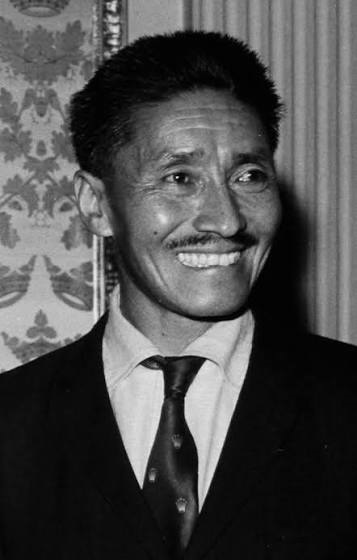
Tenzing Norgay was one of the greatest mountaineers in history and the first person to successfully reach the summit of Mount Everest along with Edmund Hillary on 29 May 1953.
A Sherpa mountaineer from the Himalayas, Tenzing played a crucial role in the successful British Mount Everest Expedition of 1953. His achievement became a symbol of courage, teamwork, and human determination. For his historic contribution to mountaineering, he received the Padma Bhushan in 1959 from the Government of India.
2. Quick Facts
| Particular | Details |
|---|---|
| Full Name | Tenzing Norgay |
| Native Name | བསྟན་འཛིན་ནོར་རྒྱས་ (Tenzin Norgay) |
| Date of Birth | c. May 1914 |
| Place of Birth | Tshechu, Khumbu region, Nepal (near Everest) |
| Date of Death | 9 May 1986 |
| Place of Death | Darjeeling, West Bengal, India |
| Nationality | Nepali-born Indian resident (later associated with India) |
| Occupation / Profession | Mountaineer, Sherpa Guide, Expedition Leader |
| Field of Achievement | Mountaineering |
| Years Active | 1930s–1980s |
| Known For | First successful ascent of Mount Everest |
3. Award Information
Award Name
Padma Bhushan
Award Category
Sports / Mountaineering
Award Year
1959
Presented By
Government of India
Date of Ceremony
The Padma Awards were presented by the President of India at Rashtrapati Bhavan. The exact investiture date for Tenzing Norgay’s award is not widely documented.
Citation / Official Reason
Awarded for his outstanding achievement in mountaineering and his historic first ascent of Mount Everest, which brought international recognition to Himalayan climbing.
Previous Recipients (Optional)
The Padma Bhushan is awarded to multiple individuals each year, so there is no single previous recipient.
Next Recipients
There is no single next recipient because several people receive the honour annually.
4. Why Did He Receive the Award?
Tenzing Norgay received the Padma Bhushan because of his extraordinary achievement in mountaineering:
- Successfully climbed Mount Everest for the first time in history.
- Demonstrated exceptional courage, endurance, and mountaineering skill.
- Brought international recognition to Himalayan climbers and Sherpa communities.
- Inspired future generations of mountaineers.
His Everest victory became one of the greatest achievements in exploration history.
5. Early Life
Tenzing Norgay was born around May 1914 in the Khumbu region of Nepal. His exact birth date was not recorded, and he later chose 29 May as his birthday to celebrate the anniversary of his Everest summit.
He was born into a Sherpa family and grew up in the Himalayan environment, where climbing and guiding were part of local life.
At a young age, he moved to Darjeeling, India, which became an important centre for Himalayan mountaineering expeditions.
6. Education
Tenzing Norgay had limited formal schooling.
His education came mainly through:
- Traditional Sherpa community life.
- Experience in Himalayan climbing.
- Training as a porter and mountain guide.
Through years of practical experience, he developed exceptional knowledge of mountain conditions, weather, and survival skills.
7. Career Journey
Early Mountaineering Career
- Began working as a porter for Himalayan expeditions in the 1930s.
- Participated in several British attempts to climb Mount Everest.
Everest Expeditions
Before his successful climb, Tenzing joined several Everest expeditions:
- 1935 British Everest Expedition.
- 1952 Swiss Everest Expeditions.
- Other Himalayan climbing missions.
Historic Everest Summit (1953)
On 29 May 1953, Tenzing Norgay and Edmund Hillary reached the summit of Mount Everest at 11:30 a.m.
Their achievement was part of the 1953 British Mount Everest Expedition led by John Hunt.
Later Career
After Everest:
- Worked as a mountaineering instructor.
- Became the first Director of Field Training at the Himalayan Mountaineering Institute.
- Trained young climbers from India and around the world.
8. Major Achievements
- First successful climber to reach the summit of Mount Everest.
- Awarded the Padma Bhushan (1959).
- Received the George Medal from the United Kingdom.
- Became a global symbol of mountaineering.
- Helped develop mountaineering education in India.
- Trained generations of climbers.
9. Contribution to the Nation
Tenzing Norgay contributed to India by:
Mountaineering Development
- Helped establish India as an important centre for Himalayan exploration.
- Trained young Indian mountaineers.
Sports Inspiration
- Inspired adventure sports and outdoor exploration.
- Encouraged international interest in the Himalayas.
Cultural Representation
- Became a symbol of Himalayan heritage and cooperation between nations.
10. Other Awards and Honours
- Padma Bhushan (1959), India
- George Medal (1953), United Kingdom
- Himalayan Mountaineering Institute honours
- Numerous international recognitions for mountaineering achievement
11. Legacy and Influence
Tenzing Norgay remains one of the most respected figures in world mountaineering.
His legacy includes:
- Inspiring climbers worldwide.
- Raising recognition of Sherpa contributions.
- Promoting mountaineering education.
- Representing courage, teamwork, and perseverance.
The Tenzing Norgay National Adventure Award in India is named in his honour.
12. Interesting Facts
- Tenzing and Edmund Hillary were the first confirmed people to reach Mount Everest’s summit.
- He carried the Indian flag, Nepalese flag, United Nations flag, and British flag to the summit.
- He did not know his exact birth date.
- He was affectionately called “Tiger of the Snows.”
- He dedicated much of his later life to training young climbers.
- He became an international ambassador for Himalayan mountaineering.
13. Quotes
A famous quote attributed to Tenzing Norgay:
“To climb Everest is a challenge. To conquer it is a dream.”
Another widely cited saying:
“The mountain is not a challenge to conquer, but a place to respect.”
(Exact wording of some popular quotations varies by source.)
14. Timeline
| Year | Event |
|---|---|
| 1914 | Born in the Khumbu region of Nepal |
| 1930s | Began work with Himalayan expeditions |
| 1952 | Participated in Swiss Everest expeditions |
| 1953 | Reached Mount Everest summit with Edmund Hillary |
| 1959 | Received Padma Bhushan from India |
| 1960s | Became involved in mountaineering training |
| 1986 | Died on 9 May in Darjeeling |
15. References
For your blog, consult:
- Padma Awards Portal, Government of India
- Himalayan Mountaineering Institute
- Royal Geographical Society
- Encyclopaedia Britannica – Tenzing Norgay
16. Related Personalities
- Edmund Hillary
- John Hunt
- Bachendri Pal
- Reinhold Messner
- Junko Tabei
17. Frequently Asked Questions (FAQ)
1. Who was Tenzing Norgay?
Tenzing Norgay was a legendary Sherpa mountaineer who became the first person to successfully climb Mount Everest.
2. When did Tenzing Norgay climb Mount Everest?
He reached the summit of Mount Everest on 29 May 1953 with Edmund Hillary.
3. Why did Tenzing Norgay receive the Padma Bhushan?
He received the Padma Bhushan in 1959 for his historic contribution to mountaineering.
4. Who climbed Everest first, Tenzing Norgay or Edmund Hillary?
Both reached the summit together and are recognized as the first successful climbers of Mount Everest.
5. Where was Tenzing Norgay born?
He was born in the Khumbu region of Nepal.
6. What was Tenzing Norgay’s profession?
He was a mountaineer, Sherpa guide, and climbing instructor.
7. When did Tenzing Norgay die?
He died on 9 May 1986 in Darjeeling, India.
8. Why is Tenzing Norgay famous?
He is famous for achieving the first successful ascent of Mount Everest and inspiring generations of mountaineers worldwide.
About the Author