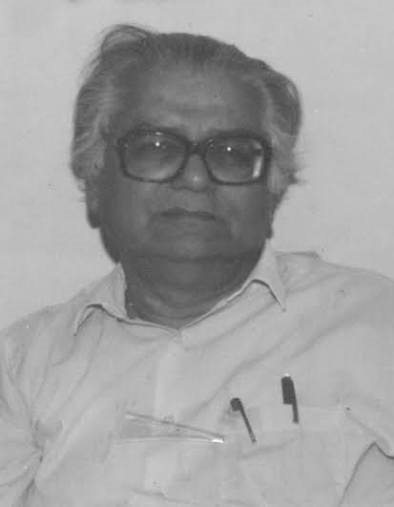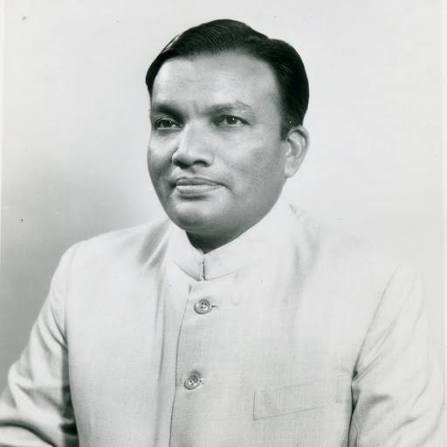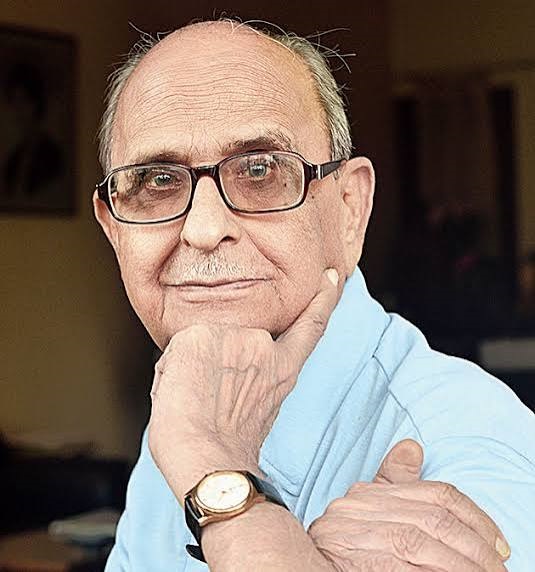
Dr. Tarlok Singh (26 February 1913 – 10 December 2005) was an eminent Indian economist, civil servant, development planner, and public policy expert. He played a crucial role in shaping India’s early economic planning after independence. As a member of the Planning Commission of India, he contributed significantly to the formulation of India’s First Five-Year Plan and subsequent development strategies. He was awarded the Padma Bhushan in 1962 for his distinguished service in Civil Service.
1. Introduction
Dr. Tarlok Singh was one of the architects of India’s post-independence development planning. A member of the Indian Civil Service (ICS), he combined administrative experience with economic expertise to address challenges such as poverty reduction, refugee rehabilitation, rural development, and national planning.
He served as a key policymaker during the leadership of Prime Minister Jawaharlal Nehru and contributed to the foundation of India’s planned economic development model.
2. Quick Facts
| Information | Details |
|---|---|
| Full Name | Tarlok Singh |
| Date of Birth | 26 February 1913 |
| Place of Birth | Gujranwala, British India (now in Pakistan) |
| Date of Death | 10 December 2005 |
| Nationality | Indian |
| Profession | Economist, Civil Servant, Development Planner |
| Field of Achievement | Economics, Public Administration, Economic Planning |
| Years Active | 1937–1974 |
| Known For | Planning Commission, Five-Year Plans, Refugee Rehabilitation |
3. Award Information
| Field | Details |
|---|---|
| Award Name | Padma Bhushan |
| Award Category | Civil Service |
| Award Year | 1962 |
| Presented By | Government of India / President of India |
| Date of Ceremony | 1962 Investiture Ceremony |
| Official Reason | Distinguished service in Civil Service |
| Awarding Authority | Government of India |
The Government of India’s Padma Awards records list Shri Tarlok Singh, Additional Secretary, Planning Commission as a Padma Bhushan (1962) recipient in the Civil Service category.
4. Why Did He Receive the Padma Bhushan?
Tarlok Singh received the Padma Bhushan for:
- Outstanding contribution to India’s economic planning.
- Service in the Indian Civil Service.
- Role in designing national development programmes.
- Contribution to poverty reduction and social development policies.
- Leadership in refugee rehabilitation after Partition.
5. Early Life
Tarlok Singh was born on 26 February 1913 in Gujranwala, which was then part of British India and is now in Pakistan.
He grew up during a period of political change and economic challenges in India. His interest in public administration and economics led him toward a career in government service and national development planning.
6. Education
- Studied in India before pursuing higher education abroad.
- Graduated from the prestigious London School of Economics (LSE).
- Studied under the renowned political theorist Harold Laski.
- Developed expertise in economics, administration, and social policy.
7. Career Journey
Indian Civil Service
Tarlok Singh joined the Indian Civil Service (ICS) in 1937. He served in various administrative positions and became known for his analytical approach to governance and development.
Private Secretary to Jawaharlal Nehru
He served as the first Private Secretary to Prime Minister Jawaharlal Nehru, assisting in the early years of independent India’s administration.
Refugee Rehabilitation
After the Partition of India in 1947, he played a major role in refugee rehabilitation. As Director General of Rehabilitation in Punjab, he helped resettle displaced people who had migrated from Pakistan.
Planning Commission
Tarlok Singh became one of the earliest members of the Planning Commission of India, serving from its establishment in 1950 until 1967.
He contributed to:
- India’s First Five-Year Plan.
- Long-term development strategies.
- Rural development policies.
- Economic and social planning.
International Service
From 1970 to 1974, he served as Deputy Executive Director (Planning) of UNICEF, contributing to international development programmes.
8. Major Achievements
- Played a major role in preparing India’s First Five-Year Plan.
- Served as a member of the Planning Commission.
- Helped develop economic policies for independent India.
- Managed large-scale refugee rehabilitation programmes.
- Served as Deputy Executive Director of UNICEF.
- Awarded:
- Padma Shri (1954)
- Padma Bhushan (1962)
- Padma Vibhushan (2000)
9. Contribution to the Nation
Tarlok Singh contributed to India through:
Economic Planning
He helped establish the framework of planned economic development in India.
Poverty Reduction
His policies focused on reducing poverty and promoting social welfare.
Refugee Rehabilitation
He played a key role in rebuilding the lives of millions displaced during Partition.
Public Administration
He demonstrated how professional civil service could support nation-building.
10. Other Awards and Honours
| Award | Year |
|---|---|
| Padma Shri | 1954 |
| Padma Bhushan | 1962 |
| Söderström Medal for Economics | 1970 |
| Padma Vibhushan | 2000 |
The Söderström Medal was awarded by the Royal Swedish Academy of Sciences for his contributions to economics and development.
11. Legacy and Influence
Tarlok Singh is remembered as one of India’s pioneering development administrators. His work influenced India’s approach toward economic planning, social welfare, and public administration.
The Indian Association of Social Science Institutions (IASSI) organizes the Tarlok Singh Memorial Lecture Series in his honour.
12. Interesting Facts
- He was one of the few civil servants to receive all three major Padma honours: Padma Shri, Padma Bhushan, and Padma Vibhushan.
- He helped draft India’s first Five-Year Plan.
- He served under Prime Minister Jawaharlal Nehru.
- He contributed to refugee rehabilitation after Partition.
- He later worked with UNICEF on international development programmes.
13. Quotes
No widely authenticated personal quotations by Dr. Tarlok Singh are available in reliable historical sources.
14. Timeline
| Year | Event |
|---|---|
| 1913 | Born on 26 February in Gujranwala |
| 1937 | Joined Indian Civil Service |
| 1947 | Worked on refugee rehabilitation after Partition |
| 1950 | Joined Planning Commission of India |
| 1954 | Received Padma Shri |
| 1962 | Received Padma Bhushan |
| 1967 | Completed Planning Commission tenure |
| 1970–1974 | Served as UNICEF Deputy Executive Director |
| 1970 | Received Söderström Medal for Economics |
| 2000 | Awarded Padma Vibhushan |
| 2005 | Passed away on 10 December |
15. References
- Government of India – Padma Awards Database.
- Padma Awards Notification 1962.
- Indian Association of Social Science Institutions – About Dr. Tarlok Singh.
- Biography of Tarlok Singh (Economist).
16. Related Personalities
- Jawaharlal Nehru – First Prime Minister of India; worked closely with Tarlok Singh.
- P. C. Mahalanobis – Economist and architect of India’s statistical planning system.
- V. K. R. V. Rao – Economist and educationist.
- Dr. Radha Kamal Mukerjee – Economist and Padma Bhushan recipient (1962).
- D. R. Gadgil – Economist and planning expert.
17. Frequently Asked Questions (FAQ)
1. Who was Tarlok Singh?
Tarlok Singh was an Indian economist, civil servant, and development planner who helped shape India’s early economic policies.
2. Which award did Tarlok Singh receive in 1962?
He received the Padma Bhushan in the Civil Service category in 1962.
3. What was Tarlok Singh famous for?
He was famous for his role in India’s Five-Year Plans, Planning Commission, and refugee rehabilitation programmes.
4. Where did Tarlok Singh study?
He studied at the London School of Economics.
5. What was his role in the Planning Commission?
He was among its earliest members and contributed to India’s development planning from 1950 to 1967.
6. Which international organization did he serve?
He served as Deputy Executive Director (Planning) of UNICEF from 1970 to 1974.
7. Why is Tarlok Singh remembered today?
He is remembered as one of the architects of India’s early economic planning and nation-building efforts.
About the Author