

1. Introduction
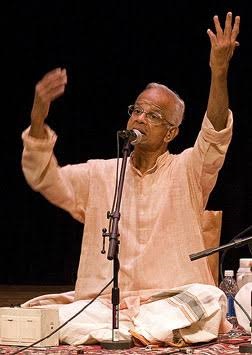
T. V. Sankaranarayanan (widely known as TVS) was a legendary exponent of South Indian Carnatic classical vocal music. As a premier torchbearer of the distinctive musical style pioneered by his legendary maternal uncle and guru, Madurai Mani Iyer, TVS captured the hearts of classical music lovers worldwide. Renowned for his soaring, effortless upper-octave execution, vibrant stage presence, and deep emotional resonance, he left an indelible mark on the landscape of Indian classical music.
2. Quick facts
- Full Name: Tiruvalangadu Vembu Sankaranarayanan
- Native Name: திருவலங்காடு வேம்பு சங்கரநாராயணன் (Tamil)
- Date of birth: March 7, 1945
- Place Of birth: Mayiladuthurai, Madras Presidency, British India
- Nationality: Indian
- Occupation/ Profession: Carnatic Classical Vocalist, Musician
- Filed of Achievement: Indian Classical Music (Carnatic Vocal)
- Years Active: 1968–2022
3. Award Information
- Award Name: Padma Bhushan / Sangeetha Kalanidhi
- Award Category: National Civilian Honour / Supreme Carnatic Music Honour
- Award Year: 2003 (Conferred both in the same year)
- Presented By: Government of India (Padma Bhushan) / The Madras Music Academy (Sangeetha Kalanidhi)
- Date of Ceremony: Conferred during respective annual national and cultural sessions in 2003
- Citation/Official Reason: Recognized for his exceptional mastery of Carnatic music, unique adherence to the Madurai Mani Iyer style, and monumental contribution to classical vocal art forms globally.
- Previous Receipients (optional): Umayalpuram K. Sivaraman (2001), Sikkil Sisters (2002)
- Next Recipients: M. Chandrasekaran (2005)
4. Why they Receive the award?
TVS received these top-tier honors because of his unmatched command over sruthi (pitch) and laya (rhythm), his ability to effortlessly execute high-register notes (upper octaves), and his dedication to keeping a rich traditional lineage alive. His performances successfully combined intellectual rigor with accessible, joyous emotional expression.
5. Early Life
Born into a musical family in Mayiladuthurai, Tamil Nadu, music was a natural part of his environment. His mother, Gomathy, was the sister of the towering Carnatic maestro Madurai Mani Iyer. Recognizing his early pitch alignment and vocal capabilities, his family initiated him into the basics of music at a young age.
6. Education
While deeply immersed in music from childhood, TVS also focused on formal academics. He moved to Madras (now Chennai) at age 11 and later went on to complete a university degree in law (Bachelor of Law – BL). However, music remained his true calling, leading him to choose the concert stage over the legal profession.
7. Carrier Journey
- Formal Training: Under the rigorous tutelage of his uncle, Madurai Mani Iyer, TVS imbibed a style characterized by immense joy, aesthetic clarity, and brilliant phrasing.
- Concert Debut: He made his formal platform debut in February 1968, setting the foundation for a deeply respected career.
- Global Reach: He travelled extensively across India and internationally, performing at prestigious venues and festivals, and popularizing classical kritis globally.
8. Major Achievements
- Cemented himself as the primary spiritual and stylistic heir to Madurai Mani Iyer.
- Noted for his effortless execution of complex Ragam Tanam Pallavi sequences.
- Spearheaded the widespread appreciation of Tamil Isai (Tamil compositions), receiving titles like Sivan Isai Chelvar.
- Released numerous acclaimed audio albums and live concert recordings.
9. Contribution to the nation
TVS played a vital cultural ambassador role for India. By preserving, practicing, and propagating indigenous South Indian classical music traditions, he enriched India’s soft power and intangible cultural heritage. Furthermore, as an esteemed guru, he mentored the next generation of artists.
10. Other Awards and Honours
- Sangeet Natak Akademi Award (1990)
- Gayaka Sikhamani (USA, 1981)
- Sangeetha Ratnakara (Vassar College, 1975)
- Ganakalaratnam (Conferred by Dr. Semmangudi Srinivasa Ayyar, 1987)
- Sangeetha Kalasikhamani (The Indian Fine Arts Society, 2005)
11. Legacy and influence
TVS is remembered as a “blazing sun” in the Carnatic music firmament who perfected the ideal concert flow pattern. His style deeply influenced younger generations of musicians, including prominent artists like T. M. Krishna, who noted that TVS’s vibrant, passionate, and flowing music made listeners fall deeply in love with Carnatic art. He passed away on September 2, 2022.
12. Intersting Facts
- Cricket’s Loss, Music’s Gain: As a teenager living in Madras, TVS became so obsessed with cricket that music momentarily took a backseat before he fully refocused on his vocal training.
- Vocal Range: He was particularly celebrated for his effortless reach into high-frequency upper notes without any visible strain.
- Family Tradition: His legacy is actively carried forward by his children and disciples, including his son Mahadevan Sankaranarayanan and daughter Amruta Sankaranarayanan.
13. Quotes
“Your music was filled with passion, romance, flourish and unrestricted flow. You made me fall in love with this music.” — T. M. Krishna
14. Timeline
- 1945: Born on March 7 in Mayiladuthurai, Madras Presidency.
- 1953–1956: Began intense musical training under Madurai Mani Iyer.
- 1968: Made his official debut on the Carnatic concert platform.
- 1990: Conferred the Sangeet Natak Akademi Award.
- 2003: Awarded the Padma Bhushan by the Government of India and Sangeetha Kalanidhi by the Madras Music Academy.
- 2022: Passed away on September 2 in Chennai at the age of 77.
15. References
- Wikipedia: T. V. Sankaranarayanan Profile
- India Art Review: T V Sankaranarayanan: Vocalist Extraordinaire
- The Madras Music Academy Archives
16. Related Personalities
- Madurai Mani Iyer (Uncle and Guru)
- Semmangudi Srinivasa Ayyar
- T. N. Seshagopalan
- Amruta Sankaranarayanan (Daughter and Disciple)
- Mahadevan Sankaranarayanan (Son and Disciple)
17. Frequency Asked Questions(FAQ)
- Q: Who was T. V. Sankaranarayanan?
- A: He was a legendary Indian Carnatic classical vocalist widely celebrated as the primary torchbearer of the Madurai Mani Iyer style.
- Q: What are his highest civilian and artistic honors?
- A: He received the Padma Bhushan and the Sangeetha Kalanidhi titles both in the year 2003.
- Q: Who was his primary guru?
- A: His legendary maternal uncle, Madurai Mani Iyer.
About the Author




