Introduction
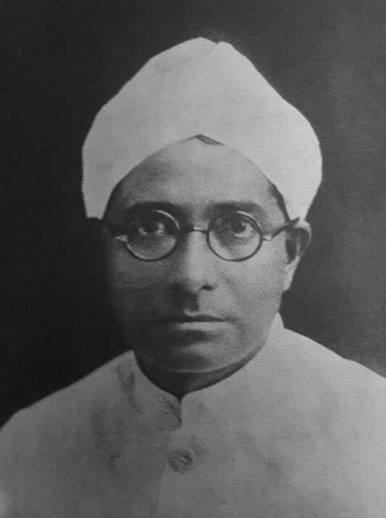
Sir Kariamanikkam Srinivasa Krishnan (4 December 1898 – 14 June 1961), popularly known as K. S. Krishnan, was one of India’s most distinguished physicists and scientific leaders. He made pioneering contributions to solid-state physics, magnetism, and crystallography, and played a crucial role in the discovery of the Raman Effect alongside Nobel laureate Sir C. V. Raman. As an outstanding researcher, educator, and institution builder, Krishnan helped establish India as a center for advanced scientific research. In recognition of his exceptional contributions to science and engineering, he was awarded the Padma Bhushan in 1954, one of India’s highest civilian honours.
Early Life
Kariamanikkam Srinivasa Krishnan was born on 4 December 1898 in Watrap (also known as Vathirairuppu), in present-day Virudhunagar district, Tamil Nadu, India. He grew up in a family that valued education and learning. From a young age, he displayed exceptional talent in mathematics and science, which encouraged him to pursue a career in physics.
His curiosity about the natural world and his dedication to scientific research shaped his future as one of India’s greatest physicists.
Birth Date and Death
- Born: 4 December 1898
- Birthplace: Watrap (Vathirairuppu), Virudhunagar District, Tamil Nadu, British India
- Died: 14 June 1961
- Place of Death: New Delhi, India
- Nationality: Indian
Education and Career
K. S. Krishnan completed his early education in Tamil Nadu before joining Madras Christian College, where he earned a degree in physics.
He began his research career under the guidance of Sir C. V. Raman at the Indian Association for the Cultivation of Science (IACS), Kolkata. Together, they conducted groundbreaking experiments on the scattering of light, which led to the discovery of the Raman Effect in 1928.
Later, Krishnan held several prestigious positions, including:
- Professor of Physics at the University of Dacca (now in Bangladesh).
- Professor at the University of Allahabad.
- Founding Director of the National Physical Laboratory (NPL), New Delhi, where he established world-class research facilities.
His research covered magnetism, crystal physics, thermionics, and material science, earning him international recognition.
Why Did He Receive the Padma Bhushan Award?
K. S. Krishnan received the Padma Bhushan in 1954 for his outstanding contributions to:
- Experimental physics.
- Discovery and study of the Raman Effect.
- Research in magnetism and solid-state physics.
- Scientific leadership and institution building.
- Advancement of scientific research in independent India.
His pioneering work strengthened India’s reputation in global scientific research and inspired generations of physicists.
Career and Achievements
Throughout his distinguished career, K. S. Krishnan achieved several remarkable milestones.
1. Co-discovery of the Raman Effect
Working with Sir C. V. Raman, he conducted experiments that led to the discovery of the Raman Effect, one of the most significant discoveries in modern physics. This discovery earned Raman the 1930 Nobel Prize in Physics, and Krishnan’s contributions were widely recognized by the scientific community.
2. Research in Magnetism
Krishnan conducted pioneering research on the magnetic properties of crystals and materials, making important contributions to solid-state physics.
3. Founding Director of the National Physical Laboratory
As the first Director of the National Physical Laboratory (NPL), he helped establish one of India’s leading scientific research institutions.
4. International Scientific Recognition
He published numerous research papers and collaborated with scientists from around the world, enhancing India’s scientific reputation.
5. Academic Leadership
He trained and mentored many young scientists who later became leading researchers in India.
Field of Achievement
K. S. Krishnan made significant contributions in:
- Physics
- Solid-State Physics
- Magnetism
- Crystallography
- Experimental Physics
- Material Science
- Scientific Research
- Science Education
Awards and Honours
His major honours include:
- Padma Bhushan (1954) for contributions to science.
- Knight Bachelor (1946), becoming Sir K. S. Krishnan.
- Fellow of the Royal Society (FRS) (1940), one of the highest honours for a scientist.
- President of the Indian Science Congress.
- Numerous honorary doctorates from Indian and international universities.
- Founding Director of the National Physical Laboratory (NPL).
Interesting Facts
- K. S. Krishnan was one of the principal researchers involved in the discovery of the Raman Effect.
- He worked closely with Nobel Prize winner Sir C. V. Raman during his early scientific career.
- He was among the first Indian physicists to gain worldwide recognition for experimental research.
- He played a major role in establishing India’s scientific infrastructure after Independence.
- His research in magnetism continues to influence modern material science and condensed matter physics.
Legacy and Inspiration
K. S. Krishnan’s legacy extends beyond his scientific discoveries. As a researcher, teacher, and institution builder, he helped create a strong foundation for scientific research in India. His work continues to inspire physicists, engineers, and students to pursue innovation and excellence in science. His leadership at the National Physical Laboratory contributed significantly to India’s technological development.
Contribution to the Nation
K. S. Krishnan made lasting contributions to India by:
- Advancing scientific research in physics.
- Contributing to the discovery of the Raman Effect.
- Establishing the National Physical Laboratory as a premier research institution.
- Promoting scientific education and research culture.
- Training future generations of Indian scientists.
- Strengthening India’s international reputation in science and technology.
His work laid the foundation for many advances in physics and materials research in India.
Conclusion
Sir Kariamanikkam Srinivasa Krishnan was one of India’s greatest physicists and scientific visionaries. His pioneering research on the Raman Effect, magnetism, and solid-state physics placed Indian science on the global stage. Through his leadership, research, and dedication to education, he played a vital role in building India’s scientific institutions and inspiring future generations of researchers. The Padma Bhushan, awarded to him in 1954, recognized his extraordinary contributions to science and the nation. Today, Sir K. S. Krishnan is remembered as a pioneering physicist whose legacy continues to shape scientific research and technological progress in India.
About the Author