

Introduction
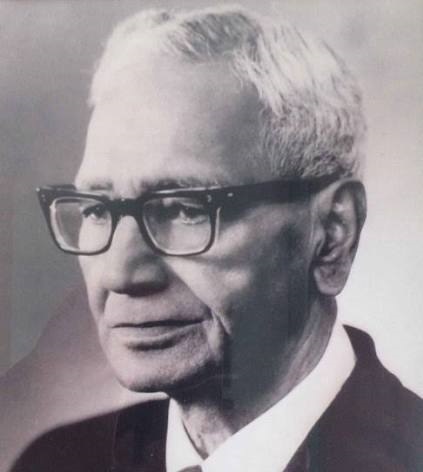
Ajudhia Nath Khosla (11 December 1892 – 29 May 1984) was one of India’s most distinguished civil engineers, administrators, and educationists. He made remarkable contributions to the development of irrigation systems, dams, water resource management, and hydroelectric projects in India. His innovative engineering solutions played a crucial role in strengthening the country’s agricultural and industrial growth. In recognition of his outstanding service to engineering and national development, he was awarded the Padma Bhushan in 1954, one of India’s highest civilian honours. He was later honoured with the Padma Vibhushan in 1977 for his lifelong contributions.
Early Life
Ajudhia Nath Khosla was born on 11 December 1892 in Jalandhar, Punjab, British India (now in Punjab, India). From an early age, he displayed exceptional academic ability, especially in mathematics and science. His passion for engineering inspired him to pursue higher education in civil engineering, leading to a distinguished career in public service.
Birth Date and Death
- Born: 11 December 1892
- Birthplace: Jalandhar, Punjab, British India (now Punjab, India)
- Died: 29 May 1984
- Nationality: Indian
Education and Career
Ajudhia Nath Khosla graduated in Civil Engineering from Thomason College of Civil Engineering, Roorkee (now the Indian Institute of Technology (IIT) Roorkee).
He joined the Indian Service of Engineers in 1916 and quickly established himself as an outstanding hydraulic engineer. During his career, he worked on several major irrigation and river valley projects across India.
He later served in several important positions, including:
- Chairman of the Central Waterways, Irrigation and Navigation Commission (CWINC).
- Vice-Chancellor of the University of Roorkee (now IIT Roorkee).
- Governor of Odisha from 1962 to 1966.
- Member of various national committees on water resources and infrastructure planning.
His work significantly influenced India’s post-independence development in irrigation and water management.
Why Did He Receive the Padma Bhushan Award?
Ajudhia Nath Khosla received the Padma Bhushan in 1954 for his exceptional contributions to:
- Civil and hydraulic engineering.
- Irrigation and river valley development.
- Water resource management.
- Construction and planning of major dams and canals.
- National infrastructure and agricultural development.
His engineering expertise helped improve irrigation systems, increase agricultural productivity, and support India’s economic development.
Career and Achievements
Ajudhia Nath Khosla achieved several milestones during his illustrious career.
1. Pioneer in Hydraulic Engineering
He developed innovative methods for designing dams, reservoirs, and irrigation structures that improved their efficiency and safety.
2. Leader in Water Resource Development
He played a major role in planning and supervising several important river valley and irrigation projects across India.
3. Chairman of the Central Waterways, Irrigation and Navigation Commission
As Chairman, he guided national policies on water resources, irrigation, flood control, and hydroelectric development.
4. Vice-Chancellor of the University of Roorkee
He modernized engineering education and promoted advanced research in civil and hydraulic engineering.
5. Governor of Odisha
He served as the Governor of Odisha from 1962 to 1966, contributing to public administration and state development.
6. International Recognition
His expertise in water engineering earned him recognition both in India and internationally, and he represented India at several global engineering conferences.
Field of Achievement
Ajudhia Nath Khosla made outstanding contributions in:
- Civil Engineering
- Hydraulic Engineering
- Water Resource Management
- Irrigation Engineering
- Dam Design
- River Valley Development
- Engineering Education
- Public Administration
Awards and Honours
His major honours include:
- Padma Bhushan (1954) for contributions to engineering and public service.
- Padma Vibhushan (1977), India’s second-highest civilian award.
- Numerous honorary doctorates from Indian universities.
- Served as Vice-Chancellor of the University of Roorkee.
- Served as Governor of Odisha.
Interesting Facts
- He developed the Khosla Theory, an important engineering method for designing weirs and barrages on permeable foundations.
- He was among India’s foremost experts in irrigation and hydraulic engineering.
- His engineering principles continue to be taught in civil engineering programs.
- He played an important role in planning India’s early water management strategies after Independence.
- He received both the Padma Bhushan and the Padma Vibhushan, a distinction earned by only a select group of Indians.
Legacy and Inspiration
Ajudhia Nath Khosla’s contributions transformed India’s approach to irrigation, dam construction, and water resource management. His engineering innovations continue to influence infrastructure projects, while his leadership in education inspired generations of civil engineers. His commitment to scientific excellence and public service remains a model for engineers and policymakers.
Contribution to the Nation
Ajudhia Nath Khosla made lasting contributions to India by:
- Developing modern irrigation systems that supported agricultural growth.
- Improving dam and barrage design for safer and more efficient water management.
- Strengthening India’s water resource planning.
- Promoting engineering education and research.
- Supporting hydroelectric and river valley development.
- Serving the nation in important administrative and constitutional roles.
His work contributed significantly to India’s food security, industrial development, and infrastructure modernization.
Conclusion
Ajudhia Nath Khosla was one of India’s greatest civil engineers and public servants. His pioneering work in hydraulic engineering, irrigation, and water resource management helped lay the foundation for modern India’s infrastructure development. Through his technical innovations, educational leadership, and public service, he made a lasting impact on the nation’s progress. His Padma Bhushan, awarded in 1954, and later the Padma Vibhushan in 1977, stand as enduring recognition of his extraordinary contributions. Today, Ajudhia Nath Khosla is remembered as a visionary engineer whose legacy continues to inspire engineers, researchers, and policymakers across India.
About the Author




