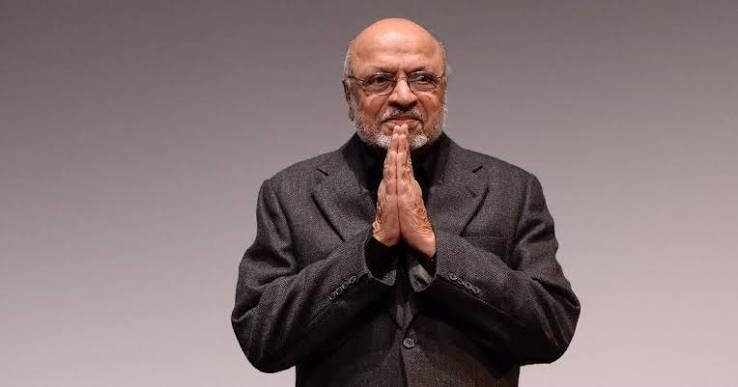
Here is the comprehensive 17-point blog post package tailored for the legendary Indian film director, screenwriter, and pioneer of the parallel cinema movement, Shyam Benegal, matching your exact outline requirements:
1. Introduction
Shyam Benegal (1934–2024) was a towering titan of Indian cinema and one of the principal architects of the mid-20th-century “Parallel Cinema” movement. Through a brilliant cinematic lens, Benegal explored complex themes of socio-economic inequality, feudal exploitation, gender dynamics, and political turmoil without ever sacrificing narrative gripping power. From launching the careers of powerhouse actors like Smita Patil and Shabana Azmi to helming monumental television epics like Bharat Ek Khoj, Benegal permanently reshaped the cultural consciousness of modern India.
2. Quick Facts
- Full Name: Shyam Sunder Benegal
- Native Name: श्याम बेनेगल (Hindi) / ಶ್ಯಾಮ್ ಬೆನೆಗಲ್ (Kannada)
- Date of Birth: December 14, 1934
- Place of Birth: Trimulgherry, Hyderabad State, British India (now Telangana, India)
- Date of Passing: December 23, 2024 (at the age of 90)
- Nationality: Indian
- Occupation/Profession: Film Director, Screenwriter, Documentarian
- Field of Achievement: Feature Films, Parallel Cinema, and Television Documentaries
- Years Active: 1959–2024
3. Award Information (Dadasaheb Phalke Award)
- Award Name: Dadasaheb Phalke Award
- Award Category: India’s Highest Award in Cinema (Lifetime Achievement Honour)
- Award Year: 2005 (Conferred at the 53rd National Film Awards)
- Presented By: Directorate of Film Festivals, Ministry of Information and Broadcasting, Government of India
- Date of Ceremony: 2006 (New Delhi)
- Citation/Official Reason: For his outstanding contribution to the growth and development of Indian cinema through realistic, socially conscious storytelling and cinematic innovation.
- Previous Recipients: Adoor Gopalakrishnan (2004), Mrinal Sen (2003), Yash Chopra (2001).
- Next Recipients: Tapan Sinha (2006), V. Shantaram (Posthumous, 2007).
4. Why He Received the Award
Shyam Benegal received the Dadasaheb Phalke Award for his pioneering role in establishing a sustainable, critically acclaimed parallel cinema movement in India during the 1970s. His films avoided formulaic commercial tropes to dissect gritty social realities, caste oppression, and women’s empowerment, while his mentorship nurtured an entire generation of stellar actors, technicians, and independent filmmakers.
5. Early Life
Born on December 14, 1934, in Trimulgherry (near Secunderabad/Hyderabad), Shyam Benegal grew up in a culturally vibrant family. His father, Sridhar B. Benegal, was a photographer, which early on imbued young Shyam with a deep fascination for visual framing and lighting. He made his first amateur film at the age of 12 using his father’s camera, setting the stage for a lifelong romance with motion pictures.
6. Education
- Undergraduate: Nizam College, Hyderabad, where he graduated with a Master of Arts (M.A.) in Economics.
- Early Artistic Pursuits: Founded the Hyderabad Film Society during his college years, exposing himself to world cinema and European auteur films that heavily influenced his artistic philosophy.
7. Career Journey
- 1959–1960s: Began his professional career in advertising as an executive and copywriter with Lintas and later ASP (Advertising, Sales and Promotion) in Bombay, directing hundreds of commercials.
- 1974: Directed his groundbreaking feature debut, Ankur (The Seedling), which won critical acclaim and established the parallel cinema wave.
- 1975–1983: Directed a string of masterpieces that defined Indian art-house cinema, including Nishant, Manthan, Bhumika, and Mandi.
- 1988: Created the monumental 53-episode television series Bharat Ek Khoj (Discovery of India) for Doordarshan, based on Jawaharlal Nehru’s book.
- Later Decades: Continued making socially resonant films such as Suraj Ka Satvan Ghoda, Zubeidaa, and Well Done Abba.
8. Major Achievements
- National Film Awards Record: Won the National Film Award for Best Feature Film in Hindi a record seven times (Ankur, Nishant, Manthan, Bhumika, Arohan, Junoon, and Suraj Ka Satvan Ghoda).
- The Manthan Co-operative Triumph: Co-financed by 500,000 farmers of the Gujarat Co-operative Milk Marketing Federation (GCMMF), making it India’s first crowd-funded film and a cinematic tribute to the White Revolution.
- Star-Maker Extraordinaire: Launched or shaped the careers of cinematic greats including Shabana Azmi, Smita Patil, Naseeruddin Shah, Om Puri, and Amrish Puri.
9. Contribution to the Nation
Benegal gave Indian cinema a conscience. At a time when commercial cinema was dominated by escapist formulas, his films forced mainstream audiences to confront uncomfortable truths about rural exploitation, feudal tyranny, and the struggles of modern Indian women. Furthermore, his massive public service broadcasts on television educated millions on India’s ancient history, pluralism, and democratic foundations.
10. Other Awards and Honours
- Padma Shri (1976) by the Government of India.
- Padma Bhushan (1991) by the Government of India.
- Dadasaheb Phalke Award (2005).
- V. Shantaram Lifetime Achievement Award.
- Nargis Dutt Award for Best Feature Film on National Integration (multiple times).
- Fellowship of the Sangeet Natak Akademi.
11. Legacy and Influence
Shyam Benegal’s legacy is that of a gentle revolutionary of the camera. He proved that films could be intellectually rigorous, aesthetically sublime, and socially transformative without losing narrative engagement. His works remain essential reference points for film schools, sociologists, and art lovers worldwide.
12. Interesting Facts
- The Amul Connection: His landmark film Manthan (1976) was funded by half a million farmers contributing two rupees each, effectively making India’s dairy farmers the producers of the film.
- Advertising Roots: Before stepping into feature films, Benegal directed over 900 advertising shorts and documentaries, sharpening his precise sense of timing and visual economy.
- Kinship with Guru Dutt: Renowned filmmaker Guru Dutt was his mother’s cousin, giving young Shyam early family exposure to the inner workings of the Hindi film industry.
13. Quotes
“Cinema is the most powerful medium of our time because it combines all the arts—literature, music, painting, and drama—and reaches out to touch the collective soul of society.” — Shyam Benegal
14. Timeline
- 1934: Born on December 14 in Trimulgherry, Hyderabad State.
- 1974: Directs his feature film debut, Ankur, winning widespread critical acclaim.
- 1976: Conferred the Padma Shri by the Government of India.
- 1988: Releases the iconic TV series Bharat Ek Khoj.
- 1991: Awarded the Padma Bhushan.
- 2005: Honored with the prestigious Dadasaheb Phalke Award.
- 2024: Passes away on December 23 at the age of 90 in Mumbai.
15. References
- Wikipedia contributors, “Shyam Benegal,” Wikipedia, The Free Encyclopedia.
- Directorate of Film Festivals – Dadasaheb Phalke Award Archives.
- National Film Archive of India (NFAI) – Retrospective Profiles on Shyam Benegal.
- Obituaries and archival tributes in The Hindu, The Indian Express, and Scroll.in.
16. Related Personalities
- Smita Patil & Shabana Azmi: Iconic leading actresses who delivered career-defining performances in Benegal’s parallel cinema classics.
- Vijay Tendulkar: Renowned playwright and screenwriter who collaborated with Benegal on masterworks like Nishant and Manthan.
- Govind Nihalani: Famed cinematographer and director who worked closely as cinematographer on many of Benegal’s greatest films.
17. Frequently Asked Questions (FAQ)
- Q: Who was Shyam Benegal?
- A: Shyam Benegal was a legendary Indian film director, screenwriter, and one of the pioneers of the “Parallel Cinema” movement in India.
- Q: What is Shyam Benegal most famous for?
- A: He is best known for socially and politically resonant films like Ankur, Nishant, Manthan, Bhumika, and the epic television series Bharat Ek Khoj.
- Q: What highest cinema honor did he receive from India?
- A: He was awarded India’s highest cinema honor, the Dadasaheb Phalke Award, in 2005, alongside the Padma Shri (1976) and Padma Bhushan (1991).
- Q: When did he pass away?
- A: He passed away on December 23, 2024, at the age of 90.
About the Author