1. Introduction
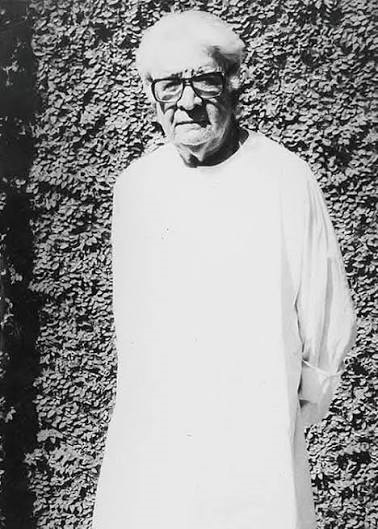
Narayan Shridhar Bendre (1910–1992) was one of the most luminous figures of modern Indian art, renowned for his technical innovation, lyrical lyricism, and pioneering mastery of the pointillist technique in the Indian context. As a founding member of the prestigious Bombay Progressive Artists’ Group and a visionary Head of the Faculty of Fine Arts at M.S. University, Baroda, Bendre bridged traditional Indian aesthetics with European modernist experiments, leaving an enduring imprint on generations of artists.
2. Quick Facts
- Full Name: Narayan Shridhar Bendre (N.S. Bendre)
- Native Name: नारायण श्रीधर बेंद्रे (Marathi / Hindi)
- Date of Birth: August 21, 1910
- Place of Birth: Indore, Princely State of Indore, British India (now Madhya Pradesh, India)
- Date of Passing: February 19, 1992 (at the age of 81)
- Nationality: Indian
- Occupation/Profession: Painter, Art Educator, Printmaker
- Field of Achievement: Modern Indian Art and Pointillism
- Years Active: 1930s–1992
3. Award Information (Padma Bhushan)
- Award Name: Padma Bhushan
- Award Category: Civil Honour (Third-highest civilian award in India)
- Award Year: 1992
- Presented By: Government of India
- Date of Ceremony: 1992 (Rashtrapati Bhavan, New Delhi)
- Citation/Official Reason: Recognized for distinguished service and exceptional contributions to the fine arts, painting, and art education in India.
- Previous Recipients: Eminent artists, scholars, and public figures of prior cycles.
- Next Recipients: Subsequent civilian laureates in the following cycles.
4. Why He Received the Award
N.S. Bendre was conferred the Padma Bhushan (following his earlier Padma Shri in 1969 and the Lalit Kala Akademi Fellowship in 1988) for his lifelong dedication to enriching Indian visual art. His tireless experimentation with light, color, and texture—particularly his unique adaptation of pointillism using dots of pure pigment to capture the vibrancy of Indian rural and domestic life—set a benchmark for modernist expression.
5. Early Life
Born on August 21, 1910, in Indore, N.S. Bendre displayed an early inclination toward sketching and painting. Growing up in central India, he initially pursued a conventional academic path, earning a Bachelor of Arts (BA) from Holkar College, Indore, and a Diploma in Art from the Government School of Art, Bombay, in 1934. He also worked briefly as a government official and journalist before dedicating himself entirely to the fine arts.
6. Education
- Undergraduate: Holkar College, Indore, graduating with a Bachelor of Arts (BA).
- Art Diploma: Government School of Art, Bombay, where he earned his diploma in painting.
- Wider Exposure: Traveled extensively across India and abroad (including the United States, Europe, and the Middle East), studying global modernist movements, impressionism, and traditional miniature paintings.
7. Career Journey
- 1930s–1940s: Worked as a freelance artist and illustrator, gaining early acclaim for his landscapes and portraits.
- 1947–1948: Served as an artist-in-residence and traveled widely in the USA and Europe.
- 1950–1966: Joined Maharaja Sayajirao (M.S.) University of Baroda as a Professor of Painting and later served as the Dean of the Faculty of Fine Arts, transforming Baroda into a premier crucible of contemporary Indian art.
- Later Years: Continued painting, exhibiting globally, and serving as Chairman of the Madhya Pradesh Kala Parishad and Vice-Chairman of the Lalit Kala Akademi.
8. Major Achievements
- Pioneering Pointillism in India: Mastered and adapted the Post-Impressionist pointillist technique (painting with small, distinct dots of pure color), using it to depict glowing Indian sunlight, foliage, and daily village scenes.
- Institution Building at Baroda: Shaped the Baroda School of Art, mentoring a legendary generation of modern Indian artists like K.G. Subramanyan, G.R. Santosh, and Bhupen Khakhar.
- Global Exhibition Record: Showcased his works in major international galleries and salons across London, Paris, New York, and Tokyo.
9. Contribution to the Nation
Bendre liberated Indian painting from rigid academic realism while avoiding purely abstract alienation. By celebrating the quiet poetry of ordinary Indian life—women gathering water, village markets, and sunlit trees—through a vibrant, luminous palette, he created a universally accessible yet deeply sophisticated modern visual vocabulary. As an educator, his pedagogical vision helped establish Baroda as the intellectual capital of Indian modern art.
10. Other Awards and Honours
- Padma Shri (1969) by the Government of India.
- Padma Bhushan (1992) by the Government of India.
- Fellowship of the Lalit Kala Akademi (1988), its highest national honor.
- Gold Medal from the Bombay Art Society (numerous times during his career).
- Kalidas Samman (1984) by the Government of Madhya Pradesh.
11. Legacy and Influence
N.S. Bendre’s legacy is defined by his restless curiosity and joyous celebration of color. Unlike many contemporaries who turned to dark or angst-ridden themes post-Independence, Bendre’s canvas radiated optimism, light, and harmony. His technical brilliance continues to inspire contemporary painters and art historians alike.
12. Interesting Facts
- Early Journalism Roots: Before establishing himself as a full-time painter, Bendre worked as a journalist and news photographer, an eye for framing that heavily influenced his compositional balance.
- The Dot Master: Though he painted in various styles—from landscapes to semi-abstract forms—he is universally beloved for his dot-paintings, where millions of microscopic color strokes merge in the viewer’s eye to create dazzling radiance.
- Versatile Mediums: He was adept not only in oils and watercolors but also excelled in etching, graphic arts, and tapestry design.
13. Quotes
“Art is not a mirror held up to reality, but a hammer with which to shape it… The artist’s task is to capture the inner light and rhythm of nature.” — N.S. Bendre
14. Timeline
- 1910: Born on August 21 in Indore, Central India.
- 1934: Completes his diploma from the Government School of Art, Bombay.
- 1950: Joins M.S. University, Baroda, building its iconic Faculty of Fine Arts.
- 1969: Conferred the Padma Shri by the Government of India.
- 1988: Awarded the Lalit Kala Akademi Fellowship.
- 1992: Honored with the Padma Bhushan; passes away on February 19 in Bombay at the age of 81.
15. References
- Wikipedia contributors, “Narayan Shridhar Bendre,” Wikipedia, The Free Encyclopedia.
- National Gallery of Modern Art (NGMA) – Collection & Artist Profiles on N.S. Bendre.
- DAG (Delhi Art Gallery) – Archival essays on modern Indian masters.
16. Related Personalities
- K.G. Subramanyan: Eminent artist and student/colleague of Bendre at Baroda.
- M.F. Husain & F.N. Souza: Co-founders of the progressive art movement in India who shared contemporary spaces with Bendre.
- Ramkinkar Baij: Sculptor and modern pioneer whose experimental spirit mirrored Bendre’s.
17. Frequently Asked Questions (FAQ)
- Q: Who was N.S. Bendre?
- A: Narayan Shridhar Bendre was a legendary Indian modernist painter and art educator known for his pioneering use of pointillism and vibrant color palettes.
- Q: What is N.S. Bendre most famous for?
- A: He is best known for his luminous pointillist landscapes and domestic scenes, as well as his tenure as Dean of the Faculty of Fine Arts at M.S. University, Baroda.
- Q: What prestigious civilian honors did he receive?
- A: He was awarded the Padma Shri in 1969 and India’s third-highest civilian honor, the Padma Bhushan, in 1992.
- Q: When did he pass away?
- A: He passed away on February 19, 1992, at the age of 81.
About the Author