

1. Introduction
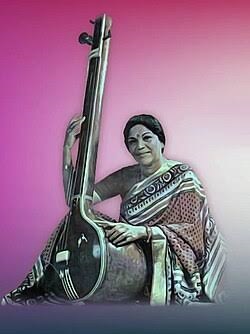
Shobha Gurtu was a legendary Indian classical and semi-classical vocalist who reigned supreme over the musical landscape for over five decades. Universally acclaimed as the “Queen of Thumri,” she possessed a rare, full-throated voice infused with intense emotional depth (abhinaya). While deeply grounded in pure Hindustani classical tradition, her unique mastery over lighter forms like Thumri, Dadra, Tappa, and Natya Sangeet captured the hearts of millions across generations.
2. Quick Facts
- Full Name: Shobha Gurtu (born Bhanumati Shirodkar)
- Native Name: शोभा गुर्टू (Hindi) / ಶೋಭಾ ಗುರ್ಟು (Kannada)
- Date of Birth: February 8, 1925
- Place of Birth: Belgaum, Karnataka, British India (present-day Belagavi)
- Nationality: Indian
- Occupation / Profession: Classical and Semi-Classical Vocalist
- Field of Achievement: Hindustani Vocal Music (Thumri, Dadra, and Classical Arts)
- Years Active: 1940s–2004
3. Award Information (Focus: Padma Bhushan)
- Award Name: Padma Bhushan
- Award Category: India’s Third-Highest Civilian Award
- Award Year: 2002
- Presented By: K. R. Narayanan (President of India)
- Date of Ceremony: March/April 2002
- Citation / Official Reason: For distinguished, extraordinary service to the arts, classical music, and the popularization of semi-classical vocal traditions in India.
- Previous Recipients (2001): Aroon Purie, Dr. B. V. Raju, Sundaram Ramakrishnan, Dr. Naresh Trehan, and others.
- Next Recipients (2003): P. Bhanumathi Ramakrishna, S. K. Skaria, and others.
4. Why Did She Receive the Award?
Shobha Gurtu was conferred with the Padma Bhushan in recognition of her monumental, lifelong contribution to Indian music. Having previously received the Sangeet Natak Akademi Award in 1987, this highest civilian honor celebrated her unmatched legacy in elevating Thumri from a regional semi-classical genre to a nationally revered art form characterized by matchless emotive expression.
5. Early Life
Born as Bhanumati Shirodkar in Belgaum, Karnataka, music was her birthright. Her mother, Menakabai Shirodkar, was a professional dancer and a trained gayaki disciple of Ustad Alladiya Khan of the Jaipur-Atrauli gharana. Growing up in an artistic household, Shobha received her foundational vocal training directly from her mother from a very young age, absorbing the rigorous techniques of classical vocal placement alongside rhythm and grace.
6. Education
- Early Training: Received intensive, immersive training under her mother Menakabai, followed by advanced guidance from stalwarts like Ustad Atta Hussain Khan, Nathhan Khan, and Pandit Ghamman Khan, mastering multiple gharana styles including Jaipur and Kirana.
7. Career Journey
Shobha Gurtu moved to Mumbai after her marriage to Vishwanath Gurtu (son of a scholar and sitar player, Pandit Narayan Nath Gurtu). In Mumbai, her powerful voice and unique styling caught the attention of radio and concert promoters. She established herself as a titan of All India Radio (AIR) and concert stages worldwide. Alongside her classical concerts, she lent her unforgettable voice to landmark Marathi and Hindi films (such as Saamna, Lal Mati, and playback singing in Main Tulsi Tere Aangan Ki). She also collaborated internationally, performing at prestigious venues like New York’s Carnegie Hall alongside legends like Pandit Birju Maharaj.
8. Major Achievements
- Queen of Thumri: Crowned as the undisputed master of Thumri, Dadra, and Bhajans, known for bringing earthy richness and poignant expression to her performances.
- Padma Bhushan: Conferred with India’s third-highest civilian honor in 2002 by the Government of India.
- Sangeet Natak Akademi Award: Honored for her excellence in vocal music in 1987.
- Cross-Genre Collaboration: Frequently collaborated with her son, world-renowned percussionist Trilok Gurtu, blending Indian classical traditions with global jazz and fusion music.
9. Contribution to the Nation
Shobha Gurtu preserved and popularized the emotive sub-genres of Hindustani music that risked being overshadowed by pure classical khayal. Through her expressive (abhinaya-laden) renditions, she made classical music deeply relatable to the common listener. Her mentorship of younger artists and widespread recordings ensured that the rich heritage of Thumri remained vibrant and alive in modern India.
10. Other Awards and Honours
- Sangeet Natak Akademi Award: Conferred for Vocal Music (1987).
- Padma Bhushan: Conferred by the Government of India (2002).
- Lata Mangeshkar Puraskar: Honored by the Government of Madhya Pradesh.
- Shahu Maharaj Puraskar & Maharashtra Gaurav Puraskar: Conferred by the Government of Maharashtra.
11. Legacy and Influence
Shobha Gurtu’s legacy is immortalized in her iconic recordings of timeless semi-classical compositions like “Saiyaan Nikas Gaye” and “Rang Sari Gulabi Chunariya.” She revolutionized how female vocalists approached emotional nuance in music, demonstrating that lyrics could be lived and breathed through sound. She passed away on September 27, 2004, leaving behind an eternal musical void and an inspiring family legacy through her sons Ravi and Trilok Gurtu.
12. Interesting Facts
- Name Change: She performed under the name Shobha Gurtu after her marriage into the Gurtu family, transitioning from her birth name Bhanumati Shirodkar.
- Carnegie Hall Performance: She captivated international audiences in New York’s legendary Carnegie Hall performing alongside Kathak maestro Pandit Birju Maharaj.
- Fusion Pioneer: She fearlessly crossed musical boundaries by collaborating on experimental world music and jazz projects with her percussionist son, Trilok Gurtu.
13. Quotes
“When you sing a Thumri, you are not just hitting notes; you are telling a story of love, longing, and human emotion. If the listener doesn’t feel it in their heart, the music has failed.” — Shobha Gurtu
14. Timeline
- 1925: Born on February 8 in Belgaum, Karnataka.
- 1940s–50s: Begins her professional performance career and rises to prominence on All India Radio.
- 1987: Receives the prestigious Sangeet Natak Akademi Award.
- 1997: Performs at Carnegie Hall, New York, representing Indian classical traditions globally.
- 2002: Conferred with India’s third-highest civilian honor, the Padma Bhushan.
- 2004: Passes away on September 27 in Mumbai at the age of 79.
15. References
- Ministry of Home Affairs, Government of India – Padma Awardees Database.
- Wikipedia – Shobha Gurtu Profile & Discography.
- Sangeet Natak Akademi – Awardee Archives.
- Retrospective Tributes from The Hindu, Rediff, and The Tribune.
16. Related Personalities
- Trilok Gurtu: Internationally acclaimed percussionist and jazz fusion artist, and Shobha Gurtu’s son.
- Pandit Birju Maharaj: Legendary Kathak maestro with whom she performed on prestigious international stages.
- Lata Mangeshkar: Iconic playback singer and contemporary musical legend who shared deep mutual admiration with Gurtu.
17. Frequently Asked Questions (FAQ)
Q1: Who was Shobha Gurtu? A: Shobha Gurtu was a legendary Indian vocalist widely celebrated as the “Queen of Thumri” for her peerless mastery over Hindustani semi-classical music.
Q2: What genres was she most famous for? A: She was primarily famous for Thumri, Dadra, Tappa, Bhajans, and Khayal, distinguished by her earthy voice and deep emotional abhinaya.
Q3: Which major civilian award did she receive? A: She was awarded the prestigious Padma Bhushan by the Government of India in 2002.
Q4: When did she pass away? A: She passed away on September 27, 2004, in Mumbai at the age of 79.
About the Author




